


If you think Key Monastery is "offbeat," you haven't seen anything yet. While the crowds are busy chasing Instagram shots at Chicham Bridge, the real spiritual heavy-lifting is happening at Fukchung Nuns Spiti, one of the most rugged offbeat places in Spiti.
Located just 3 kilometers from Kaza, this cluster of ancient meditation caves is used exclusively by nuns (Ani-las) of the Nyingmapa school of Tibetan Buddhism for a long-term (3-year) silent meditation retreat in India. No phones, no internet, and zero human contact.
While most Spiti trips focus on the "Check-list" sights like Key or Hikkim, reaching Fukchung requires a raw riverbed crossing and a vertical scramble. It is one of the most hidden gems of Spiti Valley, where the world literally disconnects from itself.
If you're seeking the raw, spiritual soul of the Himalayas, this silent desert retreat is your destination.
Popular Spiti Valley Tour Packages

Spiti Valley Group Adventure | Exclusive Himalayan Escape
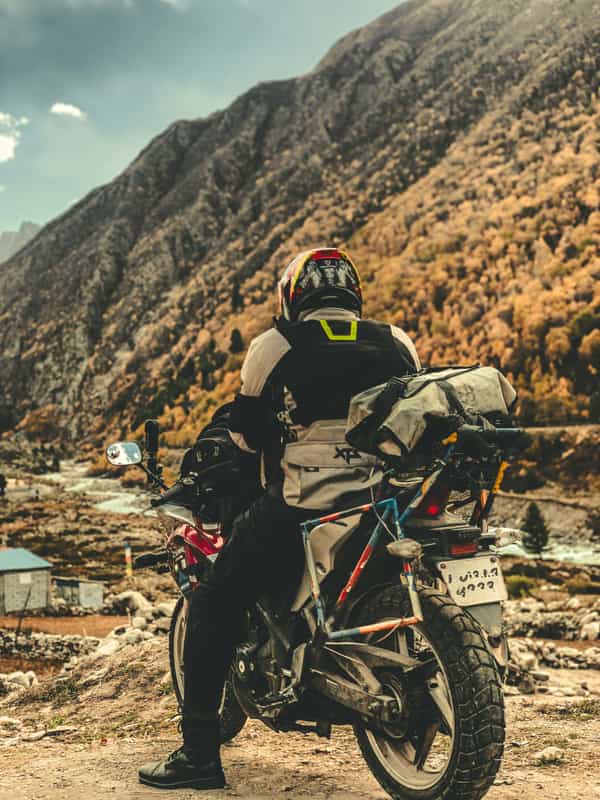
Spiti Valley Circuit Group Bike Trip | Tirthan To Manali On Two Wheels

Spiti Valley Tour From Manali: Chandratal Camping & Kibber Wildlife
Spiti Valley Full Circuit Road Trip 7 Days | Value Saver Package from Delhi
Where Is the Fukchung Nuns Spiti Monastery?

Fukchung Nuns Spiti is a localized spiritual site often missed by the "main-circuit" crowd and one of the top secret places in Spiti Valley in India. In the local language, "Phuk" or "Fuk" means cave. Since the landscape is full of sedimentary cliffs, many places have "Phuk" in their name.
As one of the most remarkable offbeat places in Spiti Valley, it sits on the opposite side of the Spiti River from the main highway, tucked into the ancient sedimentary formations of the valley.
These meditation caves Spiti Valley are geographically unique, carved directly into the high-altitude cliffs.
- Exact Location: Eastern banks of the Spiti River, approximately 3 km from Kaza town (Lahaul & Spiti District).
- Nearest Hub: Kaza (3 km | 10-minute drive). This is your last point for fuel, cash, and medical supplies.
- Altitude: Approx. 3,800 m – 4,000 m (12,500 – 13,100 ft)
- Terrain: High-altitude cold desert. The landscape consists of vertical mud cliffs and unstable "scree" (loose rock) slopes. The ground is made of fine, wind-blown silt that is notoriously slippery.
Please Note: While these nuns meditation caves India is situated in Fukchung Village Spiti near Kaza, there is also an administrative "Phukchung Village" located in the Pin Valley, home to famous Kungri Monastery, the only other major Nyingma monastery in the region. Ensure your GPS is set toward Kaza to find the hermitage.
Who Are the Fukchung Nuns Spiti?

Fukchung Village Spiti is home to nuns from the Nyingmapa school of Buddhism who come here for a silent meditation retreat in India. They typically spend 3 years in a stone cave, meditating from morning to night without speaking to another human soul.
The Fukchung meditation caves story is rooted in deep tradition. But why do nuns stay 3 years in caves Spiti? This isn't arbitrary.
The three-year retreat (three years and three fortnights) is rooted in the Kalachakra Tantra, designed to harness "wisdom wind" energy accumulated over a lifetime. The real life of Buddhist nuns in Spiti involves 6 to 8 years of preparatory study before entering the cave.
Inside the retreat, here’s how the real life of Buddhist nuns in Spiti look like:
- Wake before dawn, begin practice around 4 AM
- Cycle through multiple sessions of deity yoga and mantra recitation
- Practicing Dzogchen, the pinnacle of Nyingmapa meditation
- Minimal sleep — sometimes sitting upright in meditation boxes
- Virtually no contact with the outside world
- A helper (typically another nun) delivers food and necessities, often without verbal exchange
These Spiti mountains meditation caves represent the path of the yogi, removed from all societal comforts. These aren't women who gave up on life; they chose the deepest version of it.
What's It Like to Actually Visit Fukchung?

You don't enter Fukchung. You walk alongside it. The Fukchung Nuns Spiti meditation caves are sealed during active retreats as these are among the most sacred Spiti Valley spiritual places.
As you make your way through them, you're invited to put yourself in the shoes of the nuns who have meditated and may still be meditating inside those walls, completely cut off from the world.
The experience is not visual. It's not a photo op. It's a feeling. Here’s what you'll notice:
- Rough stone cave entrances, some marked with prayer flags indicating active occupation
- Absolute, almost aggressive silence broken only by wind off the peaks
- The weight of knowing someone, right now, is on the other side of that rock in year one or two or three of not speaking
- A landscape so stark and open it feels like the Himalayas are watching you back
Travellers who've visited describe the Fukchung meditation caves story as "an intense experience", walking along the caves, trying to imagine the conviction it takes to disappear from the world for years at a time. Bring nothing to do. That's the point.
How To Reach Fukchung Nuns Spiti Site?

Getting here is part of the adventure. Kaza is your base, the main town of Spiti Valley and the logical starting point for almost every offbeat detour in the valley.
Getting to Kaza first:
- From Manali to Kaza:~202 km via Kunzum Pass (open June–October), roughly 6–9 hours depending on road conditions. And road conditions in Spiti are never smooth
- From Shimla:~407 - 420 km via the Kinnaur route, around 12 hours. This route stays open year-round and is the gentler altitude gain option
- By bus: HRTC buses run from Manali to Kaza; departs around 5 AM, arrives afternoon/evening
- Nearest airport: Bhuntar (Kullu), ~250 km from Kaza
- Nearest railway: Joginder Nagar, ~365 km from Kaza
Read the step by step route to reach Spiti Valley (Kaza) first and then plan your way to Fakchung.
From Kaza to Fukchung:
The best approach is via a hired taxi or private vehicle from Kaza as no public transport runs directly here. There are no BRO signposts to Fukchung Nuns Spiti site; you must rely on ground-level landmarks.
A 4x4 vehicle is strongly recommended. Plan it as a half-day or full-day trip from Kaza, combined with nearby Kibber village. Here’s the route:
- Specific Turn-Off: Drive 2.5 km from the Kaza main market towards Losar (Manali Highway). Just after passing the HP Petrol Pump, look for a sharp, unpaved track on your right that descends steeply toward the Spiti River bed.
- River Crossing: You must ride or drive across the dry (or shallow) riverbed toward the base of the massive mud cliffs on the opposite side.
- Warning: Low-clearance sedans will bottom out in the silt. Use a high-clearance bike (RE Himalayan/XPulse) or a 4x4 vehicle only.
- The Hike [1.5 km | 45-Minute Scramble]: Secure your vehicle at the cliff base. The trail is a narrow, zig-zagging "goat path" cut directly into the crumbling silt.
- The Visual Anchor: Keep your eyes on the white-washed Chortens (stupas) perched halfway up the cliffside. Use these as your "12 o’clock" marker. If you lose the trail in the loose scree, simply keep heading toward the stupas.
Check Out Our Best-Selling Spiti Trips

Frozen Spiti Backpacking - Bliss in Budget -edited
Spiti Valley Tour From Manali: Chandratal Camping & Kibber Wildlife

Spiti Valley Adventure From Chandigarh: Sangla, Kalpa & Tabo Special
When Is The Best Time To Visit Fukchung?

The best time to visit Fukchung Nuns Spiti is from June to September. During this window, the Manali-Kaza highway is open, the Spiti River bed is crossable, and the steep silt trails are dry and stable for hiking.
Seasonal Breakdown:
- Peak Season (June–September): Ideal weather (15C to 20C) and clear trails; overall the best time to visit Spiti Valley. Plan your visit between 10:00 AM and 3:00 PM to avoid the extreme high-altitude winds.
- Shoulder Season (May & October): Risk of black ice and sub-zero temperatures. The Kunzum Pass may close unexpectedly, cutting off access from Manali.
- Winter (November–May): Strictly Avoid. These Spiti mountains meditation caves become inaccessible and unstable due to heavy snow.
Tips And Local Etiquettes In Fukchung Nuns Spiti

This place is sacred and active. The nuns inside those caves are not part of your travel experience. You are a guest at the edge of theirs.
- Do not knock on or touch sealed cave doors. If a cave has prayer flags, someone is inside
- Keep your voice low if not completely silent.
- No drones: Never use drones near these hidden gems in Spiti
- Photography: Exterior shots of the landscape are fine; avoid photographing cave entrances or anything that feels intrusive
- Do not leave waste. Spiti's ecosystem is fragile; carry everything out
- Altitude reminder: You're at nearly 4,000 m. Go slow, hydrate, and don't underestimate it.
Check out the detailed list of essential things to carry on your trip to Spiti Valley for such remote, high-altitude locations.
Pair Fukchung In Spiti With These Nearby Stops

Since Kaza is your base, you can easily combine Fukchung with these iconic Spiti landmarks:
- Key (Ki) Monastery—the grand fortress monastery of Spiti, 12 km from Kaza
- Kibber Village—one of the world's highest motorable villages, just a short drive from Fukchung territory; great for snow leopard sightings in winter
- Chicham Bridge—Asia's highest suspension bridge, 25 km from Kaza; a 1,000-ft drop over a massive gorge.
- Tashigang—one of the world's highest inhabited villages, 32 km from Kaza; offers profound silence and Gette peak views.
- Hikkim Post Office —the world's highest post office; send a postcard home
- Dhankar Monastery& Lake —dramatic cliffside gompa overlooking the Pin-Spiti river confluence
The Silence At Fukchung Will Stay With You
Most of Spiti Valley hidden places leave you breathless in the obvious ways, the scale of the mountains, the impossible roads, the blue sky at 14,000 feet. But Fukchung Nuns Spiti meditation caves do something quieter and stranger. They make you stop.
You stand outside those rock walls and realize that someone chose this. Not as a punishment, not out of desperation, but as the most deliberate act of devotion imaginable.
If Spiti Valley is where you go to disconnect from the world, Fukchung is where the world disconnects from itself. You don't need a reason to go. You just need to show up quietly, and let the place do the rest.
Frequently Asked Questions
What happens in a 3-year Buddhist retreat?
During a traditional three-year retreat, nuns at Fukchung commit to intense meditation, ritual practices, and seclusion. They live in isolation to master complex spiritual visualizations and philosophy, aiming to purify the mind and achieve a higher state of consciousness far from worldly distractions.
Can visitors go to Fukchung village Spiti?
There is no Fukchung village in the traditional sense; it is a secluded hermitage and nunnery. While visitors are welcome to hike to the Fukchung Nuns Spiti site, you must maintain absolute silence and respect the Ani-las' privacy during their deep spiritual retreats.
What is Fukchung and where is it located in Spiti Valley?
Fukchung is an ancient meditation cave complex and Buddhist nunnery located approximately 3 km from Kaza. It is perched on the eastern mud cliffs above the Spiti River bed and is known for its Badlands topography and centuries-old tradition of cave-dwelling practitioners.
Why do Buddhist nuns spend 3 years in silence at Fukchung?
Nuns spend three years in silence to eliminate external noise and focus entirely on the internal path to enlightenment. This extreme discipline, known as a Losum Chosum retreat, allows them to stabilize their meditation and achieve profound spiritual insights without any social interruptions.
How long do the nuns meditate in Fukchung caves?
Meditation durations vary; some Ani-las perform short daily sessions, while others commit to the rigorous 3-year, 3-month, and 3-day retreat. This specific timeframe is a sacred Buddhist tradition believed to be necessary for mastering the advanced tantric practices taught within the Nyingma lineage.


