


If you are planning a trip to Spiti Valley in summer, the first thing to know is that "summer" here arrives much later than in the rest of India. While the plains swelter, Spiti only begins its "Great Thaw" in late May, with the true summer season blooming from June to September.
This is the ultimate window for Spiti trips focused on the full circuit, Chandratal camping, or legendary treks like the Pin Bhaba Pass.
Right now, the landscape is transitioning into a rugged, sun-drenched moonscape with pleasant 20°C days and crisp 0°C nights. However, the Manali-Kaza road (Kunzum Pass) remains buried under snow and likely won't open until early June.
For everyone else, the Shimla-Kinnaur route is your best bet for the Spiti Valley road trip in summer. It’s open right now and offers the safest, most gradual acclimatization for exploring the legendary Key Monastery, Hikkim, Langza, Komic, and Dhankar.
Spiti Valley In Summer 2026: At A Glance

- Weather: Sunny 20°C days, but nights still hit a freezing 0°C in May/June
- Road Status: Both Shimla and Manali routes (via Kunzum Pass) are open
- Best Months: June is the best time to visit Spiti Valley summer for the full circuit and treks
- Connectivity: Airtel/BSNL Postpaid only; Jio is spotty; most villages have no signal.
- Cash: ATMs in Kaza often fail; carry all required cash from Shimla or Rampur.
- Permits: Aadhar Card for Indians; Inner Line Permit (from Shimla/Peo) for Foreigners.
What To Expect In Spiti Valley In Summer?

Spiti in summer isn't a single season; it’s a transition from a frozen desert to a rugged moonscape. While the rest of India heats up, the Spiti Valley summer weather follows its own rules:
June – September: The Peak Window
June to September is the best time to visit Spiti Valley. It’s also the peak travel season and the only open window for the full Spiti circuit. The landscape turns a dramatic, sun-drenched brown, with pleasant days 20°C and cool nights 5°C. The Kunzum Pass usually opens by early-June, finally allowing access to Chandratal Lake and the Manali-Kaza road.
This is the core period covered in most Spiti Valley summer tour packages. Explore month-wise weather and temperature of Spiti Valley to plan your trip well.
The Rain Shadow Reality
Because Spiti sits in a rain shadow, it stays dry and clear even during the monsoon (July-August). However, be warned: while the valley is dry, the approach roads from Manali and Shimla face heavy rain and landslides in the lower regions of Kullu and Kinnaur.
Note: The absolute best time to visit Spiti Valley in summer is June. You get the best of both worlds as the full circuit is open, the weather is stable, and you avoid the landslide risks of the late monsoon.
Check Out Our Popular Spiti Trips

Frozen Spiti Backpacking - Bliss in Budget
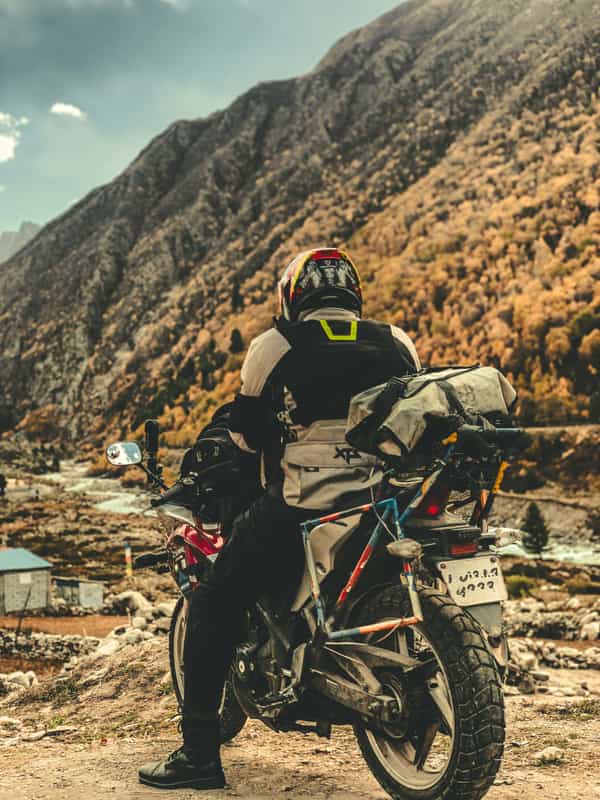
Spiti Valley Circuit Group Bike Trip | Tirthan To Manali On Two Wheels

Spiti Valley Adventure From Chandigarh: Sangla, Kalpa & Tabo Special

Spiti Valley Tour From Manali: Chandratal Camping & Kibber Wildlife
How To Reach Spiti Valley In Summer?

To get to Spiti in summer, you first need to reach Shimla or Manali. Here is the breakdown of how to get there for your Spiti Valley in summer adventure.
By Air
- To Shimla: Fly into Jubarhatti Airport (SLV), 22km from Shimla. Flights are small and often cancelled due to weather. Alternatively, fly to Chandigarh (IXC) and take a 3.5-hour taxi.
- To Manali: Fly into Kullu-Manali Airport (KUU) in Bhuntar. It is 50km (1.5 hours) from Manali. Most travelers prefer flying to Chandigarh and driving 7–8 hours to Manali.
By Train
- To Shimla: Reach Kalka station via the Shatabdi Express from Delhi. Take the Kalka-Shimla Toy Train (UNESCO Site) from here. It’s slow (5–6 hours) but scenic.
- To Manali: There is no direct train to Manali. The nearest major railhead is Chandigarh or Ambala Cantt. From there, you must hire a taxi or take a bus.
By Road
- To Shimla: Overnight Volvo buses run daily from ISBT Kashmiri Gate, Delhi. Drive time is roughly 8–10 hours.
- To Manali: Very well-connected by luxury Volvo buses from Delhi and Chandigarh. The drive from Delhi takes about 12–14 hours via the Kiratpur-Manali Highway.
Shimla to Kaza Route (The "Hindustan-Tibet" Road)
For the Spiti Valley road trip in summer, this is one of the long but best options. This is the safest way to avoid altitude sickness.
- Road Status: Open all-year
- Path: Shimla - Narkanda - Rampur - Reckong Peo - Kaza
- Travel Time: 2 to 3 days
- Key Stop: Kalpa or Sangla for a night to let your lungs adjust before hitting Kaza.
- Vehicle: High-clearance SUV recommended due to "shooting stones" near Malling Nala.
Manali to Kaza Route (The "Adventure" Gate)
Open from June onwards. It is much faster but steeper and tougher on your car.
- Road Status: Usually opens early June (depends on Kunzum Pass snow).
- Path: Manali - Atal Tunnel - Gramphu - Batal - Kunzum La - Kaza
- Travel Time: 10–12 hours in a single day
- The Challenge: Famous for "Pagal Nalas" (erratic water crossings) that get deeper as the afternoon sun melts the snow.
- Vehicle: 4x4 or SUV is a must; hatchbacks often get stuck at Batal.
If you’re still wondering, check out our detailed explanation on how to reach Spiti Valley in 2026 via different routes.
10 Must-Visit Places In Spiti Valley In Summer 2026
1. Key Monastery (Ki Gompa)

Key Monastery, a 1,000-year-old fortress, is the spiritual heart of Spiti and one of the iconic places to visit in Spiti Valley in summer. It looks like a giant fortress made of sugar cubes perched on a hill. Inside, you’ll find narrow, dim-lit corridors that smell of incense and old scriptures.
If you arrive by 7:00 AM, you can sit silently at the back of the prayer hall and listen to the monks' deep, rhythmic morning chants.
- Location: 12 km from Kaza (easy drive/bike)
- Timings: 6:00 AM – 6:00 PM
- Entry Fee: Free (donations are welcome)
- Things to do: Witness morning prayers, explore the rooftop for 360-degree valley views, and try the herbal tea offered by monks.
2. Chandratal (The Moon Lake)

Chandratal is a high-altitude lake that is legendary for its crescent shape and crystal-clear blue water that changes shades with the sun. Since the camps are 2 km away, the walk to the lake is incredibly peaceful. At night, the sky here is so clear that the Milky Way looks like a bright cloud, perfect if you want to try your hand at astrophotography.
- Location: Near Kunzum Pass (Accessible after June 10th)
- Timings: Best visited during daylight; camps close by October
- Entry Fee: Free entry; camping costs ₹1,500–₹2,500 per person
- Things to do: Walk the 5 km circumambulation (Parikrama) of the lake, stargaze, and enjoy lakeside reflection photography.
3. Hikkim: The World’s Highest Post Office

Hikkim is a tiny, dusty village that holds a massive world record and is one of the best places to visit in Spiti Valley in summer. Sending a postcard from here is a traveler’s "rite of passage."
You’ll see people huddled in the small, red-painted office writing letters to loved ones. It’s a slow, nostalgic process that reminds you how beautiful physical mail is in a digital world.
- Location: 15 km from Kaza (4,400 m)
- Timings: 10:00 AM – 4:00 PM (Monday–Saturday)
- Entry Fee: No entry fee; postcards and stamps cost ₹20–₹50
- Things to do: Mail a postcard to yourself or friends, chat with the legendary postmaster, and hike the nearby fossil trails.
4. Langza: The Fossil Village

Langza is famous for its massive, golden Lord Buddha statue that watches over the valley. But the real "treasure" is beneath your feet. Millions of years ago, this was the Tethys Sea, so the ground is scattered with marine fossils called Chaudua. It’s a surreal feeling to find a seashell fossil at $14,500$ feet in the air.
- Location: 16 km from Kaza
- Timings: Open all day (visit for sunset)
- Entry Fee: Free; local fossil "guides" might charge ₹500 for a tour
- Things to do: Take the "Buddha Statue" photo, search for fossils in the streams, and visit a local home for butter tea.
5. Komic: The Highest Motorable Village

Komic is as high as a car can go in Spiti (15,027 ft). Life here is simple and tough. The village has a beautiful monastery (Tangyud) where women aren't allowed in the inner sanctum, but the exterior and the "Highest Cafe in the World" are open to all. Eating a bowl of hot Maggi here while looking at snow-capped peaks is a core memory.
- Location: 19 km from Kaza (just past Hikkim)
- Timings: Monastery opens 8:00 AM – 5:00 PM
- Entry Fee: Free entry
- Things to do: Eat at the "World’s Highest Cafe," visit the Tangyud Monastery, and get your picture taken with the "Highest Village" board.
6. Dhankar Monastery & Lake

Dhankar Monastery looks like it was carved directly out of the cliffs. It’s an ancient fort-monastery perched precariously over the confluence of the Spiti and Pin Rivers. Most people just see the monastery, but the real prize is the 45-minute trek to Dhankar Lake behind the village.
It’s a steep climb, but reaching that high-altitude "mirror" lake while being completely alone in the silence is the ultimate Spiti experience.
- Location: 32 km from Kaza
- Timings: 8:00 AM – 5:00 PM
- Entry Fee: Free
- Things to do: Explore the crumbling old monastery sections, trek to the lake, and photograph the river confluence from the cliff edge.
7. Chicham Bridge

Suspended at a staggering height over a 1,000-foot deep gorge, Chicham Bridge is a feat of modern engineering in a primitive landscape. Before this bridge opened, villagers had to cross the canyon in a dangerous hand-pulled rope basket.
Walking across it now, you can feel the wind whistling through the steel cables. It's a massive adrenaline rush and the best spot to spot rare Blue Sheep grazing on the vertical cliffs below.
- Location: 20 km from Kaza (near Kibber)
- Timings: Open 24/7
- Entry Fee: Free
- Things to do: Test your vertigo by looking straight down, take a panoramic drone-style shot, and continue the drive toward Losar.
8. Giu: The 500-Year-Old Mummy

Giu is home to one of the most mysterious sights in the world: a naturally mummified monk sitting in a meditative pose. No chemicals or bandages were used; the dry, cold mountain air preserved his skin, hair, and even teeth for five centuries.
It’s a bit of a detour toward the Tibet border, but standing inches away from a "living" relic in such a remote, silent valley is something you won't find anywhere else on Earth.
- Location: 80 km from Kaza (near Sumdo)
- Timings: 8:00 AM – 5:00 PM
- Entry Fee: Free
- Things to do: See the Mummy Monk, visit the newly built colorful monastery, and enjoy the absolute peace of a border village.
9. Pin Valley & Mud Village

While most of Spiti is a "Cold Desert" of browns and greys, Pin Valley is a surprising splash of lush green. It is the gateway to the Pin Valley National Park, famous for Snow Leopards and Siberian Ibex.
The final village, Mud Village, feels like the literal end of the world. It’s the perfect place to sit in a local cafe, eat a hot bowl of Thukpa, and watch the clouds roll over the massive glaciers.
- Location: 50 km from Kaza
- Timings: Best visited during daylight
- Entry Fee: Free
- Things to do: Spot Himalayan wildlife, walk along the Pin River, and try the local Seabuckthorn juice, a superfood berry found only here.
10. Tabo Monastery

Often called the "Ajanta of the Himalayas,"Tabo Monastery is a UNESCO World Heritage site that is over 1,000 years old. Unlike the hilltop Key Monastery, Tabo is built on flat ground with mud-brick walls.
Inside, it houses some of the most well-preserved Buddhist frescoes and life-sized statues in existence. The atmosphere here is heavy with history, it’s a place meant for quiet reflection rather than just quick photos.
- Location: 48 km before Kaza (on the Shimla route)
- Timings: 6:00 AM – 6:00 PM
- Entry Fee: Free
- Things to do: Explore the ancient dark caves where monks still meditate, visit the new monastery temple, and walk through the apple orchards nearby.
If you want to escape tourist crowds during the summer season, check out some of the top offbeat places to explore in Spiti Valley.
Top Exciting Things To Do In Spiti Valley In Summer

1. Fossil Hunting In Langza
As the snow clears from the village trails in April, you can find Ammonite fossils (black spiral stones) in the small streams in Langza, Spiti in summer. These are millions of years old from the ancient Tethys Sea, just remember to photograph them and leave them for the next traveler.
2. Whitewater Rafting On The Spiti River
Once the glaciers melt in June, the river levels rise. The stretch from Pangmo to Kaza offers moderate rapids with incredible views of the monasteries from the water. Note: The water is glacier-fed and incredibly icy, a wetsuit is non-negotiable.
3. High-Altitudes Trekking
Summer (June–September) is the only window to trek Spiti’s legendary passes. These treks are world-famous for the "geographical shift", starting in lush green valleys and crossing into the dry, brown "Middle Land."
Trekking is one of the most adventurous things to do in Spiti in summer. Because Spiti lies in a rain shadow, it offers the best trekking conditions in India when the rest of the country is drenched in monsoon rains.
- Pin Bhaba Pass: The most dramatic greenery-to-desert crossover.
- Hampta Pass: A beginner-friendly trek ending at the sapphire Chandratal Lake.
- Mount Kanamo: A 19,600 ft "trekking peak" accessible without technical gear.

4. Attending Summer Festivals In Spiti
Between June and August, the valley comes alive with Spiti Valley summer festivals such as Ladarcha and Hee-Sagnam. Unlike the quiet winter prayers, summer festivals are a riot of color, featuring masked Cham dances, local horse trading, and traditional Spitian wrestling.
These Spiti Valley summer festivals offer the best opportunity to witness the local community celebrating their short but beautiful harvest season before the winter returns.
- Key Festivals in Spiti: Tsheshu Fair/Key Cham Festival (late June), Ladarcha Festival (August), and the Lahaul and Spiti Tribal Festival (mid-August)
5. Stargazing At Chandratal Lake
Chandratal is one of the best spots for camping in Spiti Valley. From mid-June, you can camp near the "Moon Lake." With zero light pollution, the Milky Way is visible to the naked eye as a bright, glowing band. It is one of the best spots in India for long-exposure astrophotography.
6. Mountain Biking The Chicham Loop
One of the most exciting things to do in Spiti in summer is mountain biking. You can rent a mountain bike in Kaza and cycle the high-altitude route through Kibber and across the Chicham Bridge. The 1,000-foot drop below the bridge provides a massive adrenaline rush on two wheels.
Some Practical Tips For Spiti Valley In Summer

To survive and enjoy Spiti Valley in summer, you need to play by the "Mountain Rules." This is a practical Spiti Valley summer travel guide with essential tips for your trip.
1. The "Noon Rule" For Road Crossings
On the Manali-Kaza route, glacial streams like Chota Dhara and Pagal Nala swell as the afternoon sun melts the snow. Cross these before 10:00 AM; by 2:00 PM, the water can be deep enough to stall an SUV or wash away a bike.
2. Acclimatization & The 48-Hour Rule
Don't rush to Kaza 3,800 m on Day 1, or you’ll likely spend your trip with a splitting headache. Spend your first two nights in Shimla, Sangla, or Kalpa to let your lungs adjust to the thin air and avoid Acute Mountain Sickness (AMS). This is one of the most common mistakes people make on their first Spiti trip.
3. Cash & Connectivity Realities
Kaza has the only ATMs (SBI/PNB), but they frequently run out of cash or lose power. Carry all the cash you need from Reckong Peo or Rampur; for signal, only BSNL and Airtel Postpaid work reliably in Kaza and Tabo. Whether you book Spiti Valley summer tour packages or go solo, remember these cash and connectivity realities to plan accordingly.
4. The "Onion" Layering Strategy
The Spiti Valley summer weather is harsh with daytime temperatures at 20°C, but there’s freezing wind and nights still dropping to -5°C in May. So, you must wear layers you can peel off: a base thermal, a t-shirt, a fleece, and a windproof jacket to handle the constant temperature swings.
5. Sun Protection & Hydration
At 14,000 ft, the UV rays are intense enough to cause skin peeling in hours. Wear SPF 50+ sunscreen, polarized sunglasses to prevent snow blindness, and drink 4–5 liters of water daily to help your blood carry more oxygen.
6. Inner Line Permits (ILP)
Indian travelers only need a valid Aadhar Card. Foreign nationals must obtain an ILP from the DC office in Shimla or Reckong Peo (not available in Kaza) to pass the Sumdo checkpoint near the Tibet border.
7. Eco-Travel & Plastic Waste
Spiti has no waste management system; everything you leave stays there forever. Use refillable water bottles (Kaza has several "Life-Water" stations) and carry your plastic wrappers back to Manali or Shimla for disposal.
What To Pack For Spiti Trip During Summer?

- The Bag: Use a 60L rucksack instead of a suitcase. Spiti’s "roads" are often just gravel and mud; dragging wheels through Kaza’s dirt tracks is a nightmare.
- The 3-Layer Rule: Spiti in summer still requires layered clothing. Pack one heavy down jacket, two thermal base layers, and three fleece hoodies. You’ll be peeling layers off at 12:00 PM (sunny 20°C) and piling them back on by 5:00 PM (windy 0°C).
- Footwear: Bring one pair of waterproof trekking boots with deep lugs. You will step into freezing glacial streams (Pagal Nalas) on the Manali route; sneakers will leave you with wet, frozen feet for hours.
- Skincare: Carry SPF 50+ Sunscreen and heavy-duty Boroline. The air at $14,000$ft is so dry and the UV so intense that your skin and lips will crack painfully within 24 hours without a thick barrier.
- Connectivity: Switch to an Airtel or BSNL Postpaid SIM. Prepaid cards from outside Himachal become "Emergency Calls Only" the moment you cross the Kinnaur border.
- Battery: Bring a 20,000mAh Power Bank. Extreme cold drains lithium batteries 30% faster than usual, and frequent power cuts in Kaza mean you can't rely on wall sockets.
- Cash: Carry ₹15,000 in physical cash from Shimla or Rampur. The Kaza ATM is a "lottery"; it’s often out of cash, out of power, or has a 50-person deep line.
- Hydration: Bring a 1L insulated steel flask. Drinking ice-cold water at high altitudes can trigger a sore throat or AMS; sipping warm water keeps your core temperature stable and your oxygen levels up.
Discover Spiti’s Most Beautiful Version In Summer
Spiti Valley in summer isn't just about escaping the heat; it’s about entering a world where the mountains are still waking up from a six-month sleep.
Between the melting glaciers of the Manali route and the high-altitude sun that turns the Key Monastery golden, you’re a witness to the rawest version of the Himalayas.
Use this Spiti Valley summer travel guide to plan your itinerary and witness the "Middle Land" in its full glory.
Plan your Spiti adventure with WanderOn for the most memorable experiences!
Frequently Asked Questions
Is summer the best time to visit Spiti Valley?
Yes, June to September is the best time to visit Spiti Valley when the full circuit opens. Unlike the monsoon-hit lower Himalayas, Spiti stays dry, making it perfect for trekking, high-altitude camping at Chandratal, and exploring ancient monasteries that are often snow-locked during the harsh winter months.
What is the Spiti Valley summer weather like?
Summer weather is a game of extremes. Days are harsh but pleasant (15°C to 25°C) with intense UV rays, while nights quickly drop to 3°C or even sub-zero. The air is incredibly dry, and the constant mountain wind makes layering essential for survival.
What things to do in Spiti Valley summer?
Summer is for adventure: raft the turquoise Spiti River, trek to Dhankar Lake, and hunt for ancient marine fossils in Langza. It’s also the only time you can camp under the Milky Way at Chandratal or cross the high-altitude Kunzum Pass toward Manali.
Which route is better for Spiti Valley in summer - Manali or Shimla?
The Shimla route is better for entry as the gradual climb helps you acclimatize and avoid altitude sickness. The Manali route is shorter but much steeper and more rugged; it is best used as an exit once your body has adjusted to the height.


