Is a Spiti road trip on your bucket list for long? Wait no more! The journey to Spiti is far more accessible today than it used to be.
How to reach Spiti Valley is usually the first question travelers ask when planning the trip, and it actually matters. Tucked in Himachal Pradesh near the Tibetan border, Spiti Valley is a remote Himalayan cold desert, sitting at an average altitude of around 3,800 meters. You can only reach Spiti by road and eventually arrive at Kaza, the main hub for exploring the region and a central base for most Spiti Valley trips.
If you're wondering how to reach Spiti Valley by road, there are two main routes. The Manali route (via Atal Tunnel and Kunzum Pass) is faster but involves a steep, risky ascent. The Shimla route (via Kinnaur) is longer but the best route for Spiti offering a gradual climb and proper acclimatization.
In this guide, we’ll break down all the routes, travel options, distances, and tips you need to plan your Spiti Valley tour smoothly.
Where Is Spiti Valley Located?
Spiti Valley is a high-altitude cold desert located in the northeastern part of Himachal Pradesh. It is bordered by Tibet to the east, Ladakh to the north, and Kinnaur to the south. Because it is tucked away in the rain-shadow of the Himalayas, it doesn't get the monsoon rains seen in Shimla or Manali, making it a stark, lunar landscape that feels worlds away from the rest of India.
The heart of the valley is Kaza, which serves as the administrative center and the main base for most travelers. Whether you’re coming for the ancient monasteries like Ki and Tabo, or the high-altitude villages like Hikkim and Langza, Kaza is where all roads eventually converge.
Quick Facts To Know About Spiti Valley:
- State: Himachal Pradesh
- District: Lahaul & Spiti
- Main Town: Kaza (the primary hub)
- Altitude: ~3,800 m or 12,500 ft
- Climate: Arid Cold Desert
- Primary River: Spiti River
- Entry points: Shimla (Kinnaur side) or Manali (Lahual side)
Top-Selling Spiti Trips In 2026
How To Reach Spiti Valley By Air?
If you are traveling from a city like Mumbai, Bangalore, or Kolkata, your journey will inevitably start at an airport. Since Spiti has no landing strip, you have to fly into the nearest Himachal hubs.
1. Bhuntar Airport (Kullu-Manali Airport)
- Distance to Kaza: ~245 km
- Best for: Travelers taking the Manali Route (June - October)
- Airlines: Alliance Air: Operates the most frequent direct flights from Delhi, Amritsar, Dehradun, and Jaipur.
- Average Cost (Delhi–Bhuntar): ₹7,000 – ₹12,000 for a one-way ticket. Prices can spike to ₹25,000+ during peak June dates.
Please Note: These are small ATR-72 aircraft. Because the airport is located in a deep valley, flights are highly sensitive to weather. If the clouds are low, your flight will be canceled. Always have a "Plan B" (like a bus from Delhi) if you choose this Spiti Valley route.
2. Chandigarh International Airport (IXC)
- Distance to Kaza: ~490 km
- Best for: Reliable, year-round access via the Shimla Route
- Airlines: IndiGo, Air India, Vistara, and SpiceJet: Massive connectivity from almost every major Indian city
- Average Cost (Delhi–Chandigarh): ₹2,500 – ₹5,000 one-way
Please Note: This is the most professional and reliable hub. Once you land, you can find a pre-paid taxi directly to Shimla (4 hours) or Manali (8 hours) right outside the terminal.
3. Shimla Airport (Jubbarhatti)
- Distance to Kaza: ~430 km
- Best for: Saving a few hours of driving if you are taking the Shimla Route
- Airlines: Alliance Air: Operates daily 46-seater flights from Delhi and Dharamshala.
- Average Cost (Delhi–Shimla): ₹4,500 – ₹8,000 one-way
Please Note: The airport is 22 km away from Shimla town. Like Bhuntar, it is a tabletop airport and can be tricky in bad weather. Most travelers prefer Chandigarh because of the sheer number of flight options and lower costs.
How To Reach Spiti Valley By Train?
Getting to Spiti by train is a more budget-friendly option. Many travelers searching how to reach Spiti Valley by train start their journey from Delhi and end at either Chandigarh or Kalka. These are the two most strategic jumping-off points.
1. Reach The Main Hubs: Chandigarh & Kalka
Here are the destinations where your rail journey ends:
- Chandigarh (CDG): 486 km drive from Chandigarh to Spiti Valley. Best if you want to start your road trip immediately via taxi or luxury bus.
- Kalka (KLK): 419 km away from Kaza. Best if you want to take the famous Toy Train to Shimla first.
Top Trains from Major Cities (2026 Timings):
- From Delhi: The Kalka Shatabdi (12011) is the most popular option for those planning how to reach Spiti Valley from Delhi via rail. It leaves New Delhi at 7:40 AM and reaches Kalka by 11:45 AM. For a faster vibe, the Vande Bharat Express (22447) reaches Chandigarh in just over 3 hours.
- From Mumbai: The Paschim Express (12925) runs daily from Bandra Terminus directly to Kalka (approx. 26 hours).
- From Kolkata: The Netaji Express (12311) connects Howrah to Kalka daily (approx. 31 hours).
2. Kalka To Shimla Toy Train
If you aren't in a rush, don't just hire a cab from Kalka. Instead, board the UNESCO World Heritage Toy Train. The toy train is a scenic detour while figuring out how to reach Spiti Valley by train. It’s a 96 km journey through 103 tunnels and over 800 bridges.
- Shivalik Deluxe Express (52451): Departs Kalka at 5:20 AM; reaches Shimla at 10:00 AM. (Premium, includes breakfast).
- Himalayan Queen (52455): Departs Kalka at 12:10 PM; reaches Shimla at 5:30 PM. (Standard, great for views).
- Rail Motor Car (72451): A tiny, glass-roofed bus-on-rails. Departs 5:10 AM; reaches 9:50 AM.
- Estimated Cost: ₹320 – ₹510 per person
- Booking Tip: These trains are tiny and fill up months in advance on the IRCTC website. Book as soon as your window opens.
3. Joginder Nagar Railway Station: Rare Choice
While rarely used, Joginder Nagar is technically the closest narrow-gauge station to the Manali side of Spiti.
- Distance to Kaza: ~360 km
- Route: Train from Pathankot to Joginder Nagar, then a bus/taxi to Manali, and finally the road to Kaza.
Unless you are already exploring the Kangra Valley, this is the least efficient way to reach Spiti. Stick to the Kalka/Chandigarh route for a smoother transition.
How To Reach Spiti Valley By Road?
Road travel is the heart of the Spiti experience. In 2026, while infrastructure has improved, these roads remain some of the most challenging and spectacular in the world. Once you arrive at Chandigarh / Kalka, there are two primary Spiti Valley routes by road to go further.
Most travelers choose to do the "Spiti Circuit," which means entering from the Shimla side and exiting via Manali (or vice versa) to see the entire landscape.
Route 1: The Shimla To Spiti Valley Route (Via Kinnaur)
This is the best route for Spiti for travelers looking at how to reach Spiti Valley by road safely. It follows the Hindustan-Tibet Highway, carved directly into the vertical cliffs of the Kinnaur district. It’s the most popular Spiti Valley route for first-timers.
- The Path: Shimla → Narkanda → Rampur → Tapri → Reckong Peo → Pooh → Nako → Tabo → Kaza
- Distance: ~420 km from Shimla
- Time Required: 2 days (minimum) to 3 days (recommended)
- Route Status: Open year-round. It stays open even in winter (barring temporary closures due to heavy snow or landslides).
How To Reach Spiti From Shimla?
Adventurers usually choose this Shimla to Spiti Valley route when researching how to reach Spiti Valley by road quickly. This Spiti Valley route is a 2-day journey minimum with an overnight stop at Reckong Peo or Kalpa to break the trip and acclimatize.
- Shimla to Narkanda (65 km | ~2.5 hours): The road is smooth. Excellent stop for breakfast with views of apple orchards.
- Narkanda to Rampur Bushahr (65 km | ~2 hours): A steep descent towards the Satluj River. The air gets warmer here.
- Rampur to Jeori / Sarahan (40 km | ~1.5 hours): Many take a 16 km detour to Sarahan to visit the Bhimakali Temple.
- Jeori to Reckong Peo / Kalpa (80 km | ~3.5 hours): Overnight Stop) This is where the HRTC bus stops. Kalpa offers the best views of the Kinner Kailash range.
- Reckong Peo to Pooh (72 km | ~3 hours): The landscape starts shifting from green to rocky desert. The road is carved into cliffs.
- Pooh to Khab (11 km | ~30 mins): See the confluence of the Satluj and Spiti rivers.
- Khab to Nako (25 km | ~1.5 hours): A series of "Kazigs" (hairpin bends) that climb rapidly to 3,600m.
- Nako to Tabo (65 km | ~2.5 hours): Welcome to Spiti! Home to the 1,000-year-old Tabo Monastery.
- Tabo to Kaza (48 km | ~1.5 hours): The final flat stretch along the Spiti riverbed leading into the main hub.
Route 2: The Manali To Spiti Route (Via Kunzum Pass)
This is the "adventure" Spiti Valley route. It is shorter in distance but significantly more rugged. It takes you through the high-altitude wilderness of Lahaul.
It’s the fastest way to reach Kaza if you are short on time and also offers access to the famous Chandratal Lake (accessible via a detour from Batal).
- The Path: Manali → Atal Tunnel → Sissu → Gramphu → Chhatru → Batal → Kunzum La → Losar → Kaza
- Distance: ~200 km from Manali
- Time Required: 8 - 12 hours (depending on road conditions)
- Route Access: Seasonal. This route is only open from June to October. For the rest of the year, heavy snow on Kunzum Pass (4,551m) cuts off this entrance.
How To Reach Spiti From Manali?
This is a single-day, high-adrenaline Spiti Valley route. Since the Atal Tunnel opened, you bypass the old Rohtang Pass, saving roughly 3 hours of traffic.
- Manali to Atal Tunnel South Portal (25 km | ~45 mins): Smooth highway through Solang Valley.
- Atal Tunnel (North Portal) to Gramphu (10 km | ~20 mins): You exit the tunnel into the Lahaul Valley. At Gramphu, you leave the paved Leh highway and turn right onto the dirt tracks of NH-505.
- Gramphu to Chhatru (17 km | ~1 hour): The road disappears. You are now driving on boulders and sand.
- Chhatru to Batal (32 km | ~2.5 hours): The most difficult stretch. Multiple "Pagal Nallahs" (glacial streams) cross the road. Stop at Chacha Chachi Dhaba in Batal for a legendary meal.
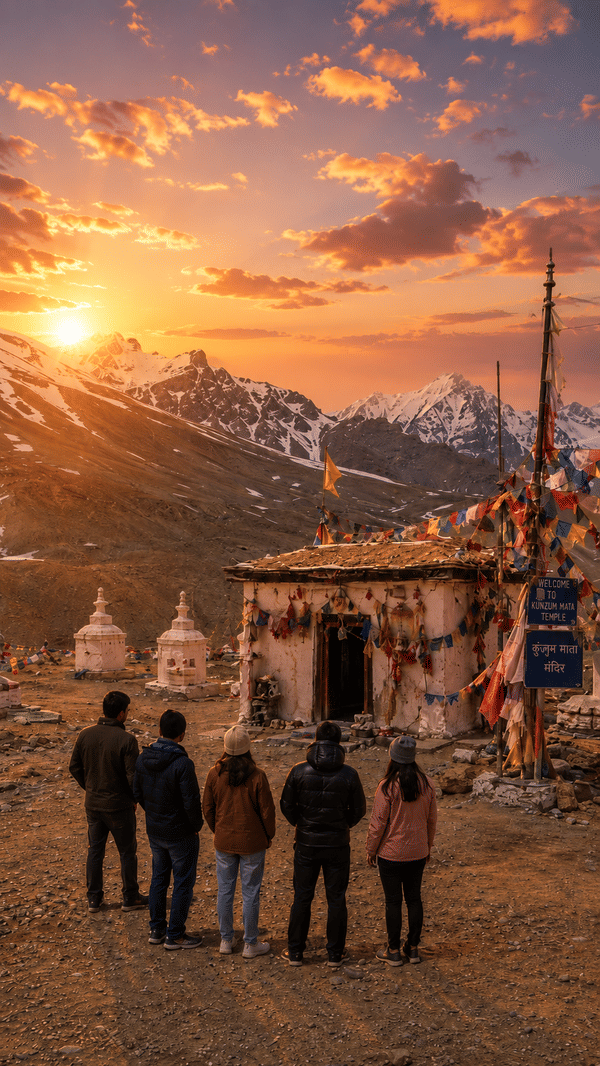
- Batal to Kunzum Pass (12 km | ~45 mins): A steep climb to 4,551 meters. It is tradition to circle the Kunzum Mata temple for a safe journey. Read our guide on Kasol to Spiti Valley to get complete details on such major stops on the Manali route.
- Kunzum Pass to Losar (19 km | ~1 hour): A sharp descent. Losar is the first village in Spiti where you must register your vehicle at the check-post.
- Losar to Kaza (56 km | ~2 hours): The road improves significantly. You’ll pass through the wide, stunning river valleys of Hansa and Kiato. Read detailed information on logistics for the Manali to Spiti Valley trip here.
How To Reach Spiti Valley From Delhi?
Many travelers researching how to reach Spiti Valley from Delhi choose flights or trains to Chandigarh / Kalka (Shimla). The most efficient way to plan your departure from the capital by road is via two ways:
Option 1: The Delhi - Shimla Route (Recommended)
Take a private Volvo / public bus from ISBT Kashmiri Gate to Shimla (8 - 10 hours). Switch to the 6:30 AM HRTC bus to Reckong Peo, then continue to Kaza. From here, you enter Spiti via Kinnaur. This is the best route for Spiti to avoid altitude sickness as you climb gradually over 3 days.
Option 2: The Delhi - Manali Route (Fastest)
Catch an overnight bus or drive to Manali (approx. 12 - 14 hours). From Manali, you can reach Kaza in a single day via the Atal Tunnel and Kunzum Pass (5:00 AM HRTC bus or shared taxi), though the risk of AMS (altitude sickness) is much higher.
Which Vehicle To Choose For Spiti Valley Road Trip?
1. By Private SUV or Self-Drive Car
If you are driving yourself or hiring a private cab, an SUV is strongly recommended, especially if you plan to cover the Manali-Kaza stretch.
- Best Vehicles: Mahindra Thar (4x4), Scorpio-N, Tata Nexon, Maruti Jimny, or Toyota Fortuner to handle water crossings) and rocky patches.
- Can you take a Hatchback/Sedan?
Via Shimla: Yes, if driven carefully. The road is 80% paved.
Via Manali: No. You risk damaging your oil sump or getting stuck in river crossings between Gramphu and Batal.
Rental Cost (2026): Self-drive SUVs from Manali/Chandigarh cost roughly ₹5,000–₹9,000 per day.
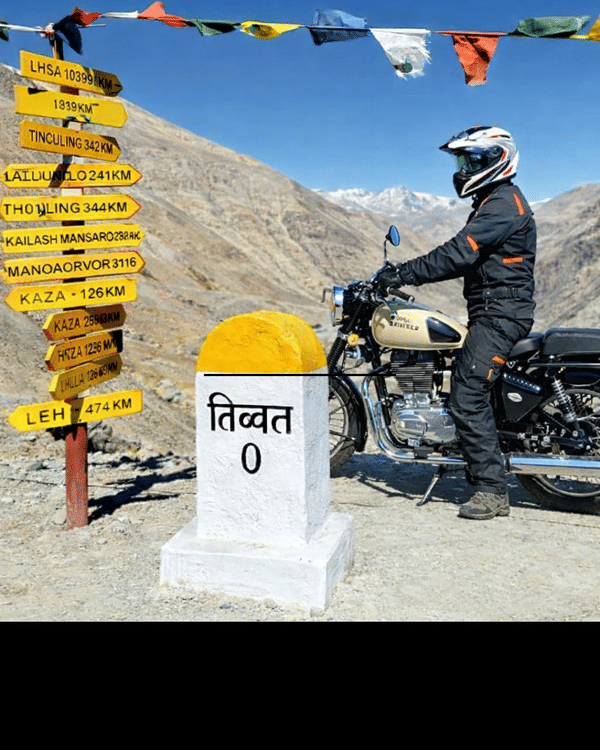
Spiti is a bucket-list destination for bike riders. For 2026, the Royal Enfield Himalayan 450 and Scram 411 are the top picks for their specialized mountain suspension. Read our guide on Shimla to Spiti Valley bike trip for your dream adventure.
- Recommended Bikes: RE Himalayan, KTM Adventure 390, or RE Classic 350 (for those who prefer a steady thump).
- Rental Cost: ₹1,500 – ₹2,500 per day (excluding fuel).
- Season: June to September is the prime window. Avoid late October as black ice starts forming on the passes.
- Essential Tip: Always carry a spare clutch cable, accelerator cable, and a puncture repair kit with a portable inflator.
The Himachal Road Transport Corporation (HRTC) is the most budget-friendly way to reach Spiti. These drivers are masters of the terrain, and the local bus is often the only vehicle moving when the weather turns rough.
Shimla To Kaza By Bus
The bus from Shimla to Reckong Peo leaves (ISBT Tutikandi) daily at 6:30 AM. It stops at Reckong Peo (at 4:00 PM) for the night, and you continue to Kaza the next morning at 7:00 AM.
Manali To Kaza By Bus
Two buses depart from the Manali Main Bus Stand daily between 5:00 AM and 5:30 AM once the Kunzum Pass opens (typically June to October). There is no online booking; you must reach the stand by 4:30 AM to secure a seat.
- Ticket Booking: For 2026, while you can book major routes (like Delhi to Shimla/Manali) on the HRTC Official Website, tickets for the final leg into Kaza are usually sold over the counter at the bus stand.
- Average Cost: One-way fares for the 2026 season range from ₹600 to ₹900 for the entire journey from the base cities.
- Seasonality: The Shimla-Kaza bus runs year-round (except during active heavy snowfall); the Manali-Kaza bus runs strictly from mid-June to mid-October.
Best Time To Travel To Spiti Valley
Depending on the month you choose for your Spiti Valley tour, you will see two completely different worlds. Here is the best time to visit Spiti Valley according to different seasons:
Summer (May to July)
This is the peak season. Both the Shimla and Manali routes are open by mid-June. It is the best time for high-altitude trekking and camping at Chandratal Lake. Read our detailed guide on Spiti Valley in Summer for proper trip planning.
Monsoon (August to September)
Spiti is a rain-shadow region, meaning it doesn't get much rain. However, the routes to get there (Kinnaur and Manali) are prone to landslides during this time. You need to avoid travel or keep a 2-3 days buffer.
Autumn (October)
The Spiti Valley turns golden, and the crowds disappear in October as black ice begins forming on roads. The weather is crisp and clear, though the Manali route usually closes by the end of this month.
Winter (November to April)
Only for the brave. The Manali route is closed. You can only enter via Shimla to experience "White Spiti." Expect temperatures as low as -25°C and the chance to spot the elusive Snow Leopard. Explore detailed information on logistics and planning for Spiti Valley in winter.
Permits Required For Spiti Valley Tour
Navigating the paperwork is straightforward, but essential for the border-adjacent areas.
- Indian Travelers: You do not need any special permit to enter Spiti Valley or Kaza. However, always carry a valid Government Photo ID (Aadhar Card or Driving License) for check-post registrations at Losar and Jhabri.
- Foreign Travelers: You must obtain an IProtected Area Permit (PAP/ILP) to travel from Shimla/Reckong Peo/Keylong, available at the District Collector's office in Shimla or Reckong Peo.
Requirements: A valid passport, visa, and at least 3-4 passport-sized photos. Permits are usually issued within half a day during working hours.
Sample Travel Plan For Spiti Valley: The Full Circuit
Here is a short breakdown of the 9-day sample itinerary plan for the full circuit Spiti Valley tour starting from Chandigarh / Delhi.
Day 1: Arrival in Shimla / Narkanda
- Drive from Chandigarh/Delhi. Stay in Narkanda to avoid Shimla’s traffic and enjoy the apple orchards.
Day 2: Narkanda to Sangla / Chitkul
- Follow the Satluj River into Kinnaur. Visit Chitkul, the last inhabited village near the Indo-Tibet border.
Day 3: Chitkul to Kalpa
- A short 3-hour drive. Catch the sunset over the sacred Kinner Kailash peaks.
Day 4: Kalpa to Tabo (Entry into Spiti)
- Stop at the Khab Confluence and the Gue Mummy (a 500-year-old natural mummy). Explore the 1,000-year-old Tabo Monastery.
Day 5: Tabo to Kaza (via Dhankar & Pin Valley)
Day 6: Kaza High-Altitude Villages
- Visit Hikkim (World’s highest post office), Komic (Highest village), and Langza (Fossil village with the giant Buddha statue).
Day 7: Kaza Sightseeing
Day 8: Kaza to Chandratal Lake
- Drive over the Kunzum Pass (4,551m). Trek 1.5 km to Chandratal. Stay in luxury campsites nearby.
Day 9: Chandratal to Manali (Departure)
- Cross the rugged Batal-Chhatru stretch. Pass through the Atal Tunnel to reach Manali by evening for your return bus/flight.
You can also check out our detailed itinerary and logistics for a perfect 8-day Spiti Valley trip.
- Total Distance: ~900 - 1,000 km (Circuit)
- Best Season: June to September (to ensure the Manali exit is open)
- Key Pass: Kunzum La (only open in summer)
- Night Halts: Narkanda (1), Chitkul (1), Kalpa (1), Tabo (1), Kaza (3), Chandratal (1)
Logistics And Travel Tips For Spiti Valley Tour
Here are the best travel tips for Spit Valley for every traveler:
- Gradual Acclimatization: Enter via Shimla and spend at least 2 nights in Kaza before visiting higher villages like Hikkim or Komik to prevent Acute Mountain Sickness (AMS).
- Hydration Rule: Drink 3-4 liters of water daily and carry portable oxygen cans for high passes like Kunzum La if coming from the Manali side.
- Fuel Strategy: Fill your tank to the brim at Reckong Peo (Shimla route) or Tandi (Manali route); the Kaza pump is the only one in the valley and often runs dry.
- Carry Enough Cash: ATMs in Kaza are notoriously unreliable. Withdraw all the cash you need in Shimla or Manali before heading deeper into the mountains.
- Mobile Network: Only Jio and BSNL (Postpaid) work with any consistency; download offline Google Maps as GPS will fail in the gorges.
- The 2 PM Nallah Rule: Cross glacial streams (nallahs) before 2:00 PM when traveling between Manali and Kaza to avoid high water levels caused by afternoon snowmelt.
- Vehicle Prep: Use a high-ground-clearance SUV (190mm+) and carry a full-size spare tire, air inflator, and tow rope for the rocky stretches.
- Expert Driving: If you aren't experienced with cliffside driving and "shooting stones," hire a local driver from Manali or Shimla who knows the terrain.
- Three-Layer Packing: Temperatures fluctuate wildly; pack thermals, a windproof down jacket, and sturdy waterproof trekking boots.
- UV Protection: The sun is extremely harsh at 12,000 feet; carry SPF 50+ sunscreen, polarized sunglasses, and heavy-duty lip balm.
- Permit Readiness: Indian travelers need a valid ID (Aadhaar); foreign nationals must carry 5+ photocopies of their passport/visa to get an Inner Line Permit in Shimla or Reckong Peo.
- Buffer Days: Always keep 1–2 "buffer days" in your itinerary to account for unpredictable landslides or road closures.
Final Thoughts On Reaching Spiti Valley
Reaching Spiti Valley is as much about the journey as the destination. Whether you take the rugged Manali shortcut or the steady, scenic climb through Kinnaur, Spiti remains one of the few places that forces you to slow down and respect the terrain. In 2026, even with better roads, the valley still demands solid preparation.
If you’re wondering how to reach Spiti Valley, then remember the best way is the one that fits your comfort level. If you're a first-timer, choose the Shimla route to acclimatize properly. If you crave adventure and are short on time, the Manali route is your best bet.
So what are you waiting for? Book your Spiti Valley tour with WanderOn today for incredible experiences throughout your journey.