


Spiti Valley is one of those places that doesn't need a filter. And nowhere is that more true than at dawn. The sunrise spots in Spiti Valley are among the most breathtaking in all of India and a trip to Spiti Valley isn't complete without catching at least one.
Spiti sits at over 3,800 metres in the cold desert of Himachal Pradesh. The air is thin, dry, and dust-free. No haze, no light pollution, no humidity. Just razor-sharp Himalayan peaks turning from deep blue to purple to amber to gold as the sun climbs over the ridgeline. It moves faster than you expect.
The landscape makes it even better. Ancient clifftop monasteries in Spiti, high-altitude lakes at 14,000 feet, villages perched on ridges with 360° views. Every vantage point frames something extraordinary.
The best sunrise in Spiti Valley looks different depending on where you stand, the Buddha statue at Langza with a 6,300 m peak glowing behind it, Key Monastery with the Spiti River turning gold below, or Chandratal Lake perfectly mirroring the morning sky.
This blog covers all the major sunrise spots in Spiti, what you'll see and how to plan it right for the perfect shot.
Comparing The Top 8 Sunrise Spots In Spiti Valley
1. Langza Village

Altitude: 4,400 m (14,500 ft) |Distance from Kaza:~14 km
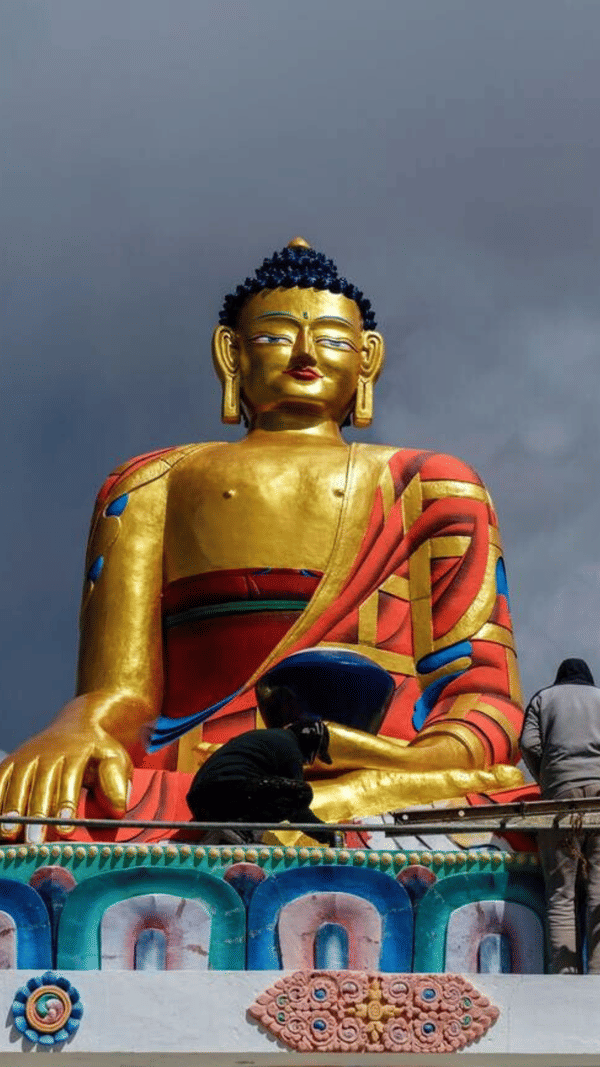
Langza is one of the top sunrise spots in Spiti Valley that almost every photographer puts at the top of their list. The giant Buddha statue, painted vivid white and gold, facing east, stands at the edge of the village against an open sky.
The Langza Buddha Statue sunrise is the kind of frame that looks almost too good to be real: first light slowly illuminating the 6,300 m Chau Chau Kang Nelda peak behind it, while the statue glows in the foreground.
What makes it special for sunrise:
- The Chau Chau Kang Nelda peak rises directly behind the village, glowing amber and gold in the early light
- The Buddha statue in the foreground makes for a natural compositional anchor; one of the top photography spots in Spiti Valley.
- The village has just a handful of houses and almost no noise — silence + colour + altitude is a rare combination
- You also get a 360° view of the surrounding valley, completely unobstructed
How to plan it:
- Spend the night in a stay in Langza (a few options exist, book ahead in peak season).
- Step out around 15–20 minutes before sunrise. The light changes fast at this altitude.
- Note: Langza is also Spiti's fossil village, marine fossils from the ancient Tethys Sea are found in the rocky hillsides.
- Combine your sunrise with a morning walk to look for them.
Best-Selling Spiti Trips

Chandigarh To Spiti Valley Road Trip | Complete Himalayan Expedition

Spiti Valley Adventure From Chandigarh: Sangla, Kalpa & Tabo Special

Spiti Valley Road Trip: Chandratal & Pin Valley Circuit
2. Key Monastery (Ki Gompa)

Altitude: 4,166 m (13,668 ft) |Distance from Kaza:~12 km
Key Monastery is the largest monastery in Spiti and arguably its most iconic image. The whitewashed complex stacks up the side of a rocky hill like something out of a painting, with the Spiti River winding below it in the valley.
The Key Monastery sunrise is one of the most photographed moments in all of Himachal Pradesh. When golden light hits the monastery walls and the peaks behind light up in sequence, it's the kind of thing you don't forget. It’s one of the best sunrise places in Spiti Valley.
What makes Key Monastery special for sunrise:
- The east-facing hillside means Key catches the first light beautifully, especially in summer
- You can shoot from multiple angles — from the road below (classic wide shot with river in frame), from the monastery courtyard, or from the ridge above
- The classic postcard angle is actually from the opposite side of the river — cross over and hike up a short ridge for that shot
How to plan it:
- Kaza is just 12 km away, so you don't need to overnight here unless you want to.
- Leave Kaza by 5:00–5:30 AM (earlier in summer). The monastery has basic accommodation too.
- Pro tip: Go on a clear morning after a night of rain; the air is dust-free and the peaks look razor-sharp.
3. Chandratal Lake

Altitude: 4,300 m (14,100 ft)| Distance from Kaza:~60 km (via Batal road)
Chandratal, the Moon Lake, is shaped like a crescent and sits in a bowl of mountains near the Manali road. It's primarily known for its insane night skies (the Milky Way from here needs to be seen to be believed), but the sunrise is just as stunning.
The still water reflects the changing sky in real time, deep blue turning to pink, then gold, then full daylight and the surrounding peaks get hit with light in slow succession. Among all Spiti Valley photography sunrise spots, Chandratal is in a league of its own.
What makes Chandratal special for sunrise:
- The lake reflection at sunrise is one of the best mirror shots in all of Himachal Pradesh
- No settlements nearby, so there's near-zero light pollution and zero noise at dawn
- The crescent shape of the lake means the light comes in at a perfect angle in the early morning
- September–October mornings here are cold but crystal clear — the best for photographs
How to plan it:
- Camping near the lake (camps are set up 2–3 km from the shore — lakeside camping is not allowed).
- Wake up around 4:30–5:00 AM and walk to the lake edge. Carry a good torch and layers — it gets very cold overnight.
- Important: Chandratal is only accessible from June to mid-October. Road conditions from Batal can be rough. A 4WD vehicle is strongly recommended.
4. Dhankar Monastery & Lake

Altitude:~3,890 m (12,800 ft) |Distance from Kaza:~70 km (via Tabo road)
Dhankar Monastery is one of the most dramatic monasteries on earth. It sits on a thin pinnacle of rock, literally on the edge of a cliff, above the confluence of the Spiti and Pin rivers.
At sunrise, the light hits the cliff face first and the ancient mud-and-stone structure glows. The two rivers below catch the early colour in a way that feels almost sacred, making it one of the best sunrise places in Spiti Valley.
What makes Dhankar Monastery special for sunrise:
- Two rivers meeting, framed by towering canyon walls — one of the most striking natural compositions in Spiti
- The 1,000-year-old monastery looks like it grew out of the rock — dawn light reveals that texture beautifully
- Hike above the monastery for a sweeping 360° view of the valley during golden hour in Spiti
- Far fewer people here than Key or Langza — you often have it to yourself
The Dhankar Lake sunrise trek is the real bonus. A 1.5-hour Dhankar Lake hike above the monastery takes you to a turquoise high-altitude lake at 4,100 m. Go right after sunrise — the morning light on still water up there is something else entirely.
How to plan it:
- Dhankar is best as an overnight stop if you're travelling between Kaza and Tabo.
- Stay at the basic guesthouse near the monastery, wake up before 5:30 AM, and walk up to the viewpoint.
5. Komic Village

Altitude: 4,587 m (15,027 ft)| Distance from Kaza:~19 km
Komic is one of the highest motorable villages on Earth. Here you can see the best sunrise in Spiti Valley from the Roof of the World. At this altitude, sunrise feels different, the air is thinner, the colours are more intense, and the sheer width of the view is staggering.
You can see mountain range after mountain range, all the way to the horizon, with nothing blocking the sky in any direction. If you want the best sunrise in Spiti Valley from the highest possible vantage point accessible by road, Komic is it.
What makes Komic special for sunrise:
- 180° panoramic view of the surrounding Himalayan ranges — completely unobstructed
- Because it's so high, the sky gets light earlier than lower villages
- The tiny Tangyud Monastery here is a beautiful foreground element in the morning light
- Far fewer visitors than Langza or Key so sunrise here is often a private experience
How to plan it:
- Spend the night in one of the very few stays in Komic or do a very early drive up from Kaza (road is steep and rough — SUV/4WD needed).
Combine with Langza and Hikkim for a full day village circuit.
6. Kibber Village

Altitude: 4,270 m (14,200 ft)| Distance from Kaza:~17 km
Kibber sits on an open plateau with dramatic cliff drops on one side and snow peaks on the other, making it one of the best places to see sunrise in Spiti. It's the base for wildlife watching in the Kibber Wildlife Sanctuary (snow leopards in winter!), but it's also one of the cleanest sunrise spots in Spiti — wide open, uncluttered, deeply peaceful.
What makes Kibber special for sunrise:
- The plateau setting means you see the full horizon — no ridges blocking the sunrise direction
- The canyon view from the edge of the village which looks out over a dramatic gorge, lights up beautifully in morning gold
- Great base if you also want to catch the Key Monastery sunrise (just 5 km away)
- The nearbyChicham Bridge, one of Asia's highest suspension bridges, is worth a visit right after sunrise
How to plan it:
- Kibber has homestays and a few guesthouses. Stay overnight and step out early.
- The road from Kaza is paved and accessible for most vehicles.
Check Out Popular Spiti Tour Packages
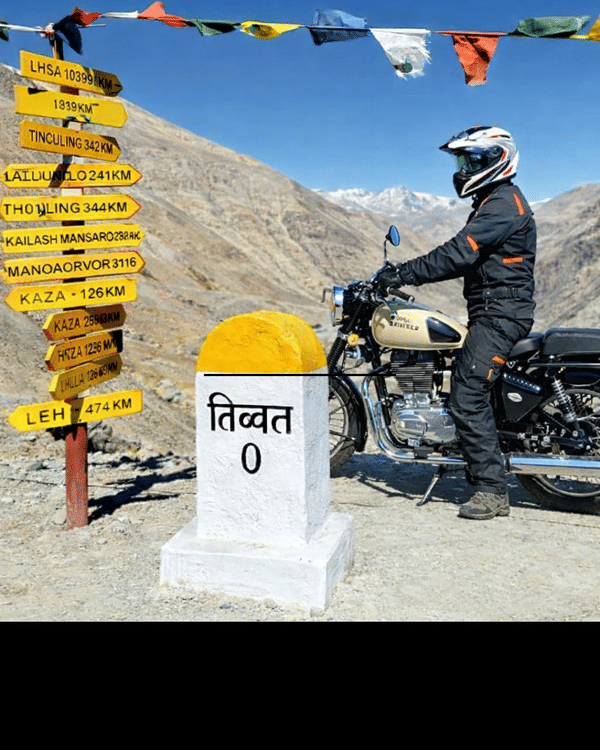
Thrilling Spiti Valley Bike Trip | Ride To The Edge At Lepcha La
Spiti Valley Full Circuit Road Trip 7 Days | Value Saver Package from Delhi

Spiti Valley Tour From Manali: Chandratal Camping & Kibber Wildlife
7. Losar Village

Altitude: 4,080 m| Distance from Kaza:~55 km
Losar is the first village you hit entering Spiti from the Manali side, and most people drive straight through it. That's a mistake. It sits in a wide open valley with unobstructed views of the surrounding peaks and at sunrise, the barren landscape turns every shade of orange and rust you can imagine.
What makes Losar special for sunrise:
- Wide valley floor means a full, unblocked horizon — perfect for watching the light spread across the mountains
- The old village mud houses and prayer flags make for great foreground elements
- Almost zero tourists at dawn — completely raw and unhurried
- Great stop if you're entering Spiti early morning via Kunzum Pass
How to plan it: Spend one night at one of the stays in Losar. It's a natural first night halt if you're coming from Manali.
8. Tabo Village

Altitude: 3,280 m| Distance from Kaza:~47 km
Tabo is home to one of the oldest continuously functioning monasteries in the world — over 1,000 years old and built entirely from mud and stone. At sunrise, the soft light hits those ancient walls in a way that makes the whole complex look like it's from another era entirely. Which, in many ways, makes it one of the best places to see the sunrise in Spiti Valley.
What makes Tabo special for sunrise:
- The mud-brick monastery complex glows a deep ochre in early morning light — unlike anything else in Spiti
- The wide Spiti River valley stretching behind it adds beautiful depth to any frame
- Tabo village is quiet and unhurried — sunrise here feels meditative, not like a photography sprint
- Combine with the cave temples carved into the hillside just above the monastery
How to plan it: Tabo is a natural overnight stop between Kaza and Shimla. Wake up early, walk to the monastery — it's right in the village.
Best Time For Sunrise In Spiti Valley: Month By Month

June to October is when Spiti is accessible and sunrise is worth the effort. Here is a month-by-month breakdown of what you’ll find there:
- June to July: Long days, sunrise around 5:30–6:00 AM. Snow still on peaks. Dramatic, ideal for visiting Spiti Valley photography sunrise spots.
- August to September: Best overall — sky is clearest, peaks are sharpest after the rains settle west of the ranges. Sunrise around 6:00–6:30 AM. Also a great window for the Dhankar Lake sunrise trek before temperatures drop.
- October: Cold (sub-zero at night), but the clarity is extraordinary. Sunrise around 6:30–7:00 AM. Fewer crowds.
Winter (November–May): Most routes into Spiti close. Only the Shimla–Kinnaur route stays accessible, and even that is tough. Winter Spiti sunrise has its own raw, snowy magic if you can manage the conditions.
What Time Does The Sun Rise In Spiti Valley?
Spiti Valley in summer (June–July), observes sunrise at roughly 5:15–6:00 AM. By October it shifts to around 6:30–7:00 AM. At altitude, the light changes quickly so you want to be in position at least 20–30 minutes before the actual sunrise to catch the alpenglow on the peaks.
Tips To Nail Your Spiti Valley Sunrise Points
- Stay the night close to your sunrise spot. Driving up in the dark on Spiti roads is risky. Langza, Komic, and Kibber all have homestay options.
- Carry layers. Pre-sunrise temperatures can drop to -5°C even in summer. Your fingers need to work to operate a camera.
- Don't over-plan for altitude. If you've just arrived in Kaza, don't immediately head to Komic (4,587 m) for sunrise. Give yourself 1–2 days to acclimatise first.
- Check the latest Spiti weather the night before. A single cloud bank on the eastern horizon can kill a sunrise. Ask locals — they'll know.
- Wide-angle + tripod is your best kit combination for all sunrise spots in Spiti. A tripod helps in the low pre-dawn light and keeps your shots sharp.
Suggested for you:

Spiti Valley Adventure Trip From Delhi: Kinnaur-Spiti Circuit
Spiti Valley Group Trip with Chandratal: Summer Edition

Frozen Spiti Backpacking - Bliss in Budget -edited
Which Is The Best Sunrise Spot In Spiti Valley For You?

All these sunrise spots in Spiti Valley deliver memorable mornings; the right pick comes down to the kind of sunrise you want to take home.
- For the Iconic Shot: Key Monastery is tough to beat for that classic, postcard frame.
- For Spiritual Serenity: Langza’s Buddha glowing at dawn sets up a quiet, reflective moment.
- For Pristine Reflections: Chandratal Lake shines on calm mornings when the water turns mirror-smooth.
- For the Adventurous Soul: The Dhankar Lake trek makes you work for it, and rewards you with big, high-angle views.
- For Ultimate Panoramas: Komic Village brings the top-of-the-world scale, with wide horizons and raw terrain.
- For Photographers: Tabo's ochre mud monastery in early morning light is unlike anything else in Spiti.
There’s a rare mix of raw, almost austere landscapes, and a stillness that feels deeper at first light in Spiti at dawn. Pick any of these sunrise spots in Spiti, stay the night nearby, set your alarm, and step outside into the cold dark. In 20 minutes, the Himalayas will put on a show that no photograph fully captures.
WanderOn offers well-planned group departures and customized itineraries to Spiti Valley throughout the travel season. Get in touch with our team today and let’s plan your adventure!
Frequently Asked Questions
Which is the most photographed sunrise spot in Spiti?
Key Monastery is the most photographed sunrise spot in Spiti Valley. You can see the whitewashed complex on a rocky hill with the Spiti River winding below makes for the classic Spiti frame. Langza's Buddha statue at dawn is a close second.
Do I need a trek to see the sunrise at Dhankar Lake?
Yes. It's a 1.5-hour uphill hike from Dhankar Monastery. No road access. The trail is manageable but steep. You need to wear proper shoes, start before 4:30 AM, and carry water and a torch.
What should I wear for a sunrise shoot in Spiti?
Layer up with thermal base, fleece, and a windproof jacket at minimum. Pre-dawn temperatures drop to -5°C even in summer. Gloves are essential if you're handling a camera for an extended period.
Can I see the Milky Way and Sunrise in Spiti at the same time?
Not exactly together. The Milky Way is visible in the hours before dawn, and fades as sunrise approaches. Chandratal and Langza let you shoot both in the same morning if you're out from 2–3 AM with a clear sky.
Is Chandratal Lake good for sunrise photography?
Chandratal is one of the best spots for sunrise in Spiti. The crescent-shaped lake sits in a mountain bowl with zero light pollution. On calm mornings the water mirrors the sky perfectly, the reflection shots here are hard to beat anywhere in Himachal.


