


Planning a road trip to Spiti Valley? Starting in Chandigarh is a great idea! A Chandigarh to Spiti Valley road trip is the adventure of a lifetime. This roughly 500 km journey isn't just long but a rough climb into one of the most remote places on Earth.
While Chandigarh to Spiti Valley road conditions are technically year-round via Shimla, winter brings its own rules. As of February 2026, the Manali route is closed due to heavy snow, making the Kinnaur highway your only entry. Watch for "black ice" near Nako and Malling Nallah, especially if you're driving early or late.
To find the best itinerary for Chandigarh to Spiti Valley, timing is everything. A 10-day Spiti trip is ideal as it lets you stop in Kinnaur to adjust to the altitude before hitting the 12,500-foot heights of Kaza.
Whether you want to see the green orchards of summer or the "White Spiti" of winter, this guide covers the must-know details for a safe, smooth journey.
Chandigarh To Spiti Valley: Quick Details

- Total Distance: Approximately 500–520 km via the Shimla-Kinnaur route
- Duration: 8 to 10 days for a safe and comfortable circuit
- Primary Route (Open Now): Chandigarh → Shimla → Reckong Peo → Kaza (NH5 & NH505)
- Current Road Status (Feb 2026): Shimla Route is open but requires a 4x4 or snow chains due to black ice; Manali route remains strictly closed until May/June
- Best Time to Visit: May to October for the full circuit; Jan to March for the "White Spiti" snow leopard expeditions
- Highest Point: Kunzum Pass (4,590m) on the Manali exit; Kaza (3,800m) is the main hub
- Connectivity: BSNL Postpaid works best; Jio/Airtel are patchy once you cross Jhabri
- Permits: Not required for Indian citizens (carry Aadhaar); Inner Line Permit (ILP) required for foreign nationals (available at Shimla/Reckong Peo)
Our Most Popular Spiti Valley Packages

Spiti Valley - Exclusive Escape with Sangla Holi Celebration

Frozen Spiti Expeditions
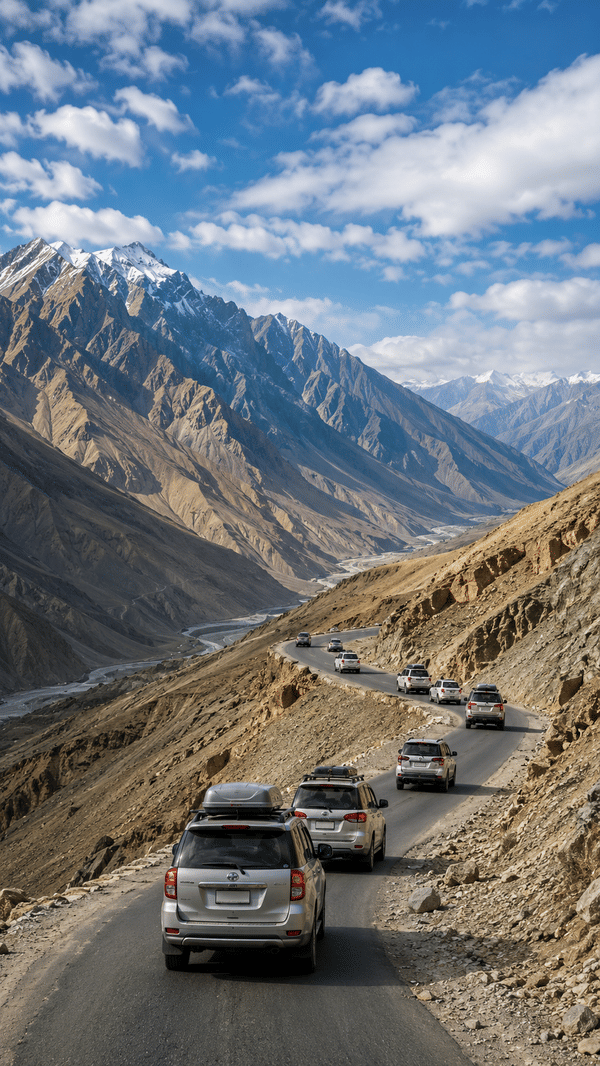
Full Spiti Valley Circuit Group Tour From Delhi: Shimla To Manali

Spiti Valley Road Trip: Chandratal & Pin Valley Circuit
Which Is The Best Chandigarh To Spiti Valley Route?

When driving from Chandigarh to the Spiti, your route choice is the single most important decision you'll make. It determines not just what you see, but how your body handles the thin mountain air.
There are two primary Chandigarh to Spiti Valley routes and most travelers choose to combine them into one epic "Spiti Circuit”.
Chandigarh - Shimla - Spiti Route
Route: Chandigarh → Shimla → Narkanda → Sarahan → Sangla/Chitkul → Kalpa → Nako → Tabo → Kaza
This is the gold standard for first-timers for a Chandigarh to Spiti Valley trip. It’s longer, but it’s a life-saver for your health. You start at an altitude of 321 m (Chandigarh) and climb gradually to 3,800 m (Kaza). This slow ascent allows your body to produce more red blood cells, drastically reducing the risk of AMS (Altitude Sickness).
- Chandigarh to Spiti Valley Distance via Shimla:~520 km (Spread over 3 - 4 days)
- Route Status: Technically year-round, though heavy winter snow can cause 1 - 2 day temporary blocks; the only way for winter travel
Chandigarh - Manali - Spiti Route
Route: Chandigarh → Mandi → Manali → Rohtang Pass/Atal Tunnel → Kunzum Pass → Kaza
This route is for the impatient and the adventurous. It’s shorter in distance but much harder on the vehicle and the lungs. It’s faster, so if you only have 4-5 days, this is the only way. However, you jump from 2,000 m (Manali) to 4,500 m (Kunzum Pass) in just a few hours. Headaches and nausea are extremely common here.
- Chandigarh to Spiti Valley Distance via Manali:~450 km (Can be done in 2 long days)
- Road Condition: Chandigarh to Spiti Valley road conditions via Manali are rough. Expect "Nallahs" (water crossings) and gravel paths. Between Gramphu and Batal, the "road" is often just a suggestion.
- Route Status: Mid-June to early October only (the Kunzum Pass, which connects Lahaul to Spiti, remains strictly closed in February)
How To Go From Chandigarh To Spiti Valley?

Getting to Spiti is a marathon, not a sprint. Depending on your vibe like backpacker, road-tripper, or adrenaline junkie, here are your three best options.
1. Chandigarh To Spiti By Bus (The Budget Choice)
This is the most authentic way to travel from Spiti valley from Chandigarh. The Himachal Road Transport Corporation (HRTC) operates the "Life-Line of Spiti," and the drivers are the true masters of these roads. However, you need to be patient on your journey from Chandigarh to Spiti by bus.
- Route: Chandigarh → Shimla → Reckong Peo → Kaza
- Travel Duration: 20 to 24 hours (if done continuously)
- Cost: Approximately 1,000 INR per person
- Note: There is a direct bus from ISBT Sector 43 (Chandigarh), but it is better to break the journey at Reckong Peo. Book your tickets at the counter at Sector 43 or online via the HRTC portal.
Luxury Bus Rentals: For those traveling in larger groups, private luxury bus rentals offer the most comfort, with prices starting from ₹30/km for 22-seater mini-buses to ₹65/km for premium 56-seater Volvo coaches, plus driver allowances (~₹1,000 - ₹1,500/day).
2. Chandigarh To Spiti By Private Vehicle (4x4, Taxis, & Cabs)
If you value flexibility and want to stop for photos at every turn, a private vehicle is the way to go.
- Route: Most take the Shimla Route (entry) and the Manali Route (exit) to complete the full circuit.
- Travel Duration: 8 to 10 days for the full trip
- Cost: 35,000 to 55,000 INR for a full cab rental (Innova/Scorpio). Shared taxis from Shimla/Manali cost about 2,500 INR per seat.
- Note: For the Manali-Kaza stretch, a High Ground Clearance vehicle is non-negotiable. Standard sedans are likely to scrape their underbelly at the water crossings near Batal.
3. Chandigarh To Spiti By Bike (The Adventure Path)
Riding to Spiti is a dream for motorcyclists. It is physically demanding but offers the most immersive experience.
- Route: Start from Chandigarh via Shimla to allow your body to adjust to the altitude gradually
- Travel Duration: 9 to 11 days
- Cost: 1,200 to 2,500 INR per day for bike rentals (like a Himalayan) plus fuel costs
- Note: Carry a basic puncture kit and extra fuel cans. While there are petrol pumps in the valley (Kaza), the stretch between Kaza and Manali has zero refueling points for over 200 km.
If you’re still weighing your options between a self-drive or a guided tour, check out our comprehensive travel guide to Spiti Valley road trips for a deeper look at the logistics.
Best Time For Chandigarh To Spiti Valley Trip

Because of the high-altitude passes, the road to Spiti Valley from Chandigarh doesn't just get bad in off-seasons; it completely disappears under ten feet of snow. Here is a breakdown of the three distinct seasons for this road trip.
June to September (Best for the Full Circuit)
This is the best time for Chandigarh to Spiti Valley trip to complete the entire "Spiti Loop" (Chandigarh - Shimla - Kaza - Manali - Chandigarh). The weather is pleasant (15 to 25 degrees Celsius), all guest houses are open, and you can visit Chandratal Lake, which usually opens by mid-June.
- Route Status: Both the Shimla and Manali routes are open
- Travel Duration: 9 to 12 days (entire circuit)
Please Note: While Spiti is a "rain-shadow" area (it doesn't rain much there), the road from Chandigarh to Shimla can face landslides during the monsoon (July-August). Always check the weather forecast for the foothills before starting and keep buffer days in your itinerary.
Since weather in the high desert can be a riddle, you might want to look at our month-by-month Spiti weather guide to see exactly what to expect in terms of temperature and snowfall
April to May & October: Shoulder Season
If you want to avoid the summer crowds and see the valley in a raw, transitional state, this is your time. In April/May, you’ll see massive "snow walls" on the sides of the road. In October, the valley turns a brilliant golden-orange as the local flora changes color.
- Route Status: Only the Shimla route is reliably open. The Manali route (Kunzum Pass) is usually blocked by snow until late May.
- Travel Duration: 7 to 9 days (Entry and Exit via Shimla)
Please Note: It is significantly colder than summer. Nights can drop to -5 degrees Celsius, and you won’t be able to visit Chandratal Lake as the road to it stays closed.
November to March (Best For "White Spiti" Expedition)
Winter Spiti is not a "tourist" trip; it is an expedition for those who want to see a completely frozen world. If you want to spot the elusive Snow Leopard or see the Key Monastery covered in thick white snow, this is the best time for Chandigarh to Spiti Valley trip.
- Route Status: Enter and Exit via Shimla only. The Manali route is closed for 6 months.
- Travel Duration: 8 to 10 days
Note: Temperatures drop to -25 degrees Celsius inSpiti Valley in winter. Most hotels are closed, so you will stay in local homestays with "dry toilets" (no running water as pipes freeze). You must carry heavy-duty thermal gear and a 4x4 vehicle with snow chains for tough Chandigarh to Spiti Valley road conditions.
Places To Visit During Chandigarh To Spiti Valley Road Trip
The journey from Chandigarh to Spiti Valley is a dramatic transition from the lush apple orchards of Kinnaur to the stark, lunar landscapes of Spiti. Here are the must-visit places to visit during Chandigarh to Spiti Valley road trip that define this legendary route, listed in the exact order you will encounter them.
1. Shimla: The Colonial Queen

Shimla is the perfect first stop to ease into the mountain vibe. This former British summer capital is famous for its pedestrian-only Mall Road and the neo-Gothic Christ Church at the Ridge. These places to visit in Shimla feel like a mix of an old English town and a vibrant Indian hill station, offering the last bit of "luxury" dining and shopping you’ll see for a while.
- Location:~115 km from Chandigarh
- Pro-tip: Walk the Ridge at sunset; the views of the distant snow peaks against the orange sky are legendary.
2. Kufri: The Adventure Hub
Just past Shimla, Kufri is the place for those who want a quick adrenaline hit. It’s the highest point in the Shimla district and is famous for its Himalayan Nature Park, where you can spot rare animals like the Snow Leopard and Brown Bear. If you're visiting in winter, the slopes here turn into a popular skiing destination.
- Location:~15 km ahead of Shimla
- Pro-tip: Enjoy the view from Mahasu Peak; on a clear day, where you can see the sacred peaks of Badrinath and Kedarnath in the distance.
3. Narkanda: The Gateway To The High Hills

Narkanda is where the air truly begins to chill. Located higher than Shimla, it’s surrounded by dense pine and fir forests and is famous for its massive apple orchards. It feels like a cozy, quiet mountain retreat. The main highlight is the drive up to Hatu Peak, which offers a 360-degree view of the inner Himalayas. It’s the perfect spot to start your journey away from the city noise.
- Location:~175 km from Chandigarh; ~2 hours past Shimla
- Pro-Tip: Don't miss the Hatu Mata Temple at the peak; the intricate wooden carvings are a masterpiece of Himachali craftsmanship.
4. Sarahan: The Gateway to Kinnaur
Sarahan is a small, beautiful village that serves as the "Gateway to Kinnaur” and is one of the best places to visit in Himachal Pradesh. It is dominated by the majestic Bhimakali Temple, one of the 51 Shakti Peethas.
The village feels deeply ancient and serene, with a backdrop of the Shrikhand Mahadev peak. Walking through the temple complex feels like being in a period movie, the stone and wood architecture is over 800 years old.
- Location:~100 km from Narkanda; ~17 km uphill detour from Jeori on the main highway
- Pro-Tip: Try to attend the morning Aarti (prayer) at the temple; the energy and the sound of the traditional instruments are unforgettable.
5. Sangla: The Valley of Light

Sangla Valley (also known as Baspa Valley) is widely considered one of the most beautiful valleys in the Himalayas and is a major stop on your Chandigarh to Spiti Valley trip. It is lush green, filled with apricot and apple trees, and the Baspa River flows right through the center. It feels vibrant and alive. You can visit the Kamru Fort, which looks more like a tower and holds great religious significance for the locals.
- Location:~95 km from Sarahan; ~18 km before Chitkul.
- Pro-Tip: If you’re there in August or September, you can pick fresh apples directly from the orchards (with the owner's permission, of course!).
6. Chitkul: The Edge of India
Chitkul is famously known as the last inhabited village on the Indo-Tibet border and is a major stop on the best itinerary for Chandigarh to Spiti Valley. It feels like stepping into a postcard, with its traditional wooden houses set against the backdrop of the turquoise Baspa River and snow-capped peaks.
It’s a place for slow travel where you can walk down to the riverbank, breathe the cleanest air in the country, and enjoy a meal at the "Hindustan ki Aakhri Dhaba”.
- Location:~245 km from Chandigarh (A 2-hour detour from the main highway at Karcham)
- Pro-Tip: Plan an overnight stay to experience the silence of the valley after the day-trippers leave.
7. Reckong Peo: The Gateway to the Peaks

Reckong Peo is the administrative heart of Kinnaur and your most important logistics stop. It is a busy, sloping town that offers a front-row seat to the massive Kinner Kailash range. Most travelers stop here to refuel and secure their Inner Line Permits before heading into the deeper Spiti wilderness.
- Location:~230 km from Chandigarh; 7 km below Kalpa
- Pro-tip: Witness the sunrise over Kinner Kailash; the 6,050-meter peak turns bright gold as the first rays hit the summit.
8. Kalpa: The Kinner Kailash Viewpoint
Kalpa is an apple-growing hub that offers the most dramatic views of the Kinner Kailash range. The highlight here is the "Sacred Shivling" peak, which changes colors throughout the day. It feels spiritual and serene, especially when the morning temple bells from the local Buddhist-Hindu temples ring through the thin mountain air.
- Location:~260 km from Chandigarh; ~200 km before Kaza
- Pro-Tip: Visit the "Suicide Point" on the way to Roghi village for a thrilling (but safe) cliff-side photo op.
9. Nako Village: The Lake in the Sky

Nako Village is the first village where you truly feel the "Trans-Himalayan" vibe. It’s built around a sacred lake that reflects the surrounding brown mountains like a mirror. The village is a maze of stone walls and prayer wheels. It feels ancient and dusty in the best way possible. Walking through the narrow lanes makes you feel like you've traveled back 500 years.
- Location:~310 km from Chandigarh; ~110 km before Kaza
- Pro-Tip: Climb to the prayer flags on the hill above the lake for the best panoramic view of the entire village.
10. Gue Monastery: The 500-Year-Old Mummy
Gue Monastery is one of the most surreal stops in the Himalayas. It houses the naturally preserved mummy of Sangha Tenzin, a Buddhist monk who died while meditating over 500 years ago. The monastery is stark, silent, and sits in a desolate valley that feels like the end of the world. It’s a chilling but fascinating reminder of the region’s deep spiritual history.
- Location: A small detour between Nako and Tabo; ~80 km before Kaza
- Pro-Tip: The mummy’s hair and nails are said to still be growing; ask the local monk for the history of the "living" mummy.
Places To Visit In and Around Spiti Valley
Once you reach the heart of the valley, the landscape shifts into a high-altitude desert dotted with ancient monasteries and sky-high villages. These iconic spots are best explored using Kaza as your basecamp for day trips and local adventures.
1. Tabo Monastery: The Ajanta of the Himalayas

Tabo is home to a UNESCO World Heritage monastery that is over 1,000 years old. Unlike the grand, fortress-style Key Monastery, Tabo Monastery is made of mud and sits on flat ground. Inside, it is dark and silent, filled with some of the most well-preserved Indo-Tibetan art in the world. It feels incredibly humble and deeply spiritual.
- Location:~350 km from Chandigarh; ~48 km before Kaza
- Pro-Tip: Flash photography is strictly banned inside to protect the ancient murals; just soak in the silence instead.
2. Dhankar Monastery: The Hanging Palace
Dhankar Monastery is arguably the most spectacular setting in Spiti. The monastery is built on a razor-sharp cliff edge overlooking the confluence of the Spiti and Pin Rivers. It feels precarious and awe-inspiring. You can explore the old fort ruins and look straight down into the abyss. It’s the kind of place that makes your heart race just by looking at it.
- Location:~30 km before Kaza (A short uphill detour from the main road)
- Pro-Tip: If you have an extra 2 hours, trek up from the monastery to Dhankar Lake for a peaceful escape from the tourist trail.
3. Pin Valley National Park: The Land of the Snow Leopard

Pin Valley is a sharp contrast to the rest of Spiti. While Spiti is brown and arid, Pin Valley has patches of green and a much wilder, more secluded energy. It is the home of the elusive Snow Leopard and the Siberian Ibex.
The valley feels raw and untouched, with the Pin River cutting through dramatic rock formations. A visit to the Kungri Monastery here offers a look at a different sect of Buddhism (Nyingma) not commonly found in the rest of the valley.
- Location:~50 km from Kaza (Entry is via the Attargo Bridge on the Tabo-Kaza road).
- Pro-Tip: Drive all the way to Mud Village (the last point in the valley). It is the base for famous treks and offers a peaceful, "end-of-the-world" vibe that Kaza lacks.
4. Kaza: The Heart of the Cold Desert
Kaza is the administrative headquarters and the only "town" in Spiti. It’s where the ruggedness of the mountains meets a touch of modern life. It feels like a high-altitude basecamp; it's busy, dusty, but full of character.
You can spend your time exploring the Kaza Monastery, walking through the local market for handmade woolens, or sitting in cozy cafes like "Himalayan Cafe" or "The Sol Cafe" to meet fellow travelers from across the globe.
- Location:~370 km from Chandigarh; central hub of Spiti Valley.
- Pro-Tip: Kaza is your "logistics HQ." Use your time here to withdraw cash, refuel, and get any minor vehicle repairs done before heading to more remote areas.
5. Key (Ki) Monastery: The Icon of Spiti

The most photographed spot in the valley, Key Monastery is a massive fort-like structure perched on a conical hill. Inside, it’s a maze of narrow stairs and ancient murals. It feels incredibly peaceful despite its fame. You can sit with the monks, drink butter tea, and watch the Spiti River snake through the valley floor thousands of feet below.
- Location: 14 km from Kaza
- Pro-Tip: If you visit during the morning prayer (around 7:00 AM), you can hear the monks chanting, which is a soul-stirring experience.
6. Kibber: The Limestone Village
Kibber is one of the highest permanently inhabited villages in India, sitting at an altitude of 4,270 m. What makes it stand out is its unique architecture, unlike other Spiti villages that use mud, the houses here are built almost entirely of stone.
It feels like a fortress in the sky, surrounded by towering limestone mountains. It’s the primary gateway to the Kibber Wildlife Sanctuary, and for many, it’s the best place in the world to attempt a sighting of the "Grey Ghost"—the Snow Leopard.
- Location:~18 km from Kaza; about 6 km ahead of Key Monastery.
- Pro-Tip: If you have the energy, take the short hike up to the Kibber Monastery at the top of the village for an incredible aerial view of the entire valley and the sprawling stone houses below.
7. Chicham Bridge: Asia’s Highest Suspension Bridge

A marvel of modern engineering, Chicham Bridge hangs over a 1,000-foot-deep gorge called the Samba Lamba Nallah. Before this bridge was built in 2017, locals used a manual ropeway to cross this terrifying gap.
It feels like a literal bridge between the sky and the abyss. Walking across it while the prayer flags flutter violently in the wind is a spine-chilling experience that offers some of the best photography angles in the valley.
- Location:~20 km from Kaza; connects Kibber village to Chicham village.
- Pro-Tip: Park your car before the bridge and walk across to feel the height; the view looking straight down into the gorge is dizzying but beautiful.
8. Hikkim: The Highest Post Office
Hikkim is a high-altitude village that feels like a time capsule. It is home to the world's highest post office (4,440 m). The main thing to do here is simple but iconic: write a postcard to your friends or your future self and drop it in the red mailbox. The local kids and the sheer altitude give this place a rugged, "top of the world" energy.
- Location:~15 km from Kaza (part of the Kaza-Hikkim-Komic-Langza circuit).
- Pro-Tip: Buy your postcards and stamps in Kaza beforehand, as the post office often runs out due to the high volume of tourists.
9. Komic: The Highest Village In The World

Komic is a place that truly defines "remote” and is one of the best places to visit in Spiti Valley. It holds the title of the world's highest village connected by a motorable road (4,587 m). It feels like a silent, windswept plateau where the oxygen is thin but the views are infinite.
The village is home to the Lundup Tsemo Gompa (Tangyud Monastery), which looks like a fortified castle guarding the edge of a canyon. Standing by the iconic "World's Highest Village" signboard is a mandatory milestone for every Spiti traveler.
- Location:~19 km from Kaza (usually visited right after Hikkim)
- Pro-Tip: Even walking 100 meters can leave you breathless. Visit the "Spiti Organic Kitchen" for a bowl of Thukpa at 15,000 feet.
10. Langza: The Fossil Village of the Himalayas
Langzais a high-altitude marvel that feels like a world suspended between the earth and the sky. It is famous for a massive, golden statue of Lord Buddha that watches over the valley, creating a surreal contrast against the barren, brown mountains.
Millions of years ago, this land was submerged under the Tethys Sea, and today, you can still find ancient marine fossils (ammonites) scattered across the village slopes. It feels like a mystical, open-air museum where time has completely stopped.
- Location:~16 km from Kaza (Usually visited as part of the Kaza-Hikkim-Komic-Langza loop)
- Pro-Tip: Do not buy actual fossils from the local children as it is illegal to transport them out of the region.
11. Chandratal: The Moon Lake

Located in the high-altitude wilderness, Chandratalis a crescent-shaped lake that looks like a blue jewel dropped into a brown desert. There are no permanent buildings here; you stay in campsites nearby. It feels wild, windy, and ethereal.
Walking the 2 km perimeter of the lake at sunset is an experience that most travelers call the highlight of their entire life. You can cover it on the way back to Manali while completing your circuit.
- Location:~100 km from Kaza (near Kunzum Pass)
- Pro-Tip: The lake is at 4,300 m. Do not attempt to stay here until you have spent at least 2 or 3 nights in Kaza to acclimatize.
12. Kunzum Pass: The High-Altitude Gateway
At 4,590 meters, Kunzum Passis the highest point of the entire Chandigarh to Spiti Valley road trip. It’s the dramatic gateway that separates the Lahaul and Spiti valleys. The pass is famous for its 15 sharp hairpin bends (the "Ka Loops") and the colorful Buddhist chortens that stand against the backdrop of massive glaciers and snow peaks. It’s windswept, raw, and offers a 360-degree view of the Chandra Bhaga range.
- Location:~100 km from Kaza; on the way to Manali
- Pro-Tip: Don't just drive through. Stop for 15 minutes to walk around the stupas and hear the prayer flags snapping in the high winds, it’s the most powerful "Himalayan" moment you’ll have.
Things To Know For Chandigarh To Spiti Trip: Survival Tips

Spiti is as unforgiving as beautiful it is. These are a few essential things to know for Chandigarh to Spiti trip for you to stay safe, fueled, and connected in the "Middle Land”.
- Acclimatization is Key: Follow the "Climb High, Sleep Low" rule by starting your journey from Chandigarh via Shimla; this gradual ascent, combined with 4-5 liters of water daily, is your best defense against AMS (Altitude Sickness).
- Rest Before You Explore: Carry a medical kit with AMS meds (like Diamox) and painkillers, and ensure you spend your first full day in Kaza resting to let your body adjust to the 3,800-meter altitude.
- Choose the Right Wheels: Prioritize a vehicle with High Ground Clearance like a Thar or Scorpio to survive the Manali-exit water crossings, and consider a 4x4 if traveling in early June or late October to handle slushy snow.
- Driver & Maintenance Prep: If you aren't an expert at mountain hairpins, hire a local driver from Chandigarh; regardless, ensure your brake pads, coolant, and tire treads are in top condition before leaving the city.
- Packing: Don't just pack for the cold; pack for the altitude. We’ve put together a checklist of 8 essential things to pack for Spiti, from specific AMS medicines to the right layering gear.
- Master Your Fuel Strategy: Fill your tank completely at the Kaza fuel station (the world’s highest) and carry a 10-liter spare jerry can if you plan to explore remote spots like Pin Valley, as mechanics vanish after Reckong Peo.
- Connectivity Reality Check: Your Airtel or Jio will likely fail in high villages, so carry a BSNL Postpaid SIM and download offline Google Maps for the entire Chandigarh-Spiti region before you lose signal.
- Cash is Your Only Friend: Most homestays and cafes don’t accept cards or UPI due to poor network; withdraw all the cash you need in Chandigarh or Shimla, as Kaza ATMs frequently run dry or fail.
- Permits & Paperwork: While Indians only need an Aadhar card, foreign nationals must secure an Inner Line Permit in Shimla or Reckong Peo; always keep 3-4 physical photocopies of your IDs for various mountain check-posts.
Key Takeaway
A Chandigarh to Spiti Valley road trip is all about timing and respect for the altitude. Always prioritize the Shimla route for your ascent to avoid altitude sickness, and ensure your vehicle has high ground clearance to handle the "nallahs" and gravel.
Beyond the views, the success of your trip depends on self-sufficiency as you need to carry extra fuel, plenty of cash, and a BSNL SIM. Plan in advance and keep your itinerary flexible enough to account for the unpredictable mountain weather.
Now what are you waiting for? This is the best time to go…start planning today with WanderOn!
Frequently Asked Questions
How far is Spiti Valley from Chandigarh?
The distance is approximately 450 km via Manali and 520 km via the Shimla route. While the Manali road is shorter, the Shimla route is preferred for a gradual climb, usually taking 2–3 days to complete the journey comfortably.
What are the best routes from Chandigarh to Spiti?
The Shimla-Kinnaur route is the best for first-timers as it helps with acclimatization. For a complete experience, travelers often take the Spiti Circuit: entering via Shimla and Narkanda, and exiting through the Kunzum Pass and Manali (seasonal).
Can I reach Spiti by bus from Chandigarh?
There is no direct bus. You must take an HRTC bus from Chandigarh to Shimla or Reckong Peo first. From Reckong Peo, a daily morning bus leaves at 7:00 AM for Kaza. Total travel time is usually 2 days.
Is a permit needed to enter Spiti from Chandigarh?
Indian citizens do not need a permit to visit Spiti Valley; just carry a valid government ID like an Aadhaar Card. Foreign nationals must obtain an Inner Line Permit (ILP), which is available at SDM offices in Shimla or Reckong Peo.
Can you find mechanics on the Chandigarh to Spiti Valley route?
Mechanics are available in major hubs like Shimla, Rampur, and Kaza. However, they are extremely rare in remote stretches like Pin Valley or between Kaza and Manali. Always carry a basic toolkit and a spare tire for emergencies.


