


A desert with glaciers, snow leopards, and frozen rivers? Sounds like geography playing a prank. But high in the Himalayas lies Spiti, a landscape so raw and unusual that it officially became India’s first Cold Desert Biosphere Reserve in September 2025.
Recognised under UNESCO’s Man and the Biosphere (MAB) Programme, this vast Trans-Himalayan cold desert ecosystem spans 7,770 sq. km and protects a rare ecosystem where life survives against brutal cold, thin air, and near-zero rainfall.
This biosphere reserve safeguards unique biodiversity, ancient mountain communities, and one of the planet’s most fragile high-altitude environments. Because of this new status, Spiti trips have evolved from simple sightseeing into deep, eco-conscious immersions into the silent valleys of Pin and the wildlife corridors of Kibber.
This means, the world has finally acknowledged what travellers and locals always knew: Spiti is not just remote, it’s irreplaceable.
India’s First Cold Desert Biosphere Reserve: At A Glance

- Total Area: Approximately 7,770 sq. km, making it one of India’s largest protected regions.
- Altitude Range: Between 3,300 meters and 6,600 meters above sea level.
- Key Protected Areas: Includes Pin Valley National Park, Kibber Wildlife Sanctuary, Chandratal Wetland, and the Sarchu Plains.
- UNESCO Status: Officially joined the World Network of Biosphere Reserves (WNBR) in September 2025.
- Climate: A classic "Rain Shadow" zone, extremely dry, with temperatures reaching -30°C in winter.
- Biodiversity Hub: Home to 17 mammal species (including the Snow Leopard) and over 119 bird species.
- Human Life: Roughly 12,000 residents live here, preserving ancient Buddhist traditions and the Sowa Rigpa (Tibetan) healing system.
Check Out Our Popular Spiti Trips

Spiti Valley Backpacking Trip | Pocket Saver Himalayan Adventure
Full Spiti Valley Circuit Group Tour From Delhi: Shimla To Manali

Spiti Valley Adventure From Chandigarh: Sangla, Kalpa & Tabo Special

Spiti Valley Road Trip: Chandratal & Pin Valley Circuit
What Is A Cold Desert Biosphere Reserve?

Think of India's first cold desert biosphere reserve, Spiti as a protected mountain desert where nature and people learn to live in balance. A biosphere reserve is a special area where ecosystems, wildlife, and local communities are protected while still allowing sustainable living and research.
Why is Spiti called a Cold Desert Biosphere Reserve? Most deserts are hot, but Spiti is a "Rain Shadow" zone. The massive Himalayan peaks block the monsoon clouds from entering the valley. While the rest of India gets rain, Spiti stays bone-dry. Combine that dryness with high altitude and winter temperatures of -30°C, and you get the Lahual-Spiti Cold Desert.
A biosphere reserve focuses on three things:
- Spiti Valley biodiversity conservation: protecting wildlife, plants, and fragile ecosystems
- Sustainable development: supporting local communities and traditional livelihoods
- Scientific research: studying climate, biodiversity, and environmental change
Cold deserts are extremely rare because very few places combine high altitude, freezing temperatures, and desert-like dryness. That’s why regions like Spiti are globally important to protect.
What makes this Spiti Valley biosphere reserve special is that it isn't just protected by fences, but by the local Spitian people.
Through ancient Buddhist traditions, the community protects the Snow Leopards in Spiti and its prey. Instead of hunting, they have created "community conservancies," proving that humans and wild predators can share the same frozen landscape.
India’s First Cold Desert Biosphere Reserve Location

So where exactly is this place? You’ll find it in Spiti Valley, a remote region in Himachal Pradesh, tucked inside the larger Trans-Himalayan region.
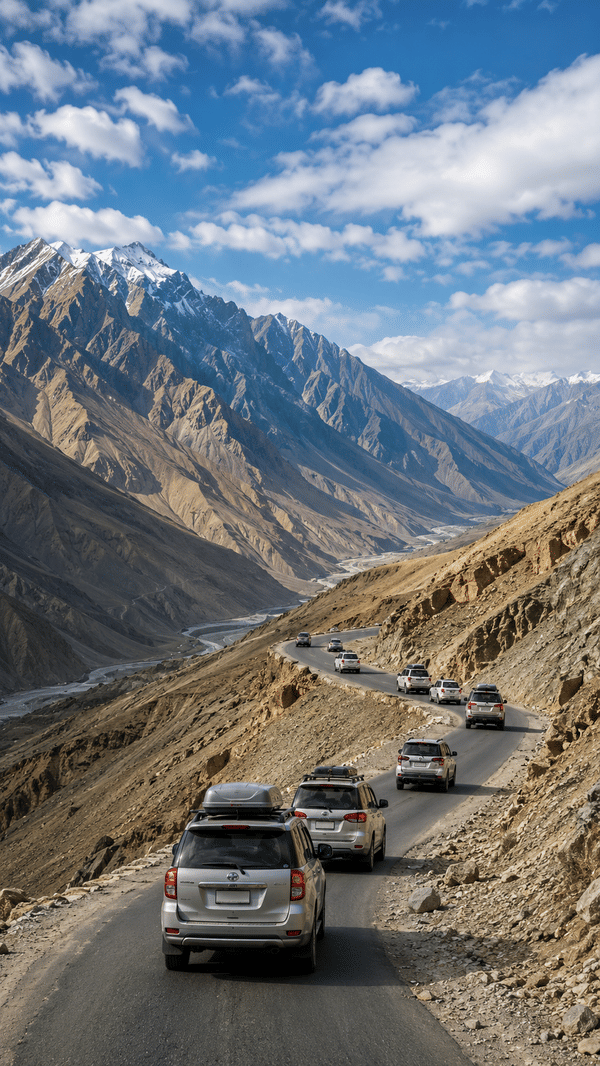
This is not your typical mountain destination. Everything here sits very high above sea level, roughly 3,300 to 6,600 meters, creating a unique trans-Himalayan cold desert ecosystem that feels like another planet.
What makes the landscape special?
- Wind-shaped mountains that look almost like another planet
- Bright alpine lakes hidden between peaks
- Glacial valleys carved by ancient ice
- Wide high-altitude plateaus where villages and wildlife quietly exist
It’s a cold, dry desert in the middle of the Himalayas where nature still feels wild and untouched.
Did you know? While many think Ladakh is the first, the official administrative "Cold Desert Biosphere Reserve" title belongs to this specific zone in Himachal Pradesh, centered around the Pin Valley. Check out how to reach Spiti Valley in detail from any major city.
Protected Areas Within The Biosphere Reserve

The Cold Desert Biosphere Reserve Spiti is actually a "mega-reserve" made up of four distinct, highly protected areas. Each one plays a different role in keeping this extreme ecosystem alive.
1. Pin Valley National Park
The Pin Valley National Parkis the "Core Zone" and the wildest part of Spiti. You’ll see high-altitude wilderness with purple-tinted mountains and zero phone signals.
You don’t just "stroll" here; you trek. It’s the best place to see the Snow Leopard in winter or the rare Siberian Ibex.
Note: You’ll need a permit, and there are no luxury hotels—only rugged homestays in nearby Mudh village.
2. Kibber Wildlife Sanctuary
Surrounding one of the world’s highest villages,Kibber Wildlife Sanctuary is where wildlife meets high-altitude living. It’s home to massive limestone cliffs and the famous Chicham Bridge (Asia’s highest).
It’s the easiest place to spot high-altitude herbivores like Blue Sheep. Most "Snow Leopard Expeditions" base themselves here because the animals often wander right past the village at night.
3. Chandratal Wetland
A protected "Ramsar Site,"Chandratal is a crescent-shaped lake and the jewel of the reserve. You’ll see crystal blue water that changes color with the sky, surrounded by snowy peaks.
It’s only accessible from June to September. You can’t camp on the shore anymore (to protect the water), but there are campsites about 2 km away. It’s a vital pitstop for rare migratory birds.
4. Sarchu Plains
This is the high-frontier gateway between Himachal and Ladakh. It has vast, windswept plains that look like the surface of Mars. At 14,000+ feet, altitude sickness is real.
It’s a transit point for bikers and road-trippers, offering a raw look at the Tibetan Wolf’s hunting grounds. It’s brutal, beautiful, and completely uninhabited in winter.
Unique Biodiversity Of The Cold Desert

At first glance, Spiti may look empty. Just rocks, wind, and endless mountains. But if you slow down and look closely, you’ll realize this cold desert is a masterclass in Spiti Valley biodiversity conservation, where every plant and animal plays a role.
Flora (Plant Life) In Spiti
At 4,000 meters, there are no tall trees. The plants here are short, sturdy, and packed with nutrients to survive the thin air. Plants here are "extremophiles." They survive -30°C winters and almost zero rainfall.
- The Wonder Berry: Seabuckthorn bushes line the riverbeds; their orange berries are a local superfood.
- High-Altitude Pharmacy: Over 650 species of herbs grow here, used for centuries in Sowa Rigpa (Tibetan medicine).
- Summer Blooms: During the short July–August window, the desert floor surprises you with wild pink roses and alpine wildflowers.
Fauna (Wildlife) In Spiti
Spiti is a fortress for some of the rarest animals on Earth.
- Snow Leopard: The legendary “Ghost of the Mountains.” They are most active in winter.
- Himalayan Ibex & Bharal: These gravity-defying climbers are often spotted on the cliffs of Pin Valley.
- Himalayan Marmot: Large, charismatic ground squirrel, popularly called the "mascot" of Spiti summers.
- Tibetan Wolf: The top predator of the high plateaus, often heard howling near the Sarchu plains.
- Birdlife: Over 100 species, including the massive Golden Eagle and the colorful Himalayan Snowcock.
Navigating The Zones Of Spiti Valley

Think of this Spiti Valley Biosphere Reserve as a target with three circles. Each zone offers a different vibe and set of rules for travelers. Here’s what you can actually see in each:
1. The Core Zone: The Wild Frontier (No Human Interference)
This is the heart of the reserve, about 2,665 sq. km of strictly protected land. You won't find hotels or cafes here; this is purely for the wildlife.
This is the kingdom of the Snow Leopard and the Tibetan Wolf. You can see the Pin Valley National Park here, with its dramatic "purple" mountains and massive glaciers. You only enter here on foot with specialized permits for trekking or research.
2. The Buffer Zone: For The Adventurers
Surrounding the core is a 3,977 sq. km area where limited eco-tourism and research happen. This is where most of your "bucket list" photos will come from. You’ll be camping under the clearest Milky Way views you’ve ever seen. You’ll find:
- Kibber Wildlife Sanctuary: One of the best spots on Earth to see Himalayan Ibex grazing on vertical cliffs.
- Chandratal (The Moon Lake): A crescent-shaped glacial lake that changes color from turquoise to deep blue as the sun moves.
- Sarchu Plains: Vast, windswept high-altitude plateaus that look like a scene from Interstellar.
3. The Transition Zone
The outer circle (1,128 sq. km) is where the 12,000+ local residents live. This Cold Desert Biosphere Reserve zone area is all about "sustainable living." This includes:
- Ancient Monasteries: Key, Tabo (the "Ajanta of the Himalayas"), and Dhankar, which is literally perched on a crumbling cliff.
- The "Highest" Villages: Hikkim (world's highest post office), Langza (fossil village), and Komic.
- Traditional Life: See locals farming green peas and barley or herding Yaks in the middle of a desert.
- The Vibe: Humble, spiritual, and deeply connected to the land. This is where you’ll find your homestays and the best butter tea in the world.
Visiting The Cold Desert Biosphere Reserve

Spiti is as fragile as it is beautiful. To make sure this "Cold Desert" stays wild for the next generation, you need to be more than just a tourist; you need to be a responsible guest.
Here’s your 2026 survival kit and essential tips to visit Cold Desert Biosphere Reserve areas responsibly.
Entry Permits & Documentation
Since the Cold Desert Biosphere Reserve Spiti sits close to the Indo-Tibetan border, access is regulated. Here is what you need to know:
- Indian Travelers: No special permit is required to visit Spiti Valley or the Biosphere Reserve. However, you must carry a valid government ID (Aadhar, DL, or Passport) for several police check-posts along the route.
- Foreign Nationals: You must obtain an Inner Line Permit (ILP). This applies if you are traveling via the Kinnaur route or the Manali route.
- Where to get the ILP: Permits are issued at the Deputy Commissioner’s office in Shimla, Reckong Peo, or Kaza.
- Requirements for ILP: You will need your Passport, a valid Visa, and three passport-sized photographs. Most travelers find it easiest to get this done in Reckong Peo (takes about 2–3 hours).
- Note on Solo Foreigners: Generally, the ILP is issued to groups of two or more. If you are a solo foreign traveler, you may need to find a partner at the permit office to apply together.
Best Time To Visit Cold Desert Biosphere Reserve

Your experience will change completely depending on the month, so here is the best time to visit cold desert biosphere & Spiti Valley:
June to September (Peak Summer): Best for road trips in Spiti Valley. The Kunzum and Rohtang passes are open, the weather is pleasant (15°C to 20°C), and the lakes are sapphire blue.
October to November (Autumn): A "hidden" season. The crowds disappear, and the landscape turns a stunning golden-orange.
December to March (The White Winter): Only for the serious adventurers. Temperatures drop to -30°C. This is the Snow Leopard season, but expect frozen pipes and basic dry toilets.
Whether you want the sapphire lakes of July or the frozen waterfalls of January, find your perfect window in our guide to the best time to visit Spiti Valley.
Responsible Travel Tips
In a UNESCO Biosphere, your behavior affects the ecosystem. Beyond the basic logistics, these tips to visit Cold Desert Biosphere Reserve zones ensure you leave no trace behind.
- Acclimatize Rigorously: Spend at least 2 days at a lower altitude before heading to the core zones. Altitude sickness can turn a dream trip into a medical emergency.
- Skip the Plastic: Plastic never "goes away" in the cold. Carry a reusable bottle; most monasteries and cafes offer filtered "Life Water" for a small fee.
- Respect Wildlife: You are in a wildlife corridor. Keep noise levels low, especially near the Pin Valley and Kibber areas, to avoid scaring away rare animals.
- Stick to the Trails: Off-roading on the desert crust causes "soil scarring" that lasts for decades. Stay on marked paths.
Eco-Friendly Tourism Practices

Support the conservation mission of the reserve through your choices:
- Choose Homestays: Skip the big hotels and opt forSpiti Valley homestays. Staying with a Spitian family ensures your money stays in the local economy and supports traditional, low-impact living.
- Eat Local: Try Thukpa, Tsampa, and Seabuckthorn juice. Local food has a lower carbon footprint and helps you adapt to the altitude.
- Don't Touch the Flora: Many medicinal plants in the reserve are endangered. Take photos, but never pick flowers or herbs.
- Carry Your Trash Out: If you brought a packet of chips or a candy bar, take the wrapper back to a major town like Shimla or Manali for proper disposal.
Make sure you haven't missed any high-altitude essentials by following our Spiti Valley packing list.
Final Thoughts: Why Spiti Matters Now?
At first, Spiti feels harsh. Dry mountains, freezing winds, and long silent valleys. But look closer and you’ll see something incredible. Life here has quietly adapted and survived for centuries.
Now, with the recognition of India’s first cold desert biosphere reserve Spiti, the world is finally paying attention to this fragile Himalayan ecosystem. It’s not just a remote destination anymore. It’s a place that needs care, respect, and responsible travel.
If this wild landscape is calling you, why not experience it the right way?
Plan your Spiti adventure with WanderOnand explore the beauty of this rare cold desert while travelling responsibly.
Frequently Asked Questions
What is India's first Cold Desert Biosphere Reserve?
Established in 2009 and recognized by UNESCO in 2025, it is a massive high-altitude sanctuary in the Himalayas. It protects 7,770 sq. km of rare trans-Himalayan ecosystem, focusing on conserving the Ghost of the Mountains, the Snow Leopard and fragile medicinal flora.
Where is the Cold Desert Biosphere Reserve located?
You’ll find this Cold Desert Biosphere Reserve Spiti in the Lahaul and Spiti district of Himachal Pradesh. It sits in the rain shadow of the Himalayas, meaning it stays bone-dry and freezing, with elevations ranging from 3,300 to over 6,600 meters above sea level.
What are the zones of Cold Desert Biosphere Reserve?
The reserve is divided into three functional parts: the Core Zone (highly protected areas like Pin Valley), the Buffer Zone (surrounding areas for research and limited tourism), and the Transition Zone (where local communities live and practice sustainable, eco-friendly farming and development).
What wildlife is in Cold Desert Biosphere Reserve?
The superstar is the elusive Snow Leopard. Other rare residents include the Himalayan Ibex, Tibetan Wolf, and Bharal (Blue Sheep). Look up to spot Golden Eagles and Lammergeiers soaring through the thin air of this extreme, high-altitude wildlife corridor.


