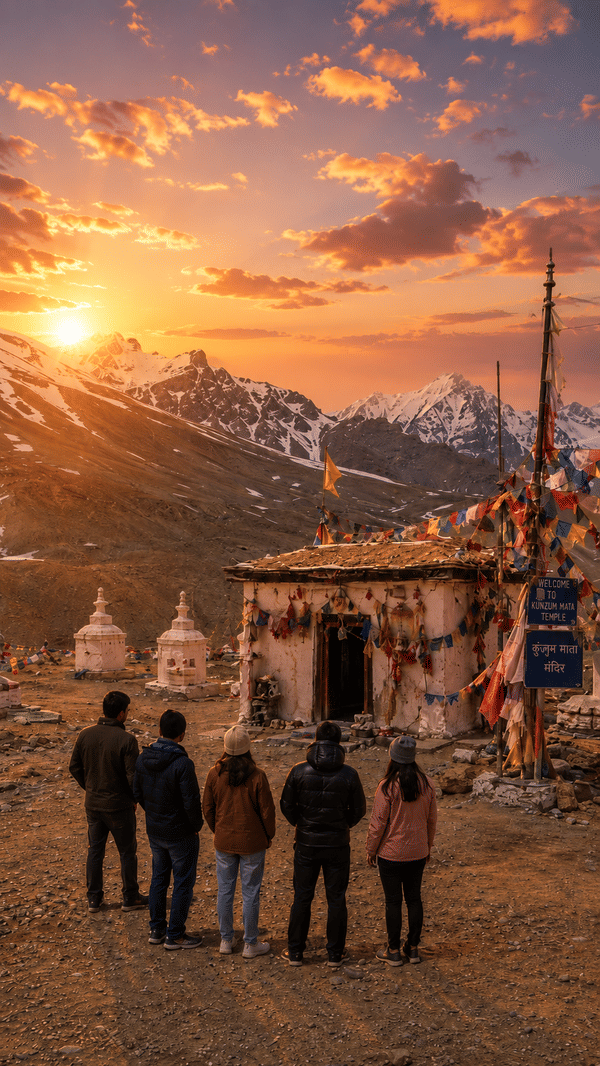
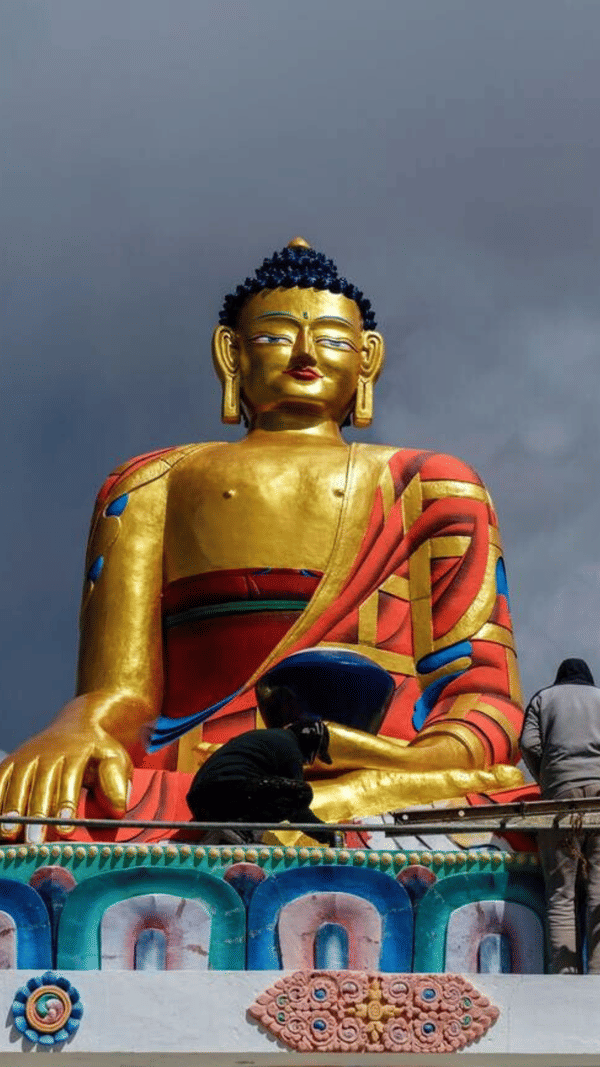
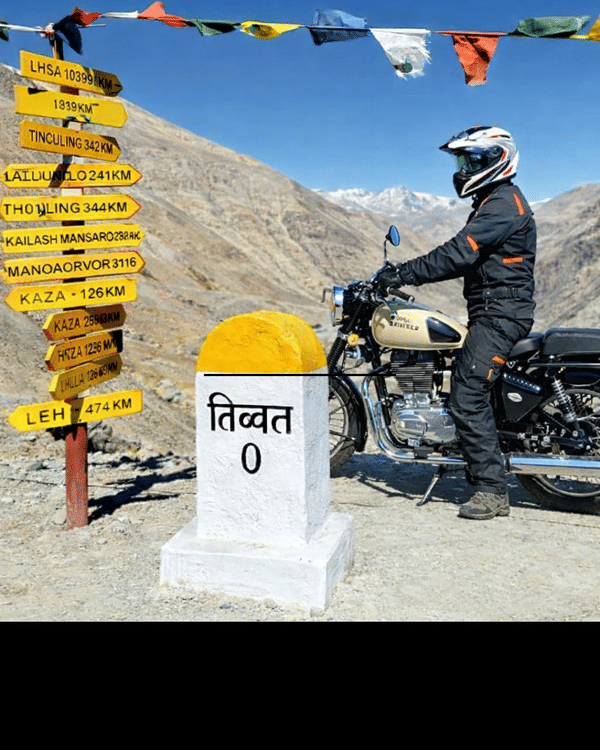
Spiti Valley sits roughly 700 to 760 kilometres from Delhi, tucked away in the cold desert belt of Himachal Pradesh at an average altitude of 12,500 feet. If you are planning your first Himalayan road trip, understanding how to reach Spiti Valley from Delhi is the most important part of your itinerary because the region is accessible only by road and the two entry routes stay open at different times of the year.
The Delhi to Spiti Valley distance is covered via two circuits: the Shimla route through Kinnaur, which remains open all year, and the Manali route via Kunzum Pass, which opens roughly from June to October depending on snowfall. Travellers usually cover the journey by overnight Volvo, private taxi, self-drive SUV, or as part of curated Spiti valley tour packages that handle permits, stays, and acclimatisation.
With Spiti tourism growing steadily over the past few years, planning a trip to Spiti Valley from Delhi has become easier, though the terrain still demands preparation. This guide breaks down every route, mode, cost, and travel tip you need before you set off.
Best-Selling Spiti Valley Tour Packages:
How to Reach Spiti Valley from Delhi: Quick Overview
- Delhi to Spiti Valley distance: 700 km (via Shimla) / 760 km (via Manali)
- Travel time: 16–20 hours by road
- Best route: Shimla–Kinnaur (open all year)
- Fastest mode: Private taxi or self-drive SUV
- Cheapest mode: Delhi to Spiti Valley bus via HRTC Volvo (Delhi–Reckong Peo–Kaza)
- Best time to visit Spiti Valley: May to October
- Nearest airport: Bhuntar (Kullu), 250 km from Kaza
- Nearest railway station: Shimla / Chandigarh
- Permit required: Only for foreign nationals (Inner Line Permit near Kaza and Tabo)
Best Routes to Reach Spiti Valley from Delhi
There are three practical routes to reach Spiti Valley from Delhi, and the right choice depends on the season, your driving experience, and how gradually you want to acclimatise to 12,500 feet. The two circuits - via Shimla and via Manali - approach the valley from opposite ends with very different terrain and accessibility windows.
Via Shimla (Kinnaur Route) — All-Year Access
The Shimla–Kinnaur route is the safer and more reliable option for how to reach spiti valley from delhi, especially for first-timers. It follows NH-5 through Chandigarh, Shimla, Narkanda, Reckong Peo, Nako and Tabo before Kaza.
- Road condition: Well-paved until Reckong Peo; narrower and landslide-prone near Malling Nala beyond Pooh.
- Key stops: Shimla (365 km), Reckong Peo (585 km), Kalpa (595 km), Nako (655 km), Tabo (690 km), Kaza (740 km).
- Altitude gain: Gradual—from 350 m at Delhi to 3,800 m at Kaza over 3–4 days, ideal for acclimatisation.
- Permits: None for Indian nationals; foreign nationals need an Inner Line Permit from Reckong Peo.
- Ideal months: All year; best in April–June and September–October.
Via Manali (Kunzum Pass Route) — June to October
On how to reach Spiti from Delhi, the Manali route is shorter on the map but far more demanding, running from Delhi through Manali and over Rohtang and Kunzum Pass before Kaza.
- Road condition: Many verified WanderOn travelers who have been to Spiti in 2026 reported that the road is smooth until Manali but gravel, loose stone, and unbridged glacial streams for 100+ km beyond Gramphu. Kunzum Pass at 4,590 m has no fuel and no phone signal.
- Key stops: Manali (550 km), Gramphu (600 km), Batal (660 km), Kunzum Pass (680 km), Losar (700 km), Kaza (760 km).
- Altitude gain: Sharp - Manali (2,050 m) to Kunzum (4,590 m) in a few hours, the leading cause of AMS on this route.
- Permits: None for Indian nationals; ILP for foreign travellers heading beyond Kaza.
- Ideal months: Mid-June to early October, subject to BRO clearance.
The Circuit Route — Enter via Shimla, Exit via Manali (Recommended for First-Timers)
The circuit route combines both approaches into one loop and is the format WanderOn's fixed-departure Spiti Valley tour packages from Delhi are built on. You enter via Shimla, acclimatise gradually, and exit via Manali once your body has adjusted.
- Updated Road condition: Highway to Shimla, mountain tarmac to Reckong Peo, high-altitude gravel from Batal to Manali.
- Key stops: Delhi, Shimla, Kalpa, Nako, Tabo, Dhankar, Kaza, Langza, Komic, Hikkim, Chandratal, Batal, Manali — around 1,500 km over 8–10 days.
- Altitude gain: Gradual Shimla-side climb gives 3–4 days of adjustment before crossing Kunzum, sharply lowering AMS risk.
- Permits: Same as individual routes.
- Ideal months: June to early October, when both sides stay open. September offers thinner crowds and clearer skies.
How to Reach Spiti Valley by Bus
Here is how to reach Spiti Valley from Delhi Via bus.
- Leg 1 – Delhi to Shimla or Manali: Overnight HRTC Volvo from ISBT Kashmere Gate. Delhi–Shimla fare: Starting from INR 400 (8–9 hrs). Delhi–Manali fare: Starting from INR 300 (12–14 hrs).
- Leg 2A – Via Shimla (all year): 7:00 AM HRTC bus from Shimla to Reckong Peo (10–11 hrs), overnight halt, then 7:00 AM Reckong Peo–Kaza bus (10 hrs, 210 km). Fare: ₹500–₹700.
- Leg 2B – Via Manali (June to mid-October): Direct 5:00 AM Manali–Kaza HRTC ordinary bus, 10–12 hrs across Rohtang and Kunzum Pass. Fare ₹500–₹650.
- Total cost: ₹1,200–₹1,750 one-way.
- Booking: Himachal Road Transport Corporation website ; Kaza-leg tickets open at bus stand counters one day prior.
- Best time for Spiti Valley travel from Delhi by bus: May to October, when both routes are operational.
How to Reach Spiti Valley by Taxi/Private Cab
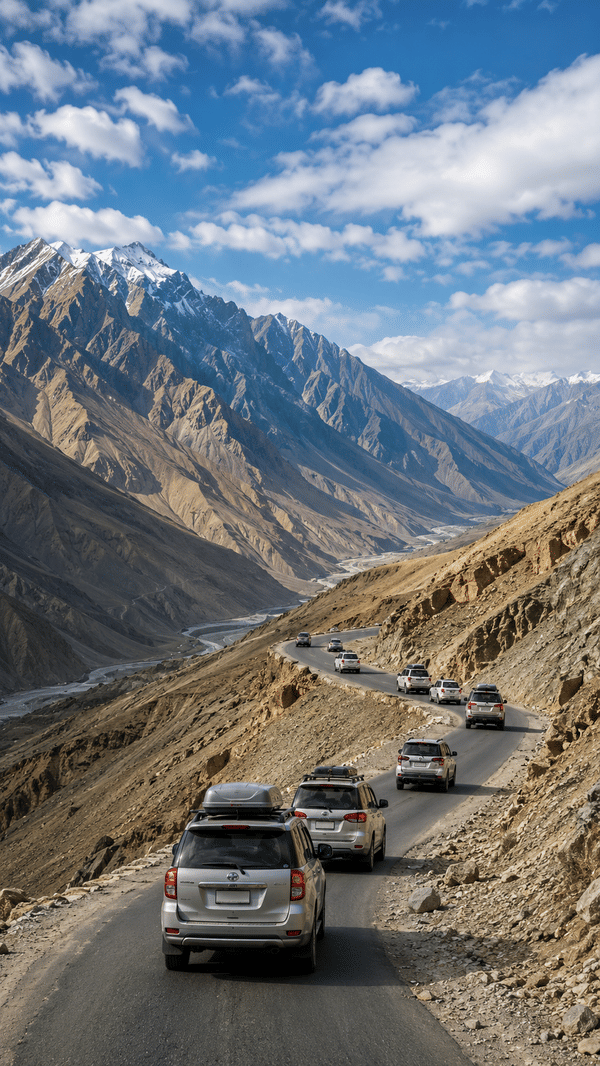
Travelling by taxi is the most flexible way to reach Spiti Valley from Delhi and the preferred choice for small groups, families, and travellers who want to control their own pace. It is also the answer to how to reach Spiti Valley from Delhi by road without the fixed schedules of HRTC buses.
- Private taxi from Delhi: Spiti full-circuit hire (Delhi–Shimla–Kaza–Manali–Delhi) costs ₹40,000–₹60,000 for 8–10 days in an Innova Crysta or similar SUV, including driver, fuel, and permits. Sedans are not recommended beyond Reckong Peo — an important consideration for anyone planning how to reach spiti valley from delhi by car.
- Shared cabs from Shimla: From Rivoli bus stand, shared Tempo Travellers and Sumos run daily to Reckong Peo (₹600–₹800 per seat, 8–9 hrs) and less frequently to Kaza. Best booked one day prior.
- Shared cabs from Manali: From Manali bus stand, shared cabs to Kaza run only from June to mid-October (₹1,500–₹2,500 per seat, 10–12 hrs across Kunzum Pass).
- Local taxis inside Spiti: Kaza Taxi Union operates fixed-rate cabs to Chandratal, Key Monastery, Langza, Komic, Hikkim and Dhankar. Rates are non-negotiable and displayed at the Kaza taxi stand.
- Vehicle requirement: SUVs with high ground clearance (Innova, Scorpio, Thar, XUV) are mandatory beyond Reckong Peo. Water crossings near Batal and Kunzum can damage low-clearance vehicles.
- Driver choice: Hire drivers with prior Spiti experience only. Delhi-based drivers unfamiliar with high-altitude driving are a common cause of breakdowns and accidents on the Kunzum stretch.
- Fuel planning: Last reliable fuel pump on the Shimla side is at Reckong Peo; on the Manali side, at Tapri or Manali itself. Kaza has one HP pump—the highest retail outlet in India at 3,800 m—but stock runs low in peak season
How to Reach Spiti Valley by Self-Drive
Self-driving is the most rewarding but also the most demanding option for how to go spiti valley from delhi. High altitude, water crossings, landslide zones, and long stretches without fuel or phone signal make Spiti one of India's toughest self-drive circuits.
- Vehicle requirement: SUV with high ground clearance is mandatory (Thar, Scorpio, XUV700, Fortuner, Innova). Sedans cannot cross the streams between Batal and Kunzum.
- Route options: Delhi–Shimla–Kaza (all-year, 740 km) or Delhi–Manali–Kaza (June to mid-October, 760 km). First-timers should enter via Shimla for gradual acclimatisation.
- Fuel stops: Last reliable pumps at Reckong Peo (Shimla side) and Manali (Manali side). Kaza's HP pump at 3,800 m is India's highest but often runs dry in peak season—carry a 10-liter jerry can.
- Hazards: Malling Nala landslides, Pagal Nala water crossing, and black ice on Kunzum. Avoid driving after 4:00 PM.
- Connectivity: Only BSNL and Jio postpaid work beyond Reckong Peo.
By Bike (Royal Enfield Rentals and Permit Needs)
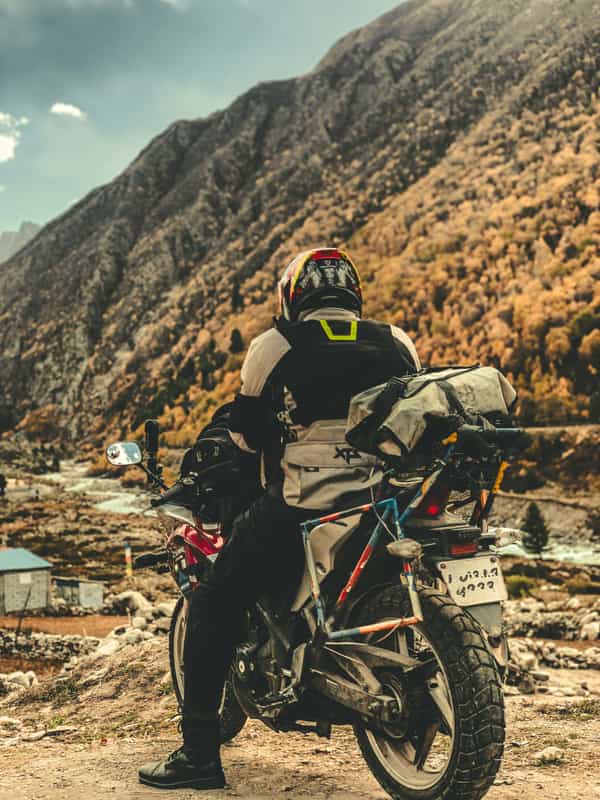
Riding to reach Spiti valley from Delhi is a bucket-list route for Indian motorcyclists and one of the highest motorable circuits in the country. The full loop covers around 1,500 km across two 4,000 m+ passes and demands both machine and rider preparation.
- Recommended bikes: The best bikes for Spiti: Royal Enfield Himalayan (best-suited for the terrain), Classic 350, Bullet 500, and KTM Adventure 390. Sub-200cc bikes are not advisable for the Manali–Kaza stretch.
- Rental options: Delhi rentals cost ₹1,500–₹2,500 per day plus a refundable security deposit of ₹10,000–₹20,000. Manali is the more popular rental base - Himalayan and Classic 350 rentals run ₹1,200–₹1,800 per day with lower deposits. Book 2–3 weeks in advance for June–September.
- Route recommendation: Enter via Shimla, exit via Manali. This gives 3–4 days of gradual altitude gain before crossing Kunzum Pass (4,590 m), sharply reducing AMS risk.
- Permits: When planning how to reach Spiti from Delhi by bike, no permit is needed for Indian riders on either route. Foreign nationals need an Inner Line Permit from Reckong Peo for the stretch up to Sumdo. Carry original DL, RC, PUC, and insurance—checked at Sumdo and Losar checkposts.
- Fuel planning: Carry a 5–10 litre jerry can. The last reliable pumps are Reckong Peo (Shimla side) and Manali (Manali side). Kaza HP pump often runs dry in July–August.
- Riding gear: Full-face helmet, a riding jacket with armor, knee and elbow guards, waterproof gloves, thermal inners, and rain covers are non-negotiable. Temperatures drop to 2–5°C at Kunzum even in July. At WanderOn, we provide them all!
- Hazards to know: Malling Nala landslide zone (Shimla side), Pagal Nala water crossing near Batal (Manali side), loose gravel, and black ice on Kunzum Pass early and late in season. Ride only between 7:00 AM and 4:00 PM.
- Altitude precaution: Halt at Kalpa or Nako for the first night. Do not attempt Delhi to Kaza in under 3 riding days.
How to Reach Spiti Valley from Delhi by Flight?
There is no direct flight to reach Spiti Valley from Delhi, as Spiti has no airport. Travellers fly to the nearest airports and continue by road:
- Bhuntar Airport (Kullu–Manali): 250 km from Kaza; limited daily flights from Delhi via Alliance Air and IndiGo. Fare ₹5,000–₹12,000. Onward drive of 10–12 hours via Manali and Kunzum Pass (June–October only).
- Shimla Airport (Jubbarhatti): 415 km from Kaza; fewer connections from Delhi. Onward drive of 14–16 hours via Kinnaur, open all year.
If you are someone who doesn’t want to spend more time traveling in the car, make sure you opt for the Delhi to Spiti Valley flight!
Delhi to Spiti Valley Itinerary
Spiti Valley Full Circuit Road Trip 7 Days | Value Saver Package from Delhi - 6N/7D
Departure Day
Departure from Delhi to Shimla by evening. Overnight journey by Volvo.
Day 1
Reach Shimla- Transfer To Sangla/Chitkul. Overnight Stay At Chitkul / Sangla [Distance: Approx 220km, Duration: 9-10 Hours]
Day 2
Explore Chitkul - Transfer to Kalpa. Overnight stay at Kalpa. [Distance: Approx 80km, Duration: 6-7 Hours]
Day 3
Transfer from Kalpa to Kaza via Nako - Tabo - Ka loops. Overnight stay at Kaza. [Distance: 220 km, Duration: 8- 9 Hours]
Day 4
Visit Key Monastery, Chicham Bridge along with Hikkim - Komic - Langza. Overnight stay at Kaza
Day 5
Depart for Chandra Taal - Overnight stay at Chandra Taal. [Distance: Approx 95 km, Duration: 5-6 Hours]
Day 6
Depart for Manali - Old Manali café crawl - Overnight stay at Manali. [Distance: Approx 95 km, Duration: 5-6 Hours]
Day 7
Self-Explore Manali - Departure To Delhi.
Arrival Day
Reach Delhi by morning. [ Distance: 510 km, Duration: 10 - 11 Hours ]
Destination Expert Travel Tips for the Delhi to Spiti Journey
Below are ground-level tips focused on the actual Delhi–Spiti road journey, based on how experienced operators plan the route and where most first-time travellers from Delhi go wrong.
- Leave Delhi by 9:00 PM, not late night: Most travellers exit Delhi past midnight and hit peak truck traffic on the Ambala–Chandigarh stretch. Leaving by 9:00 PM clears the Delhi–Panipat–Ambala corridor before heavy freight builds up around 1:00–3:00 AM, saving 90 minutes on the first leg.
- Do not attempt Delhi to Kaza in one shot: The 740 km Shimla route needs a minimum of 2.5 days; the Manali route needs 2 days. Attempting it in one stretch is the top cause of altitude sickness and driver fatigue accidents on the Kinnaur cliff road, which has no safety barriers.
- Ideal night-one halts from Delhi: For the Shimla route, halt at Narkanda (430 km, 2,700 m) instead of Shimla — it is quieter, cheaper and starts the altitude adjustment early. For the Manali route, halt at Mandi or Kullu, not Manali itself, to avoid the tourist bottleneck traffic on entry.
- The Kinnaur road landslide window: Between Rampur and Pooh, the Malling Nala and Wangtu landslide zones are active in July–August during monsoon and in March–April during snowmelt. Check the BRO road status on X the morning of your drive—a five-minute check that Delhi travellers routinely skip.
- Fuel discipline out of Delhi: Tank up fully at Chandigarh or Zirakpur before the climb—Himachal fuel prices are ₹8–₹10 per litre higher. Top up again at Narkanda or Rampur on the Shimla side or at Mandi or Manali on the Manali side. Do not enter the mountains below half a tank.
- The Kunzum Pass timing rule: Cross Kunzum Pass (4,590 m) between 9:00 AM and 1:00 PM only. After 2:00 PM, meltwater streams near Batal swell dangerously, and afternoon winds make the ridge unsafe for cars, bikes, and buses. This is why HRTC's Manali–Kaza bus departs at 5:00 AM.
- Where Delhi travellers underestimate cold: Even in June, temperatures at Kalpa drop to 8°C at night and Kunzum stays at 2–5°C by day. Delhi packing lists built around "light woollens" fail here. Carry a proper down jacket, thermals, and gloves regardless of the month you travel.
- Food and water halts that are reliable: On the Delhi–Shimla stretch, use Karnal's Amrik Sukhdev, Ambala's Puran Singh Da Vishal Dhaba, and Chakki Mor near Solan. On the Delhi–Manali stretch, Sundernagar's food strip is the last hygienic buffet-style halt before the climb. Beyond Rampur or Manali, expect basic dhaba fare only.
- Acclimatisation halt is non-negotiable: Spend night two at Kalpa (2,960 m) or Nako (3,660 m), not directly at Kaza (3,800 m). This single decision prevents 80% of AMS cases reported from the Delhi origin. Descend immediately if you develop headache, nausea or sleeplessness — do not "sleep it off."
- Vehicle checks before leaving Delhi: Brake pads, coolant level, spare tyre pressure, tyre tread depth (minimum 4 mm for hill driving), wiper blades and battery. Get a full service done 3–5 days before departure, not the day before — some issues surface only after 200 km of driving.
- The Manali exit-day mistake: Travellers descending from Kaza to Manali often push straight to Delhi the same night. This 24-hour driving stretch after 8–10 days at altitude causes reflexes to slow. Halt at Manali or Mandi for a full night before the Delhi drive — accidents on the Bilaspur–Sundernagar stretch are commonly linked to this exact fatigue pattern.