


If you’re sitting in a Kasol cafe right now, the idea of Spiti probably feels like a different planet. And honestly? It is! The drive from Kasol to Spiti Valley is a total vibe shift as you move from lush pine forests to a moon-like desert.
In 2026, it has become a popular route for travelers craving something raw and massive. However, it’s strictly season-dependent, only possible between June and September when the snow clears.
Whether you’re booking a curated Manali KasolSpiti Valley package or heading out on your own, a trip from Kasol to Spiti Valley isn’t just a scenic drive. It’s a gritty 12-hour mission passing through Sissu and Batal, crossing the legendary Kunzum Pass and rocky riverbeds.
You’ll need a high-clearance SUV, an expert driver, and a solid plan to rely on offline maps since your network will be a paperweight. Here’s everything you need to know for your Kasol to Spiti Valley road trip in detail.
Check out the popular Spiti Valley Trips

Spiti Valley - Exclusive Escape with Sangla Holi Celebration
Full Spiti Valley Circuit Group Tour From Delhi: Shimla To Manali

Chandigarh To Spiti Valley Road Trip | Complete Himalayan Expedition

Spiti Valley Adventure From Chandigarh: Sangla, Kalpa & Tabo Special
Kasol To Spiti Valley Route

Choosing the right Kasol to Spiti Valley route is the first step in ensuring you actually reach Kaza before sundown. Here is the most efficient way to map out your journey.
The Primary Route: The Gateway Via Atal Tunnel
This is the fastest and most popular way to reach the "Middle Land" from Parvati Valley. This typical Kasol to Spiti Valley distance is 252 km which takes 10 to 12 hours to complete.
- Kasol to Manali (75 km | 2-3 Hours): Start early to beat the Beas river traffic.
- Manali to North Portal (Atal Tunnel) (35 km | 1 Hour): You bypass Rohtang Pass entirely, teleporting from green forests into the high-altitude Lahaul Valley.
(Check ourLahaul and Spiti Travel Guidethat covers everything from ancient monastery secrets to the best local food in the valley.)
- North Portal to Gramphu (5 km | 15 Mins): Immediately after exiting the tunnel, you’ll take a right at the bridge toward Gramphu. This is the official start of the Kasol to Spiti Valley route where the tarmac ends
(Take a quick 20-minute detour to Sissu Lake and Waterfall before backtracking to the Gramphu turn-off; it’s the best photo op in Lahaul.)
- Gramphu to Batal (60 km | 3-4 Hours): The most brutal stretch. You’ll be driving on rocks and crossing "pagal nallahs" (mountain streams).
- Batal to Kaza (90 km | 3-4 Hours): You’ll climb the mighty Kunzum Pass (14,931 ft). Remember to take a full circle around the temple at the top for good luck; locals swear by it.
The Alternate Route: The Shimla Loop (For the Long Haul)
If the Kunzum Pass is closed (pre-June) or you want a more gradual climb to avoid altitude sickness, take the Shimla-Kinnaur route. Through this route the Kasol to Spiti Valley distance gets longer with a duration of 2-3 day journey, but the roads are better, and you’ll find signals and ATMs more frequently.
- Kasol to Shimla (250 km | 7-8 Hours): A long day of driving through winding mountain roads. Most people spend the night here to rest.
- Shimla to Reckong Peo/Kalpa (220 km | 8-9 Hours): You’ll enter Kinnaur. The roads are carved into massive cliffs, it's beautiful but requires a steady hand on the wheel.
- Reckong Peo to Tabo (150 km | 6-7 Hours): You’ll pass through the Khab confluence (where the Satluj and Spiti rivers meet). This is where the landscape finally turns into the high-altitude desert Spiti is known for.
- Tabo to Kaza (50 km | 2 Hours): The final, easy stretch. You’ll pass Dhankar Monastery on your way to the main hub.
Vehicle To Choose For Kasol To Spiti Valley Road Trip

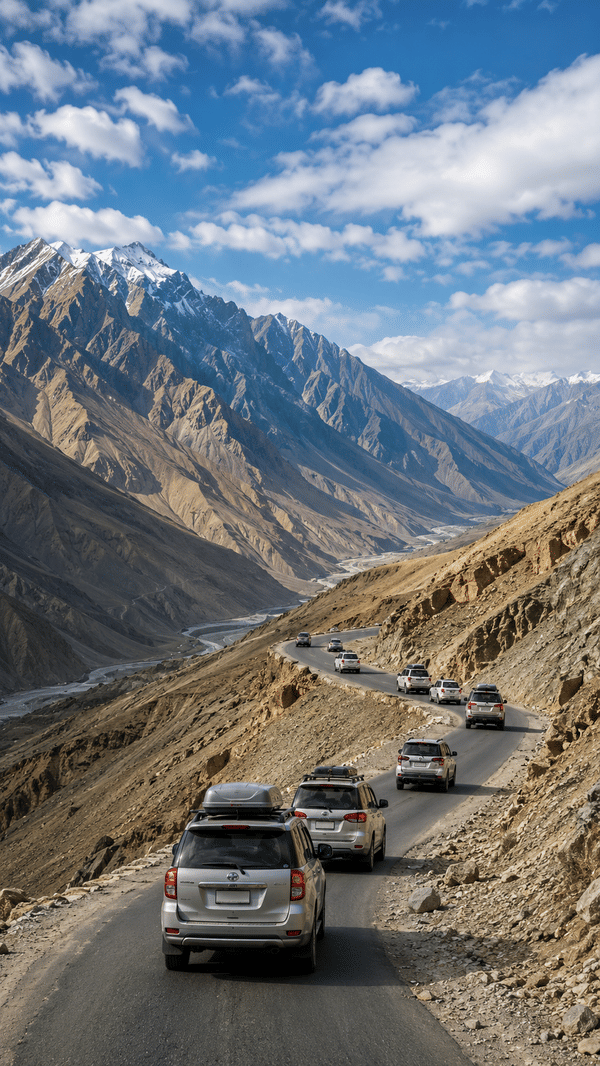
The Kasol to Spiti Valley road condition is not to be taken lightly. Once you move past the smooth tarmac of the Atal Tunnel, you are essentially driving on a riverbed of sharp rocks and glacial melt. Choosing the right wheels is the difference between a legendary trip and a breakdown in the middle of nowhere.
Private Vehicle (Recommended)
Don't even think about a hatchback (or EVs). You essentially need:
- High-clearance SUV (like a Thar, Scorpio or Fortuner) to clear the boulders between Batal and Gramphu.
- 4x4 is preferred but a 4x2 (SUVs/MUVs) with high ground clearance (minimum 190 mm – 200 mm)
HRTC Bus: The Budget-Friendly Option
There is no direct Kasol to Spiti Valley bus. You have to catch the HRTC "Kaza Special" bus from the Manali bus stand early in the morning, typically operating from June to October. It’s a bumpy, 10-hour test of endurance, but it’s the cheapest way to go. Relying on a Kasol to Spiti Valley bus requires patience, as timings depend on road clearance.
Biking: For Experienced Mountain Bikers
This is a bucket-list Kasol to Spiti Valley road trip for many. Here’s what you need:
- High-clearance bike like a Royal Enfield Himalayan or Classic 350 to handle the river crossings like a champ.
- Sturdy Gear such as waterproof boots and extra fuel to cross the water crossings.
The Scenic Highlights: Must-Stops Between Kasol And Kaza
The drive from Kasol to Spiti is one of the most dramatic in the world, but if you just keep your head down, you’ll miss the soul of the journey. Here are the places where you absolutely must pull over:
1. Sissu Lake & Waterfall

Right after exiting the Atal Tunnel, the landscape shifts from green to gold. Stop at Sissu to see the man-made lake reflecting the sky and the massive Palden Lhamo waterfall (300 ft). It’s the perfect spot for your first Lahaul Valley photo.
- Distance:~115 km from Kasol (approx. 4 hours)
- Pro-Tip: This is your last chance for clean, accessible public toilets and stable 4G/5G signal before the "dead zone" begins.
2. Tandi Bridge
This is the confluence of the Chandra and Bhaga rivers to create Chenab. It’s loud, industrial, and feels like a frontier outpost. More importantly, it is your final fuel stop until Kaza.
- Location:~8 km after Sissu
- Pro-Tip: There is no fuel for the next 130 km of brutal, high-altitude terrain. Even if you think you have enough, you don't. Fill your tank and your backup cans here.
3. Chhatru (The River Oasis)

A small cluster of seasonal dhabas located between giant, barren mountains. It’s the last bit of "civilization" (and decent ginger tea) before the road turns into a rocky riverbed. Between Chhatru and Batal, the Kasol to Spiti Valley road condition is at its most challenging.
- Location:~35 km from Tandi (approx. 2 hours)
- Pro-Tip: Eat a light meal of Rajma Chawal here. The road becomes a brutal, rocky riverbed immediately after this point, and you don’t want a heavy stomach.
4. Batal (Chacha-Chachi Dhaba)
You haven't truly done Spiti until you've eaten at Chandra Dhaba. Run by a legendary couple who have rescued countless stranded travelers, it is the emotional heart of the Manali-Kaza highway.
- Location:~32 km from Chhatru (approx. 2.5 hours)
- Pro-Tip: You can ask Chacha about the "Pagal Nallahs" ahead. If he says the water is too high to cross, grab a sleeping bag and wait.
5. The Chandratal Detour

Near Batal, there’s a 14 km narrow diversion leading to the Chandratal or "Moon Lake”. The water changes color from emerald green to deep blue as the sun moves that’ll leave you in pure awe. Whether you’re camping or just visiting for an hour, the sight of the turquoise water reflecting the peaks is the undisputed highlight of the route.
- Location: 2 km from Batal (take the left diversion before climbing Kunzum Pass)
- Requirement: Expect a small environmental fee (approx. 100) at the check-post
- Pro-Tip: This is a single-lane "cliff-hanger" road. If you encounter a vehicle coming from the opposite direction, the one going uphill generally has the right of way, but be prepared to reverse to the nearest "passing point”.
6. Kunzum Pass (14,931 ft)
Kunzum Pass is the gateway to Spiti. You’ll see colorful prayer flags snapping violently in the thin air and a 360-degree view of the Bara-Sigri Glacier. It is intimidating, just white peaks and blue ice as far as you can see. Read our detailed guide on Kunzum Pass in Spiti Valley for the best experience.
- Location:~12 km from Batal
- Pro-Tip: Tradition dictates you circle the Kunzum Mata temple in your vehicle for a safe journey. Don’t stay longer than 15 minutes; the oxygen levels here are low enough to trigger a headache instantly.
7. Losar Village

Losar is the first inhabited village in Spiti. You’ll see a sudden patch of green and white-washed houses with red-bordered windows. It looks like a classic Tibetan village. The "Welcome to Spiti" board here is the ultimate trophy for road trippers.
- Location:~19 km from Kunzum Pass
- Requirement: Mandatory stop at the police checkpost to register your ID and vehicle.
- Pro-Tip: Grab your first bowl of authentic Spitian Thukpa here. This is also where BSNL (postpaid) signals usually flicker back to life.
Now that you’ve conquered the road and reached Kaza, check out thebest places to visit in Spiti Valley to start your exploration of the high-altitude villages.
Best Time To Go From Kasol To Spiti Valley

Timing your Kasol to Spiti Valley trip is everything. Because you’re crossing the high-altitude Kunzum Pass (14,931 ft), your window is limited to just a few months. If you go too early, the road is buried under 20 feet of snow; too late, and you’re stuck in a winter freeze.
June To September: The Golden Window
Therefore, the best time to go is between June and September. This is the only time the direct "short" route via the Atal Tunnel and Kunzum Pass is fully operational.
- Late June to Early July: If you want to see the legendary "Snow Walls," this is your time. The BRO usually finishes clearing the pass by mid-June, leaving massive corridors of ice that make for incredible photos.
- July to August: This is peak season due to comfortable weather with temperatures ranging from 15°C to 20°C during the day. While Spiti itself is a rain-shadow desert and stays dry, the road to it (between Gramphu and Batal) becomes a battlefield of muddy tracks and high water crossings due to monsoon runoff.
- September: Often called the "Photographer’s Month” as the monsoon clouds vanish, the skies turn a piercing blue, and the air becomes incredibly crisp. The roads are usually at their most stable before the winter chill starts to set in.
May And October: The Shoulder Months
These months are for the wanderers who don't mind a longer, more rugged detour.
- May: You can easily hang out in Kasol, but the Kunzum Pass is almost certainly still closed. To reach Spiti, you’d have to take the "Full Circuit" via Shimla and Kinnaur, a stunning 2-day journey, but not the quick jump most expect.
- October: It’s a beautiful time to visit as the valley turns a brilliant gold, but the first heavy snowfall of the season can shut the Manali-Kaza road at any moment. If you're driving your own vehicle, you risk getting it "locked" in the valley until next summer.
Check out our Spiti weather guide for a detailed take on every season and weather conditions in the cold desert.
Pro-Tips For Your Kasol To Spiti Adventure

To pull off a Kasol to Spiti Valley road trip in 2026, you need to be a bit of a strategist as the terrain is unpredictable. Here are the essential logistics and "insider" tips to keep your trip from turning into a survival movie:
- Start early: Start your drive as early as 5:00 AM to cross the "Pagal Nallahs" (glacial streams) near Batal before noon, as they swell up dangerously by the afternoon when the sun melts the ice.
- Fuel & Maintenance: Fill up at Tandi as it's the last reliable pump before Kaza. Carry a 10-liter backup jerry can, a basic toolkit, and a tire inflator, as the sharp rocks on the Manali-Kaza stretch are notorious tire-shredders.
- Carry cash: ATMs in Kaza are notoriously unreliable and often run dry. Withdraw all the cash you’ll need in Kasol or Bhuntar before heading up.
- Mobile Connectivity: Only BSNL (postpaid) works reliably in remote spots. Download offline Google Maps while you still have Kasol’s Wi-Fi, because the data signal will vanish.
- 4x4 SUV & Expert Driver: Use a high-clearance SUV (180mm - 200mm minimum) for the uneven Kasol to Spiti Valley road condition involving river crossings. If you aren't used to off-roading, hire a local pro.
- Hydration vs. AMS: Drink 4 - 5 liters of water daily to help your body adjust to the 12,500 ft altitude and avoid Acute Mountain Sickness (AMS).
- Layering Up: Pack in "onion layers" (thermals, fleece, and a windcheater) to handle temperatures that swing from 20°C in the sun to -5°C the moment you hit the shade. For a detailed breakdown of gear, check out theseessential things to carry while travelling to Spiti Valley to make sure you don't miss anything critical.
- Sun Protection: The high-altitude sun is brutal. Wear SPF 50+ sunscreen and UV-protected sunglasses to prevent severe burns and snow blindness.
- The Buffer Day: Always keep one "extra" day in your Kasol to Spiti Valley itinerary in case a sudden landslide or high stream blocks the road for 24 hours.
Final Thoughts: Your Kasol To Spiti Valley Road Trip
Moving from the forests of Kasol to the high-desert of Spiti is more than a drive; it’s a total perspective shift. It’s a journey that tests your nerves, but the reward is a kind of stillness you can’t find anywhere else. Every Kasol to Spiti Valley road trip leaves you with stories for a lifetime.
If you want a stress-free journey, booking a Manali Kasol Spiti Valley package ensures an expert handles the rough roads while you focus on making memories.
Connect with the WanderOn team and let’s get your 2026 Spiti adventure on the calendar!
Frequently Asked Questions
How much is a taxi from Kasol to Spiti Valley?
A private taxi from Kasol to Kaza typically costs between ₹15,000 and ₹22,000, depending on the vehicle type (SUV is mandatory). This price covers the difficult 12-hour journey, fuel, and driver expertise required for navigating the rocky riverbeds near Batal and Kunzum Pass.
How can I travel from Kasol to Spiti Valley?
The most common way is driving via Manali and the Atal Tunnel in a high-clearance SUV. For budget travelers, there is no direct Kasol to Spiti Valley bus; you must take a local bus to Manali and catch the HRTC Kaza Special.
What is the distance from Kasol to Spiti Valley?
The Kasol to Spiti Valley distance is approximately 250 km. While it sounds short, the rugged terrain means it takes 10 - 12 hours to complete. Most of the journey involves slow-crawling through the rocky stretches of the Manali-Kaza highway after Gramphu.
Is Kasol to Spiti Valley safe for bike trips?
It is safe but physically demanding. The route features deep water crossings and loose gravel that require advanced riding skills. A Kasol to Spiti Valley road trip on a bike is best done between June and September using a sturdy adventure tourer like a Himalayan.


