Soumyadip Das
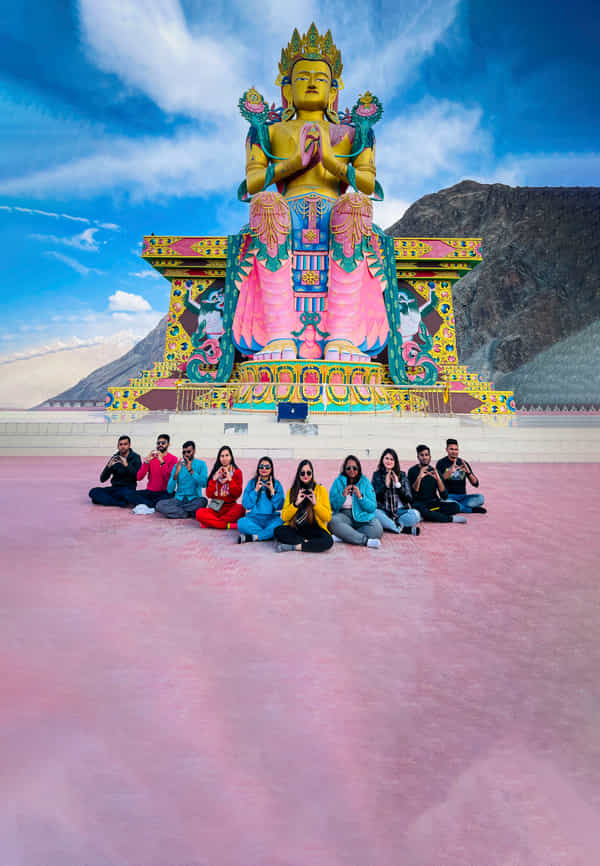
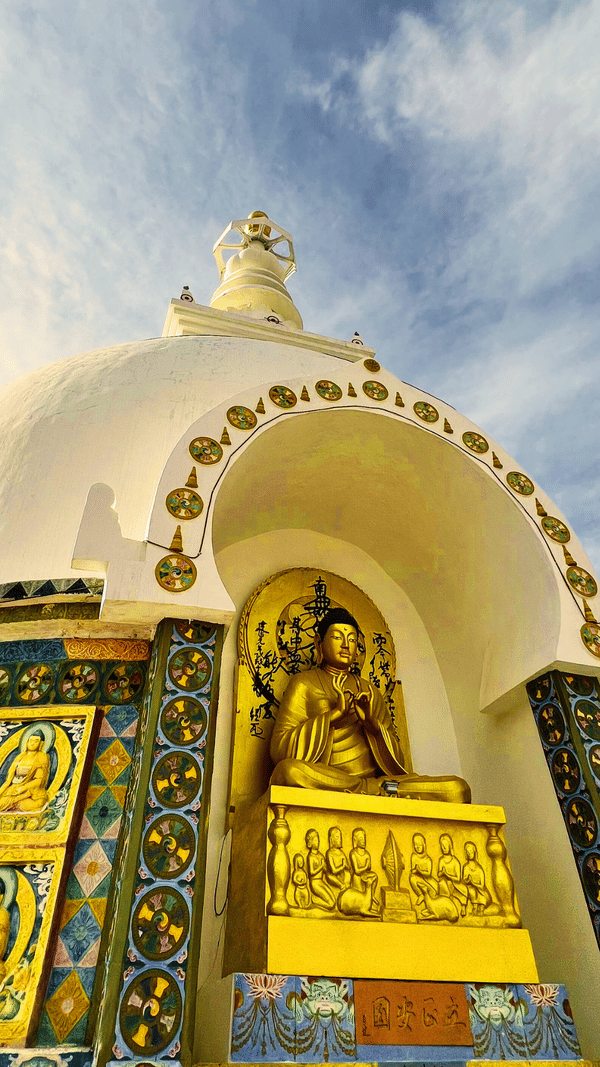
12 Jul 2026We travelled to Srinagar-Leh-Ladakh. A beautiful and overwhelming journey. Our experience was really great with WanderOn. Our virtual guide Eshta supported us with all the queries and helped in our journey.

How To Reach Ladakh From Manali: Plan Your Perfect Adventure
How to reach Ladakh from Manali comes down to one wonderful road, and anyone who has actually driven it will tell you the same thing. You go by road, over two days, along the 428 km Manali–Leh Highway. The route runs through the Atal Tunnel, Sissu, Tandi, Keylong, Jispa, Darcha, Baralacha La, Sarchu, the Gata Loops, Nakee La, Lachulung La, Pang, More Plains, Tanglang La and Upshi before dropping into Leh.
The first leg has improved enormously. Since the Atal Tunnel opened, Rohtang Pass is no longer the bottleneck it used to be, and Manali to Keylong is accessible for much more of the year. The stretch beyond Darcha remains seasonal, with opening dates shifting each year according to snowfall and clearance. Our Ladakh tourism guide explains how the region behaves month by month.
Treat what follows as a working Manali to Leh Ladakh road trip guide rather than a general overview. The overnight halt you choose shapes how enjoyable the second day feels, so read the route breakdown before you book. If you would rather have the driving handled for you, WanderOn’s Leh Ladakh tour packages run this corridor every season.
The quickest way to weigh up how to reach Ladakh from Manali is to see the options side by side. The table below sets out the distance, journey time and approximate cost for each of the six road choices and the one realistic air route as per HRTC.
| Mode | Time taken | Approximate cost |
| HRTC bus | 1 day by direct service, or 2 days via Keylong | ₹833 – ₹900 per person |
| HPTDC bus with stay included | 2 days, halt at Keylong | ₹2,900 per person |
| Shared taxi or tempo traveller | 2 days | ₹3,000 – ₹4,500 per seat |
| Private taxi | 2 days | ₹28,000 – ₹38,000 per vehicle |
| Rented motorcycle | 2 to 3 days | ₹1,500 – ₹2,500 per day plus fuel |
| Self-drive car | 2 days | ₹5,000 – ₹6,000 in fuel, one way |
| Flight via Delhi | 1 full day at minimum | ₹5,000 – ₹12,000 for Delhi–Leh |
Please note: Fares as of the 2026 season; verify before travel. Prices may vary as per season, fuel rates and vehicle availability. Fares climb through July and August and ease off once the highway nears closing.
Flying is the quickest way into Ladakh, and it is a genuinely good option if your leave is short. It simply works better from a metro city than from Manali.
Manali's nearest airport is Kullu–Manali at Bhuntar, about 50 km away, and it connects to Delhi rather than Leh. So flying out of Manali means driving to Bhuntar, flying to Delhi, then flying Delhi to Leh, which uses up a full day.
If flying appeals to you, there are two cleaner ways to do it. Drive the 300 km to Chandigarh, which has seasonal direct flights to Leh. Or fly Delhi to Leh, which runs year-round in about 1 hour 20 minutes for ₹5,000 to ₹12,000 and is the most dependable air route into Ladakh.
One thing worth planning for. Flying puts you at 3,500 m within two hours of leaving the plains, so keep your first day in Leh light and give acclimatisation the time it deserves to avoid the symptoms of acute mountain sickness. Driving up earns you that altitude gradually, which is one of the quiet pleasures of the road route.
The railway is a comfortable and inexpensive way to reach the foothills, and plenty of travellers use it for the first half of the trip. It simply does not extend to Leh, and it does not reach Manali either.
Joginder Nagar at 165 km is the closest railhead, though it is a slow narrow-gauge line with limited services. Chandigarh at 310 km and Ambala at 370 km are the practical stations, both well connected from Delhi, Mumbai and the northern circuit.
From any of these you continue by road along the route described below. Think of the train as an easy, affordable way of getting yourself to Manali, with the real journey beginning once you are there.
One thing worth planning for. Flying puts you at 3,500 m within two hours of leaving the plains, so keep your first day in Leh light and give acclimatisation the time it deserves to avoid the symptoms of acute mountain sickness. Driving up earns you that altitude gradually, which is one of the quiet pleasures of the road route.
The railway is a comfortable and inexpensive way to reach the foothills, and plenty of travellers use it for the first half of the trip. It simply does not extend to Leh, and it does not reach Manali either.
Joginder Nagar at 165 km is the closest railhead, though it is a slow narrow-gauge line with limited services. Chandigarh at 310 km and Ambala at 370 km are the practical stations, both well connected from Delhi, Mumbai and the northern circuit.
From any of these you continue by road along the route described below. Think of the train as an easy, affordable way of getting yourself to Manali, with the real journey beginning once you are there.
This is where the real decision sits. Every practical answer to how to reach leh ladakh from manali runs through one of these four, and each suits a different kind of traveller.
HRTC and HPTDC buses: These are the best value on the whole route. The direct HRTC bus leaves Manali around 4 AM and runs through to Leh in one long stretch, which suits budget travellers who are already comfortable at altitude and happy to sit for a very long day. If you would rather break the journey, HRTC also runs services via Keylong, and the HPTDC Manali–Leh bus departs around 10 AM with an overnight halt built in.
Shared taxis: These fill up near the Manali bus stand and leave once full. They cost more than the bus and move faster because they stop less, so they suit travellers who want to reach Leh quickly without hiring a whole vehicle.
Private taxi: The most comfortable way to do a Manali to Ladakh road trip. You control the stops, you can shift the halt to Jispa instead of Sarchu, and you have the flexibility to adjust if someone in the group is feeling the altitude. Across five or six people the cost works out very reasonably.
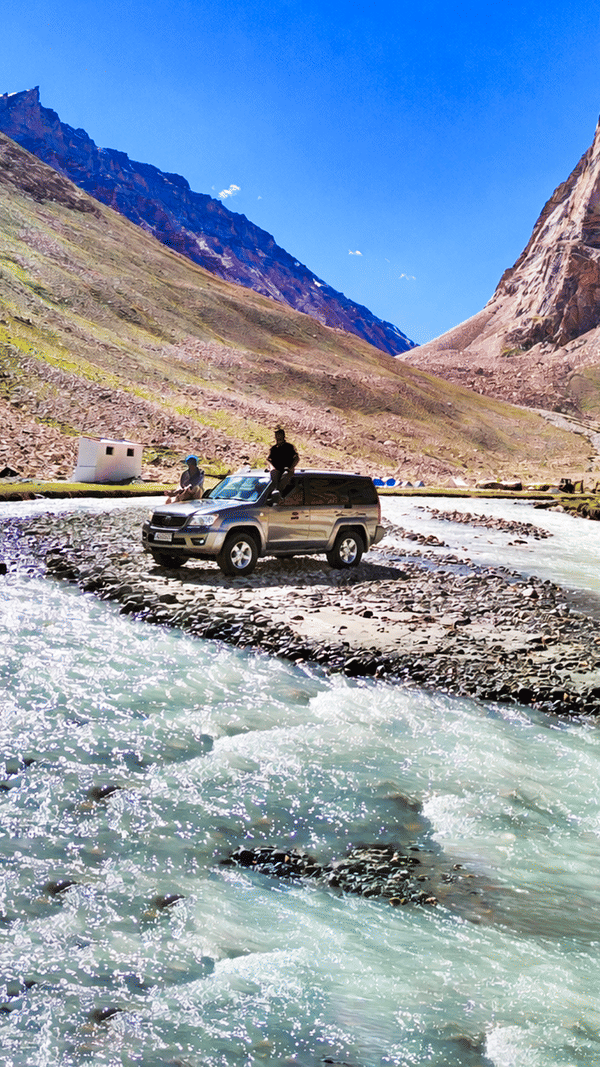
Own car: A hatchback will manage in good conditions, and higher clearance helps at the water crossings past Baralacha La and on the rougher sections near Pang. Fill up at Tandi and you will have nothing to worry about.
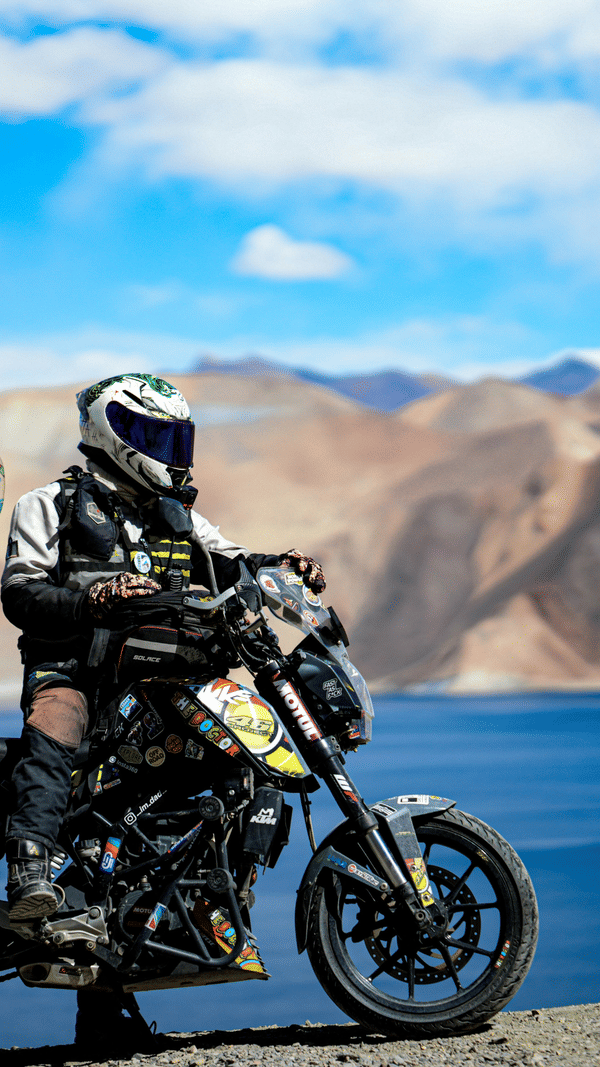
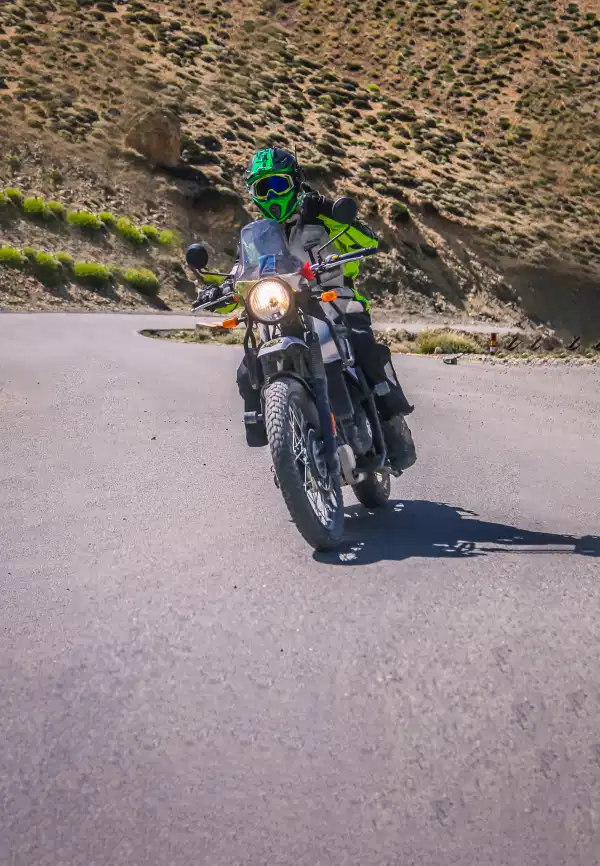
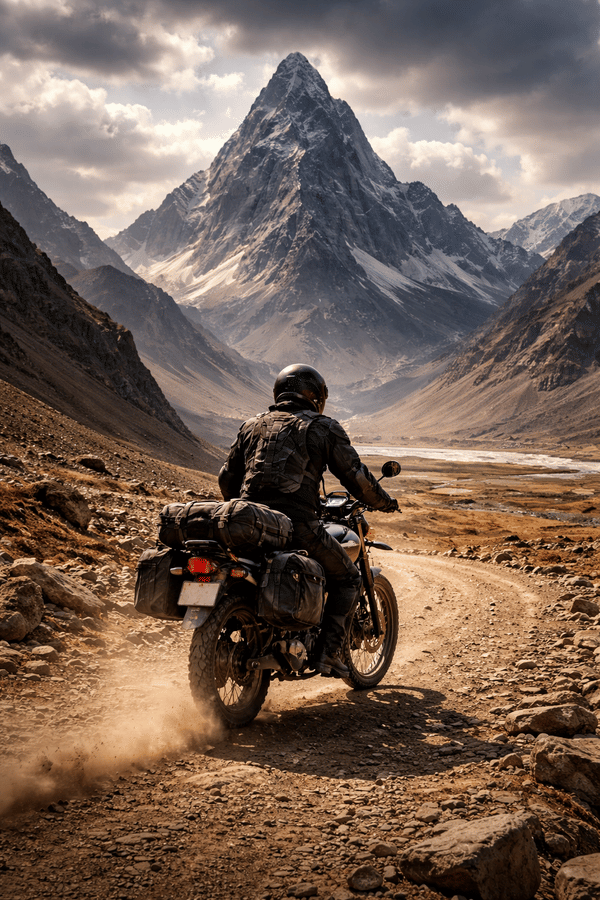
Rented motorcycle: A Ladakh bike trip from Manali is the most rewarding way to travel the highway, and the reason a lot of people make this trip at all. Enfields hire in Manali from around ₹1,500 a day, and the ride suits anyone with real long-distance experience behind them rather than a first tour.
Leh Ladakh bike tour packages make up a large share of the traffic here, and the route rewards every kilometre on two wheels. Keep these five pointers in mind before you set off.
The highway makes far more sense broken into stretches than quoted as one number. This is the part of any Manali to Leh Ladakh road trip guide that you will actually use on the road.
| Stretch | Distance | What to expect |
| Manali to Atal Tunnel south portal | 25 km | Good tarmac through Solang. Traffic builds after 9 am |
| Atal Tunnel to Sissu | 15 km | The 9.02 km tunnel bypasses Rohtang. Sissu is the first Lahaul village |
| Sissu to Tandi | 35 km | Easy valley road. Tandi has the last fuel pump before Karu |
| Tandi to Keylong | 8 km | Keylong is the main town of Lahaul and a common night halt |
| Keylong to Jispa | 22 km | Smooth road along the Bhaga. Jispa is the better place to sleep |
| Jispa to Darcha | 10 km | Last settlement of any size. Check-post here |
| Darcha to Baralacha La | 45 km | Climbs past Zing Zing Bar to 4,890 m. Stream crossings on this stretch |
| Baralacha La to Sarchu | 30 km | Drops past Bharatpur. Sarchu at 4,290 m marks the Ladakh boundary |
| Sarchu to Nakee La | 40 km | The Gata Loops, 21 hairpins, then Nakee La at 4,739 m |
| Nakee La to Lachulung La | 15 km | Short and steep. Lachulung La is 5,059 m |
| Lachulung La to Pang | 20 km | Sharp descent through gorges. Pang has army transit and tea tents |
| Pang to More Plains | 25 km | The plateau opens into 40 km of flat road at 4,800 m |
| More Plains to Tanglang La | 26 km | Tanglang La at 5,328 m is the highest point of the journey |
| Tanglang La to Leh | 107 km | Down through Rumtse, Upshi and Karu into the Indus valley |
Choosing Jispa over Sarchu for the night is the single best decision you can make on this route. Sarchu sits at 4,290 m, high enough that travellers who felt perfectly fine all day can wake up with a headache and a poor night behind them. Jispa is roughly 1,000 m lower, and the extra hour on day two buys you a proper night's sleep.
Save this Manali to Leh distance and route map offline before you leave. Network becomes limited on much of the route after Keylong and improves again around Upshi, so an offline copy is worth having on the seat beside you.
Total driving time is 18 to 20 hours. Day one from Manali to Jispa or Keylong takes 5 to 6 hours. Day two from there to Leh takes 10 to 12. Riders and anyone stopping to photograph the passes should allow two extra hours on the second day.
The permit situation has become much simpler for Indian travellers. You no longer need an Inner Line Permit for the Manali–Leh highway, for Leh town, or for the tourist areas such as Nubra Valley and Pangong Lake that were previously covered by the domestic ILP system.
Environmental and wildlife fees may still apply for travel within Ladakh, and these are handled through an online registration and payment process before you visit the relevant areas. The current fee is ₹400 per person as a one-time environment fee, plus ₹20 per person per day as a wildlife fee, with an optional ₹50 Red Cross contribution as per LAHDC/district administration. Complete it in advance through the Ladakh administration's tourist portal and keep a printed or saved copy of your payment details with you.
Foreign nationals visiting protected or restricted areas need the applicable Protected Area Permit (PAP).
*Rules and permitted areas do change from year to year, so a quick check of the latest Ladakh administration requirements before you travel is time well spent.
Mid-June to mid-September is the best time to visit Ladakh through Manali. The road has settled, the water crossings are manageable and the buses are running to schedule.
Late May and early June have their own appeal, with snow walls still standing at the passes. Travel then with some flexibility in the plan, because fresh snow can close the road for a day or two.
Late September gives you the emptiest road and the finest light of the year. Nights at Jispa drop below freezing and closures can begin at short notice, so this window rewards travellers who have done a few mountain trips before.
July and August bring the crowds and the monsoon. Lahaul and Ladakh stay largely dry through it, though landslides between Manali and the tunnel can slow the start of the journey. If you are weighing the best time to travel from Manali to Ladakh purely on road quality, late August is the sweet spot.
The good news for this season is that the road is open. The Border Roads Organisation completed seasonal snow clearance on the Manali–Leh Highway on 12 May 2026, after which civilian traffic was allowed to resume in stages. The road normally stays drivable until late October and sometimes into early November, closing when sustained snowfall settles on the high passes rather than on a fixed date, usually late October-November to May-June. Weather can still bring temporary closures or traffic restrictions, so confirm the position shortly before you leave.
Three things can change quickly. Snowfall at either high pass can close the road from mid-September onward. Landslides on the Manali side can block the approach even when the passes are clear. Convoy restrictions occasionally hold civilian traffic while army movement takes priority.
None of these last long, and a single spare day in the plan absorbs almost anything the mountain throws at you. For anyone tracking the Manali to Leh highway open status 2026 through the season, the district administration notice is the source worth watching.
If you would rather not arrange the vehicles, halts and paperwork yourself, these fixed-departure Leh Ladakh tour packages by WanderOn cover the same route with the driving, stays and altitude planning already worked out.
| Ladakh Tour Packages From Manali | Starting Price | Duration |
| Ladakh Great Lakes Adventure with Hanle and Umling La | ₹38,499/-per person | 9N - 10D |
| Manali to Srinagar Ladakh Trip with Umling La & Nubra Valley - Pocket Saver | ₹37,999/-per person | 10N - 11D |
| 11 Days Manali Leh Umling La Manali - Value Saver Escape | ₹37,999/-per person | 10N - 11D |
| Great Lakes of Ladakh: Manali to Srinagar - 9 Days Value Expedition | ₹29,999/-per person | 8N - 9D |
| 10 Days Delhi to Ladakh Road Trip | Manali - Leh - Srinagar | ₹40,999/-per person | 9N - 10D |
There are enough worthwhile places to visit between manali and ladakh to justify a third day if you can spare one.
Sissu: The first stop past the tunnel, with a waterfall visible from the road and a small lake that holds the reflection of the Lahaul range on still mornings.
Tandi: The Chandra and Bhaga rivers meet here to form the Chandrabhaga. Worth ten minutes while the tank fills.
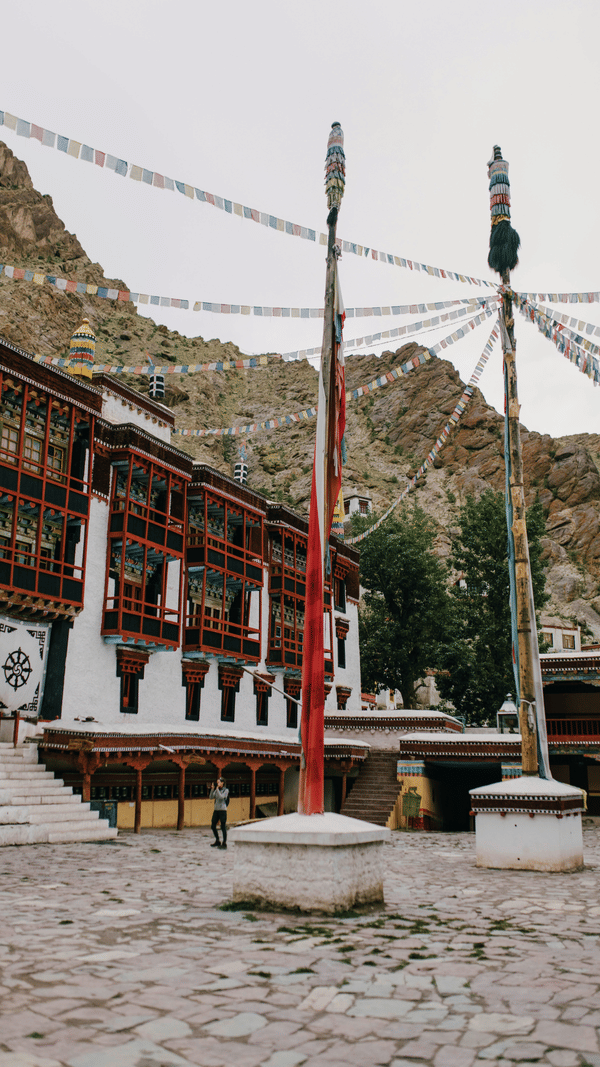
Keylong: Kardang and Shashur monasteries sit above the town and both welcome visitors.
Jispa: River camps along the Bhaga and the quietest night's sleep on the whole route.
Deepak Tal and Suraj Tal: Two glacial lakes on the climb to Baralacha La. Suraj Tal, at around 4,900 m, is among the highest lakes in the country you can drive to.
Gata Loops: Twenty-one stacked hairpins climbing out of the Sarchu plain, best appreciated from the top looking back down.
More Plains: Forty kilometres of flat, empty plateau at 4,800 m. There is nothing to do there, which is exactly the point.
Every trip on this list follows the route set out in the Manali to Leh Ladakh road trip guide above, with the halts placed where they should be and a backup vehicle on the road behind you. That is the simplest answer to how to reach Leh Ladakh from Manali without planning it yourself.
Browse all Ladakh tour packages from Manali with fixed departure dates for the 2026 season.








Soumyadip Das
12 Jul 2026We travelled to Srinagar-Leh-Ladakh. A beautiful and overwhelming journey. Our experience was really great with WanderOn. Our virtual guide Eshta supported us with all the queries and helped in our journey.
Pashangh Irani
12 Jul 2026We booked a trip to Ladakh via Wanderon. Honestly, it was great because we didn't have to worry about anything. From hotels and travel bookings to support during the trip, they had it all handled. Eshta was our POC who did a great job getting us through any issues and guiding us during the trip as well. Will definitely be using them again.
chaitanya chaitu
12 Jul 2026Had an amazing Ladakh trip with WanderOn! Everything was well organized, and the entire experience was smooth and memorable. A special thanks to our virtual trip advisors, Manish and Eshta, for their constant support and quick responses throughout the trip. Highly recommend WanderOn for a hassle-free travel experience!
Pooja Sapte
9 Jul 2026WanderOn is great for Ladakh trip. Our team captain Ayush and Bharat were amazing. Chaotic hoti baaton pe mene bohot cheda he unko and also because I took them as kids But these kids managed the trip extremely well. Ayush got responsibility and care on the table while Bharat got fun and adventure Both are extremely knowledgeable and fun to hang out with Despite of certain shortcomings in the entire journey I really had fun as the entire group was awesome I absolute didn’t feel like I was travelling with strangers I made a lot of new friends that I am going to treasure for life. The main thing that everyone cribbed about was food, which the only section where WanderOn should work on. Baaki sab badhiya that tha . I would thank WanderOn, Ayush and Bharat for making this dream bike ride comfortable and successful for me. And moreover thanks for the new friends I met on this trip All in all a great trip
Your right to Know!
The Manali to Ladakh Distance is around 427 to 428 km through the Atal Tunnel and 473 to 474 km by the older Rohtang Pass alignment. The exact figure varies slightly with your route and starting point.
Plan on two days and 18 to 20 hours of driving, though the direct HRTC bus covers it in one stretch. Manali to Leh travel time and permits are easy to plan, since Indians need no permit for the highway.
The Border Roads Organisation (BRO) completed snow clearance on 12 May 2026 and civilian traffic resumed in stages, so the road is open for the season. For the latest manali to leh highway open status 2026, check the district administration notice.
Yes, the Atal Tunnel stays open and is now the standard way of how to reach leh ladakh from manali. At 9.02 km it bypasses Rohtang Pass entirely and shortens the drive noticeably.
Tandi, just before Keylong, has the last pump before Karu near Leh, a gap of roughly 365 km. Anyone planning a manali to leh bike trip route should top up fully and carry a spare fuel can.
Indian nationals need no Inner Line Permit for the drive or for areas once covered by the domestic ILP system. Environmental and wildlife fees may apply, and foreign nationals need a Protected or Restricted Area Permit.
Some good reads to help you travel better!


Travel More. Worry Less. We've Got the Rest.
Expertly Crafted Itineraries
Famous sights, hidden gems, and everything in between — planned around your vibe, your crew, your budget.
Passionate Trip Captains
Our Captains are trained to lead and set the vibe. They will be part guide, part friend, all in.
End-to-End Travel Support
Visa help, on-ground assistance, round-the-clock support! You just book, we will handle the rest.
Top Rated by Travellers
4.9 stars on Google and TripAdvisor from 2 lakh+ travellers who booked, and came back to say it was worth it.
Transparent Pricing, No Hidden Costs
We clearly spell out what's included and what's not, so nothing catches you off guard mid-trip.
Best Stays, Transport & Meals
We arrange comfy stays, reliable drivers with good vehicles, and the best meals we can find for you.
Don't Just Dream, Travel!
Don't just dream travel!
Allow us to call you back!

Don't just dream travel!
Allow us to call you back!