Wat Phra Yai, known to most visitors as the Big Buddha Koh Samui, is the island's best-known landmark. The 12-meter golden statue sits on a small islet on the Northeast coast, which is joined to the main island by a short causeway. It is so close to Samui Airport that many travelers see it from the plane before they land.
Entry is free, a visit takes about an hour, and the temple is a short drive from Bophut and Chaweng. This guide covers the history of the statue, the dress code, the best time to visit, and the nearby places that are worth adding to the same trip.
Travellers who would like a planned trip that includes Koh Samui and Thailand's other islands can explore our Thailand tour packages. These trips arrange the hotels, transfers, and island connections in advance, so you can spend your time visiting places such as the Big Buddha instead of planning each step of the journey.
Wat Phra Yai Visitor Information: Location, Entry Fee, and Opening Hours
Wat Phra Yai is free to visit and easy to fit into a morning on Koh Samui. It is also a common stop on Thailand group tour packages that include the island, so many travelers see it as part of a planned day of sightseeing. Here are the key details to know before you go.
History and Meaning of the Big Buddha Temple
Wat Phra Yai, also known as the Big Buddha Temple Samui, began as a small local place of worship. It became the island's best-known symbol after the golden statue was completed in 1972.
It is still an active temple, with monks living on site and local families visiting to pray and make offerings. Among the many temples in Thailand, it is one of the most photographed, thanks to its golden statue and its setting by the sea.
The Statue and What Its Pose Means
The statue shows the Buddha seated, with his right hand reaching down to touch the ground and his left hand resting in his lap. This pose is known as the Mara posture. According to Buddhist tradition, the demon Mara tried to stop the Buddha from reaching enlightenment, and the Buddha touched the earth to call it as his witness. The pose stands for calm strength and the ability to resist temptation.
Ko Faan Islet and the Causeway
The temple stands on Ko Faan islet, a small rocky island just off Bang Rak Beach on Samui's north-east coast. A short causeway joins the islet to the main island, so visitors can drive or walk across without a boat.
Bang Rak Beach is often called Big Buddha Beach because of the statue that rises above it, and the view of the statue from the shore has become one of the must-see sights when discovering Thailand tourism.
Visiting the Big Buddha: Getting There, Dress Code, and Temple Etiquette
A visit usually takes 45 minutes to an hour, and it is a regular stop on most Koh Samui tour packages. Before you go, plan how you will get there, wear clothes that cover your shoulders and knees, and learn a few simple temple customs.
How to Get to Wat Phra Yai?
- By taxi: The temple is about 10 minutes from Bophut and 15 to 20 minutes from Chaweng.
- By scooter: The ride along the coast road is easy, and parking at the base of the causeway is free.
- By songthaew: This shared pickup truck works as a local taxi and is the cheapest way to get there.
- Getting to the island: If you are still planning your journey to Samui, read our guide on how to reach Koh Samui from Bangkok.
What to Expect on the Staircase and Viewing Terrace?
- The staircase: A wide staircase leads from the car park to the statue, with two long serpent statues along each side that are believed to protect the temple.
- The terrace: At the top, a terrace surrounds the statue, with rows of small bells that visitors ring for good luck.
- The view: On a clear day, you can see Bang Rak Beach, the airport runway, and the island of Koh Phangan across the sea. Watching the sunrise from this terrace is one of the most memorable things to do in Thailand.
What to Wear at Wat Phra Yai?
- Clothing: The Big Buddha Samui dress code is simple; cover your shoulders and knees, as you would at any temple in Thailand.
- Sarongs: If you arrive in shorts or a sleeveless top, you can borrow or rent a sarong at the bottom of the stairs.
- Shoes: You must remove your shoes before stepping onto the upper terrace. The tiles become very hot by late morning, so an early visit is easier on bare feet.
Etiquette to Follow at the Big Buddha Temple Samui
- Do not point your feet towards the Buddha statue, and do not climb on it or lean against it for photos.
- Speak quietly, as local people come here to pray.
- Women should not touch monks or hand objects to them directly.
- A small donation in the temple box is welcome, although it is not required.
Best Time to Visit the Big Buddha in Koh Samui
- Early morning, 7 to 9 am: This is the best time to visit. The light is soft and golden, the air is cooler, and there are few tour groups. You may also see local people bringing offerings.
- Late afternoon, 4 to 6 pm: The statue glows in the evening light, which makes this a good time for photos. Check the closing time on the day, as the upper terrace usually closes at about 6 pm.
- Midday, 11 am to 3 pm: This is the hardest time to visit, as the heat is strong, the tiles are hot underfoot, and tour buses arrive.
- By season: January to August is the drier part of the year on Samui. October to December brings the heaviest rain, so plan your visit for a dry morning in those months.
Can You See the Big Buddha When Flying into Samui Airport?
Samui Airport is only about 2 km from the temple, and many flights pass close to the statue as they land or take off. Ask for a window seat if you want to look for it. The side of the plane that faces the statue changes with the wind and the runway in use, so it is not possible to choose the right side in advance.
Places to Visit Near the Big Buddha
Wat Phra Yai sits on the north-east tip of Koh Samui, close to several of the island's best beaches and temples. For travellers covering the most popular places to visit in Thailand, this corner of Samui is easy to explore in a single day, as most of the places below are within 20 minutes of the Big Buddha.
1. Wat Plai Laem
Wat Plai Laem is about five minutes by car from the Big Buddha, yet many visitors miss it. The temple is known for a large white statue of Guanyin, the Chinese goddess of mercy, shown with 18 arms and standing on a platform in the middle of a lake.
Nearby is a statue of the laughing Buddha, and the buildings mix Thai and Chinese styles in bright colours. Entry is free, and visitors often feed the fish in the lake.
2. Fisherman's Village in Bophut
Fisherman's Village is about 10 minutes from the Big Buddha and is the best place to end the day. Its main street has old wooden shophouses, small boutiques, and restaurants that look out over the beach.
On Friday evenings, the street becomes a walking market with food stalls, crafts, and live music, usually from about 5 pm.
3. Bang Rak Beach
Bang Rak Beach lies right next to the causeway, which is why it is often called Big Buddha Beach. The water is calm and shallow, and the beach has small cafés and restaurants with views of the statue. It is a quiet place to relax after your temple visit.
4. Choeng Mon Beach
Choeng Mon Beach is about 10 minutes away by road. It is a curved, sheltered bay with soft sand and clear water, which makes it one of the best swimming beaches on the island, especially for families.
5. Chaweng Beach
Chaweng Beach is about 15 to 20 minutes from the Big Buddha and is Samui's longest and busiest beach. It has a wide choice of hotels, restaurants, and shops, and its main road becomes lively in the evening.
6. Day Trip to Koh Phangan
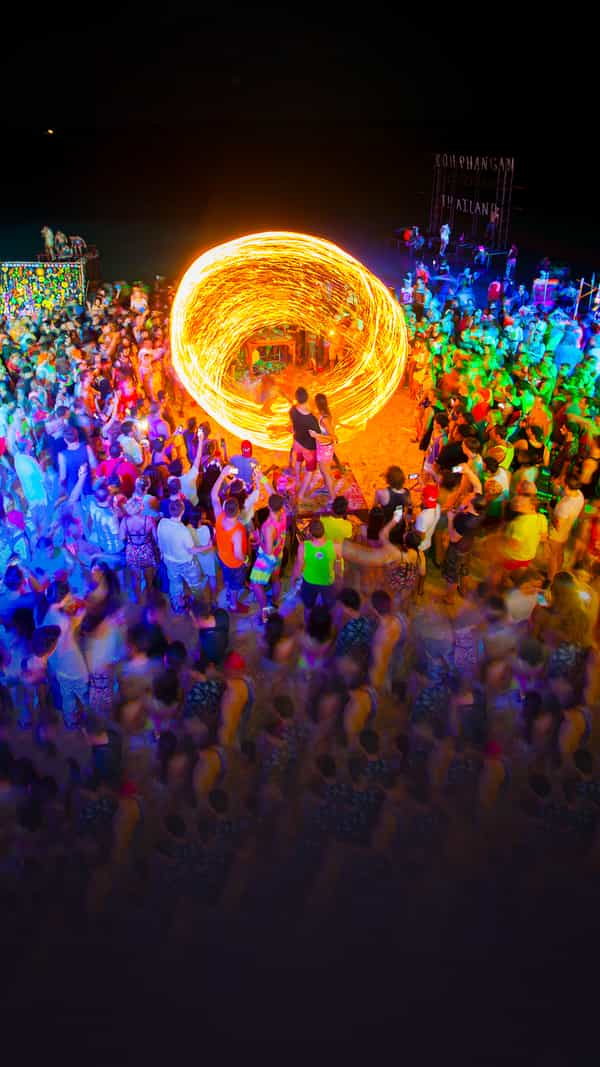
Boats to Koh Phangan leave from the pier at Bang Rak, close to the Big Buddha, and reach Haad Rin in about 50 minutes. A day trip lets you see a second island's beaches and viewpoints, and it is easy to plan from this side of Samui.
To plan the rest of your time on the island, read our guide to things to do in Koh Samui.