


Khab Sangam is the dramatic confluence of the Spiti River and the Sutlej River, near Khab village in Kinnaur, Himachal Pradesh. It sits on NH-505 on Shimla-Kaza route, about 290 km from Shimla and 70 km past Reckong Peo.
If you're on a trip to Spiti Valley via Shimla, you have to cross the Khab Sangam Bridge at 2,438 m - 2,600 m as it marks the border between green Kinnaur and the cold desert of Spiti. Most people treat it as a quick photo stop and don't stop long enough.
Below the bridge, the clear and cold Spiti River from the Kunzum Range meets the wide and muddy Sutlej from Tibet — visibly different colours before they merge into one.
The old Silk Route traces the slope above. On a clear day you can spot Reo Purgyil, Himachal's highest peak at 6,816 m, and the dramatic zigzag road climbing into Spiti from this exact point.
Follow this guide to know how to reach Khab Sangam on your Spiti Valley road trip, best time to visit, what to do, and places worth stopping at along the way.
Khab Sangam Spiti Valley: Quick Details For Your Trip

- Location: Kinnaur District, Himachal Pradesh (connecting NH-5 and NH-505)
- Confluence: The meeting point of the Spiti River (clear and cold) and Sutlej River (muddy brown)
- Khab Sangam Altitude: 2,438 m - 2,600 m
- Best Time: June-July (Summer) and September – October (Post-monsoon)
- Distance: Located 15 km from Pooh and 30 km from Nako
- Permits: Inner Line Permits are required for foreign nationals; Indian nationals only need valid ID.
- Entry Fee: None
- Connectivity: BSNL only beyond Reckong Peo
- Nearest petrol pump: Reckong Peo; fill up before you leave
Best-Selling Spiti Valley Trips:

Chandigarh To Spiti Valley Road Trip | Complete Himalayan Expedition

Spiti Valley Road Trip: Chandratal & Pin Valley Circuit

Spiti Valley Adventure From Chandigarh: Sangla, Kalpa & Tabo Special
What Makes Khab Sangam So Special?

So, what is Khab Sangam famous for actually? Khab Sangam is famous for being the dramatic meeting point of two of Himachal's most powerful rivers, and one of the most visually striking stops on the entire Spiti circuit.
You've seen river confluences before. So why does Khab feel different? It’s less about the map and more about the shift in the air as you stand at this junction.
1. Scenic, Contrasting Visuals
You see the muddy, powerful Sutlej arriving from Tibet meeting the ice-cold Spiti rushing from the Kunzum Range. They don't mix immediately; they collide, maintaining their own colors and temperatures for a few hundred meters as if they aren't quite ready to let go of where they came from.
2. The Heavy Silence Of The Mountains
Enormous rock walls press in from every side, making the world feel small and the water sound louder. On a cloudy day, it feels genuinely haunted, the kind of place where you instinctively lower your voice to a whisper.
3. A Sentinel In The Clouds

If the sky is clear, you look up to see Reo Purgyil, the highest point in all of Himachal, towering at 6,816 meters. It doesn't feel like a mountain; it feels like a guard watching over the confluence. Capturing this moment is one of the most exciting things to do in Spiti Valley for sure.
4. A Path Walked By History
Just to your left, you can still see the faint trace of the ancient Silk Route. It’s the old world whispering to the new, a reminder that traders and pilgrims have been standing exactly where you are for centuries.
5. Gateway To The High Desert
This is the real magic. Cross the bridge and the landscape essentially dies and is reborn. The greenery of Kinnaur vanishes in your rearview mirror, replaced instantly by the stark, haunting, brown-grey world of the trans-Himalayas.
That shift is what makes Khab Sangam Spiti impossible to forget. It is the physical and emotional threshold where one world ends and the Spiti you’ve been dreaming of finally begins.
Where Exactly Is Khab Sangam?

Khab Sangam in Spiti sits in Upper Kinnaur, a stretch most travellers miss because they end their journey at Kalpa or Reckong Peo. That’s a mistake. The road from Peo towards Pooh and into Spiti is easily one of the most dramatic drives in northern India.
Khab Sangam Location
On the map, Khab is the critical junction where the lushness of Kinnaur begins to fade:
- Distance: Roughly 70 km northeast of Reckong Peo
- The Highway: Located on NH-505, which officially begins here and connects Spiti Valley to the north.
- Border: You are standing in the Sutlej Valley, incredibly close to the India–Tibet border
The Logistics
- The Bridge vs. The Village: Don’t confuse Khab Village (the tiny settlement up on the hillside) with Khab Sangam. The Sangam is the confluence point down at the bridge where the dhaba is, that is where you want to stop.
- The Route: If you’re doing the Shimla to Spiti circuit, you’ll hit Khab on Day 4 or 5, typically during the leg from Kalpa to Nako.
- No Detours: It’s not a side-trip; it is directly on your route. You literally have to cross it to enter Spiti.
Best Time To Visit Khab Sangam

The best time to visit Khab Sangam is June to early July. Snowmelt from the Kunzum Range is at its peak, the rivers are running at full force, and the roads have freshly opened after winter. Check out the month by month breakdown of Spiti Valley in summer to plan accordingly.
- Weather: Generally clear with bright, high-altitude sun
- Temperature: Comfortable days (15–22°C); cold nights (0–5°C)
- Landscape: Full-force rivers, vivid color contrast, and snow-dusted peaks
- Roads: Freshly opened and at their most stable before the monsoon rains.
Other Travel Windows For Khab Sangam:
- September to October (The Stable Choice): Best for photography. The skies are crystal clear, the light is golden, and the monsoon landslide risks have passed. Check out some of the best photography spots in Spiti Valley during this time.
- July to August (The Risky Window): The confluence is muddy and dramatic, but the road between Reckong Peo and Spello is notoriously prone to landslides. Keep a 2-hour buffer and start early.
- November to May (Avoid): Extreme sub-zero temperatures and heavy snowfall. Most roads are treacherous or closed; only for specialized winter expeditions.
How To Reach Khab Sangam?

Khab Sangam Spiti isn't a destination you visit in isolation; it is a critical landmark on the road to Kaza. Depending on which way you are tackling the Spiti Circuit, you will encounter it differently.
Shimla To Kaza Route (Through The Gateway)
This is the most popular way to reach Khab Sangam as it’s directly on the main highway and you need to literally drive over it to reach Kaza.
The journey is spectacular, especially if you’re on a Shimla to Spiti bike trip, but the terrain is demanding; do not attempt this in a single day.
- Route: Shimla → Narkanda → Rampur → Reckong Peo → Pooh → Khab
- Distance:~290 km from Shimla; ~70 km from Reckong Peo
- Driving Time: 10–12 hours (Best broken over 2 days with a stay in Kalpa or Peo)
- Highway: Follow NH-5 (the Hindustan-Tibet Highway) until Khab, where NH-505 (Spiti Highway) officially begins
- Fuel Alert: Fill your tank at Reckong Peo. There are no petrol pumps between Peo and Kaza (~200 km). Carry a jerry can if you're on a bike.
Manali To Kaza Route (Through Exit)
Use this if you are completing the full Spiti circuit and exiting via Kinnaur towards Shimla. You will approach Khab from the north after passing through Kaza and Nako.
- Route: Manali → Atal Tunnel → Kaza → Tabo → Nako → Khab
- Distance:~180 km from Kaza
- Timing: Roughly 5–6 hours from Kaza
- Note: The Kunzum Pass typically opens in late June. Always check the status before planning this direction. Check out the Manali to Spiti Valley route to plan a trip from the Manali side.
Public Transport & Logistics
If you’re wondering how to reach Khab Sangam Spiti without a private vehicle, it’s entirely doable on a budget, provided you have a flexible schedule.
- Buses: Daily HRTC buses from Reckong Peo to Kaza or Peo to Pooh pass directly over the bridge.
- The Stop: Ask the driver for the "Khab Bridge" drop-off. You don't want the village; you want the confluence.
- Moving On: For the leg toward Nako/Spiti, you'll need to flag down passing shared cabs or wait for the afternoon Kaza-bound bus.
For a detailed route breakdown, check out how to reach Spiti Valley from different directions and how to navigate it safely.
Check Out Our Popular Spiti Trips:
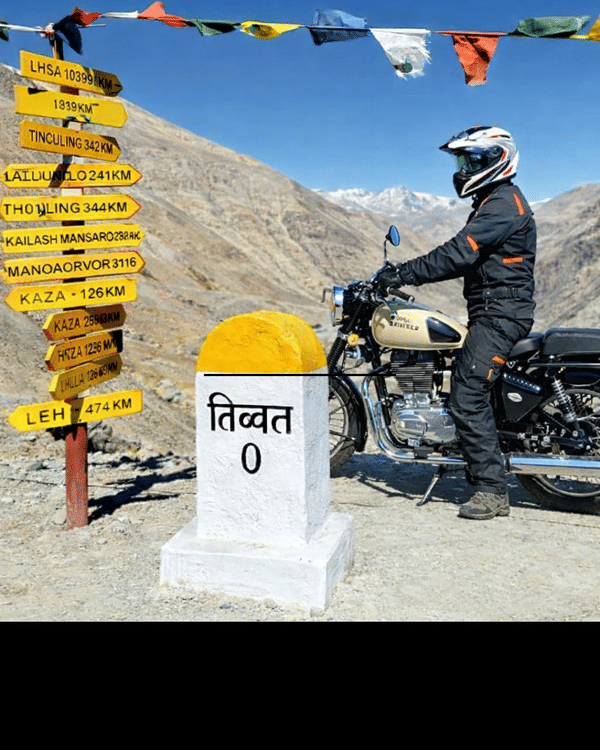
Thrilling Spiti Valley Bike Trip | Ride To The Edge At Lepcha La
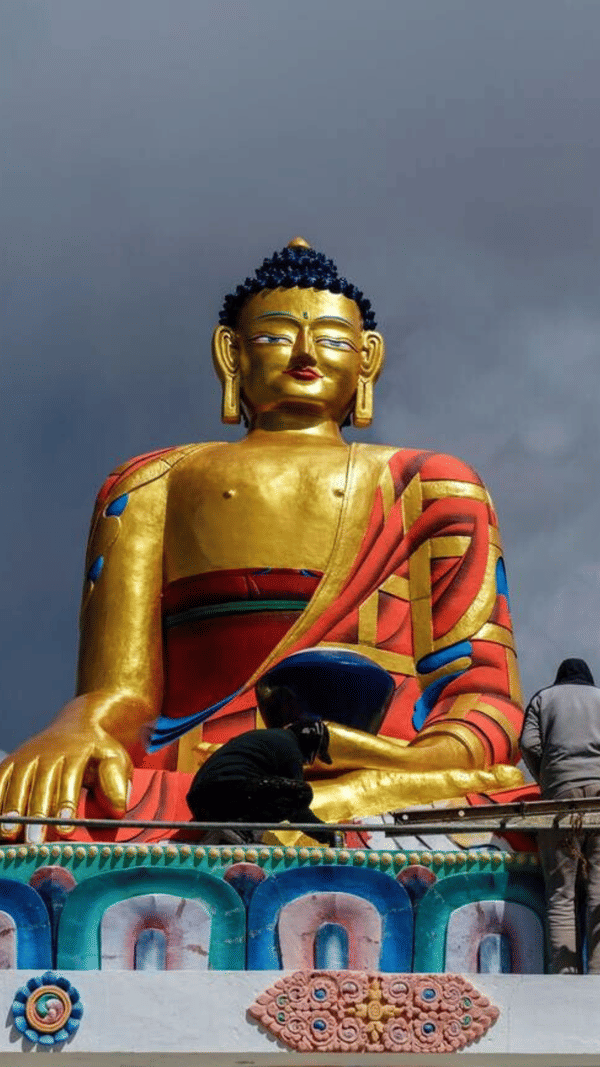
Spiti Valley Full Circuit Road Trip 7 Days | Value Saver Package from Delhi

Frozen Spiti Backpacking - Bliss in Budget
Things To Do At Khab Sangam Spiti

Khab Sangam Spiti isn't a full-day destination. You'll spend 30 minutes to an hour here, but make those minutes count.
1. Watch the Confluence Up Close
This sounds obvious, but actually stand at the Khab Sangam bridge and watch the water. The Sutlej comes in from the left, muddy and wide. The Spiti rushes in from the right, faster and colder.
For a brief stretch, you can see them as two separate rivers before they become one. The whirlpools where they meet are hypnotic.
2. Spot Reo Purgyil on a Clear Day
Looking up from the bridge towards the northeast on a clear morning, you might catch a glimpse of Reo Purgyil (6,816 m), Himachal Pradesh's highest peak.
It's not always visible, but when it is, it’s one of the best things to see at Khab Sangam Bridge due to its scale. Early morning gives you the best chance before clouds build up.
3. Walk the Bridge and Feel the Transition
This is something most people don't think to do, walk across the bridge. On one side is Kinnaur. Cross over and you're looking at the beginning of Spiti. The air feels different, the mountains look different, and something in the landscape shifts tangibly. It's a small walk but a meaningful one.
4. Photograph the Landscape
We'll get into photography tips separately, but don't put the camera away just because you're "just passing through." Khab is one of the most photographed spots on the Spiti circuit for good reason, the scale of the gorge, the two rivers, the zigzag road climbing up beyond the bridge, the ancient Silk Route marking the slope above. There's a composition in every direction.
5. Take a Detour to Tashigang Gompa
A short drive from Khab Sangam Bridge, Tashigang Gompa is a centuries-old Buddhist monastery perched above the valley. It's not heavily visited, which makes it all the more worth it.
If you have an extra 30–45 minutes and the road is clear, make this stop. The monastery and the views down to the confluence from the hillside above are wonderful.
Where To Stay Near Khab Sangam

Khab itself is just a bridge and a dhaba; you won’t find a place to sleep at the confluence. You’ll need to stop at one of these three points based on where you are in your day:
1. Pooh (15 km away)
This is your "safety net" if you’re running late. It’s a quiet village with a very local feel.
- Stay type: Simple homestays and the government PWD rest house
- Average cost:₹800 – ₹1,500 per night
- Basic amenities: A solid roof, clean blankets, and home-style meals. Don't look for Wi-Fi or room service; it's strictly for a good night's rest.
2. Nako (30 km away)
Most travelers push for a stay in Nako because it’s a proper destination by the lake. It's much higher up, so it gets significantly colder here.
- Stay type: Lakeside guest houses, basic hotels, and fixed-tent campsites
- Average cost:₹1,500 – ₹3,500 per night
- Basic amenities: You’ll get hot water (often by the bucket), small cafes with actual menus, and if you’re lucky, some patchy Wi-Fi in the common areas.
3. Kalpa or Reckong Peo (70 km away)
The standard starting point. If you want a hot shower and a decent signal before the network dies, stay here the night before hitting Khab.
- Stay type: Proper hotels, luxury resorts, and backpacker hostels
- Average cost:₹1,000 (hostels) – ₹5,000+ (resorts)
- Basic amenities: Reliable 4G, geysers, multi-cuisine restaurants, and proper parking. This is the last stop for full amenities.
Photography Tips For Khab Sangam

Khab is a photographer's playground, but you need to time it right. The scale at Khab Sangam Spiti is massive, so focus on these specific angles:
- Catch the early light: Aim for 7 AM to 9 AM. The low sun creates deep shadows on the valley walls; by noon, the light is flat and the colors look washed out.
- Shoot from the bridge center: Frame the Spiti river coming in from one side and the Sutlej from the other. It’s the best spot to capture the two distinct water colors before they mix.
- Use the road as a leading line: Point your lens at the zigzag loops climbing the mountain beyond the bridge. It gives your photos a sense of scale and shows just how tiny the cars look against the rock.
- Don't fear the clouds: If it’s overcast, the gorge looks moody and almost haunted. These are often better shots than a plain blue sky because they capture the raw, harsh vibe of the place.
- Include Reo Purgyil: On clear mornings, step to the upstream side of the bridge. If you can fit the 6,816m peak and the river confluence in one frame, you’ve got the definitive Khab shot.
- Drone Warning: This is a sensitive border zone near Tibet. Do not fly a drone here without checking local rules and having the right permits; security is tight.
Things To Know Before You Go To Khab Sangam

A few things that will save you a massive headache once you leave the main towns behind:
- Permit rules: Indian nationals just need a valid ID. Foreigners must get an Inner Line Permit in Shimla or Reckong Peo before heading this way; you'll be turned back at the checkpoint without it.
- Network dead zones: Expect your signal to die after Reckong Peo. Only BSNL works somewhat reliably, so download offline maps and tell your family you'll be off the grid for a bit.
- The "Last Fuel" rule: Fill your tank to the brim at Reckong Peo. There isn’t another drop of fuel until Kaza, which is roughly 200 km of mountain driving away.
- Cash is king: ATMs are non-existent until you hit Kaza, and UPI won't work without a signal. Carry enough physical cash for your stay, food, and emergency repairs. Check out the essential things to carry for your Spiti Trip.
- Altitude shift: Khab Sangam’s altitude is at 2,438 m - 2,600 m, so if you’re coming from the plains, you’ll feel the thin air. Drink lots of water and don't rush your movements; let your body catch up.
- The landslide stretch: The road between Peo and Spello is notorious for falling rocks. Start your day early to beat the traffic and never drive this section after sunset; it’s just not worth the risk.
- Respect the water: The Sutlej looks tempting but it's incredibly dangerous. The currents are deadly and water levels can surge in seconds; stay on the bridge or the road and don't try to head down to the banks.
Top Spiti Valley Tour Packages For You:
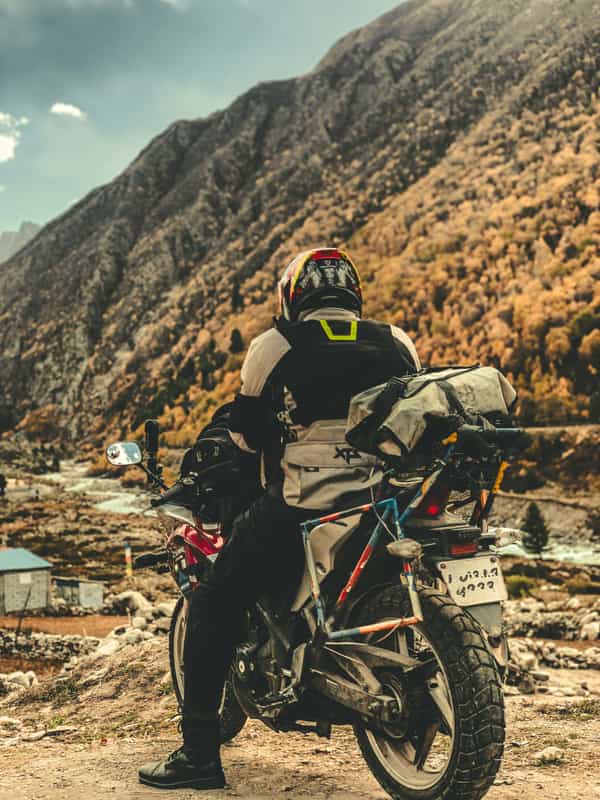
Spiti Valley Circuit Group Bike Trip | Tirthan To Manali On Two Wheels
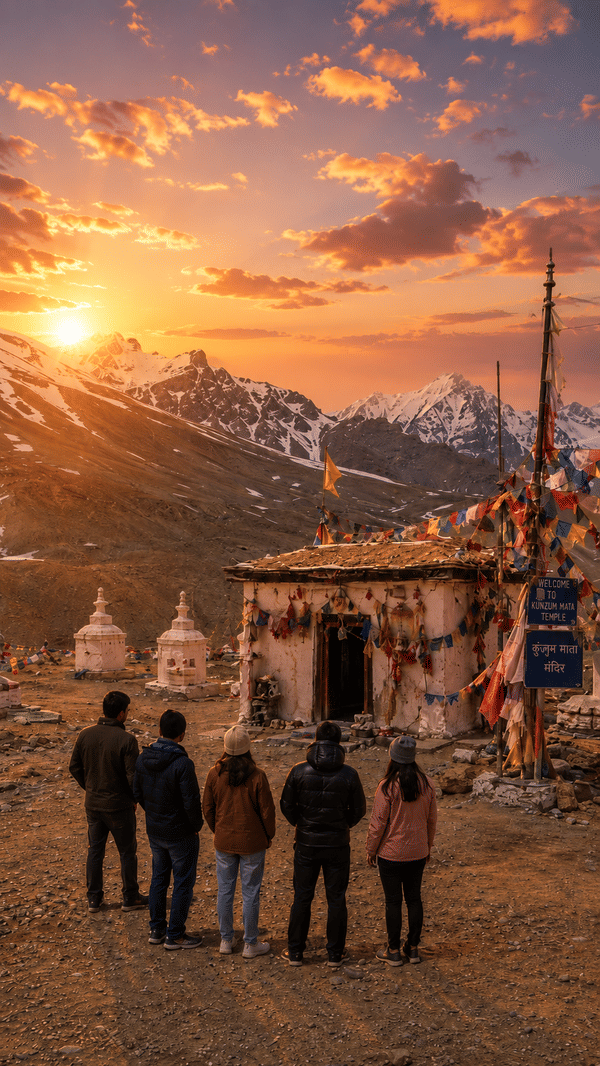
Spiti Valley Group Trip with Chandratal: Summer Edition

Spiti Valley Adventure Trip From Delhi: Kinnaur-Spiti Circuit
6 Places To Visit Near Khab Sangam
Khab is best experienced as part of the larger Kinnaur–Spiti circuit. Here are the places nearby that deserve your time:
1. Nako Lake and Village

Nako is a high-altitude village built around a small, green lake. It’s a stark, beautiful plateau where the greenery of the lower valleys completely disappears, replaced by prayer flags and wind-swept stone houses.
- Distance from Khab:~30 km
- Altitude: 3,662 m
- Highlights: 1,000-year-old monastery, lakeside walks, and the best sunset views in the region.
2. Tashigang Gompa
A hidden, cliffside monastery perched high above the confluence. It’s rarely visited by the main tourist crowds, making it one of the quietest and most authentic spiritual places to visit in Spiti on this entire route.
- Distance from Khab:~10 km (steep detour)
- Altitude:~3,200 m
- Highlights: Bird’s-eye views of the river confluence and total silence.
3. Gue Village & Mummy
Gue is a tiny village famous for housing the naturally preserved 500-year-old mummy of a Buddhist monk. It sits in a remote valley right against the border and feels like stepping back in time.
- Distance from Khab:~80 km
- Altitude: 3,050 m
- Highlights: The Sangha Tenzin mummy, ancient mud-brick homes, and extreme proximity to the Tibet border.
4. Tabo Monastery
Often called the ‘Ajanta of the Himalayas,’ this UNESCO site is a massive complex of mud-brick temples. It has been a center for Buddhist learning for over a thousand years and still feels incredibly powerful.
- Distance from Khab:~100 km
- Altitude: 3,280 m
- Highlights: 10th-century murals, ancient caves used by monks for meditation, and a very peaceful monastery guest house.
5. Kalpa

An apple-orchard village that offers the most famous view of the Kinnaur Kailash peaks. It is the last place on the circuit where you’ll see lush forests and heavy greenery before the terrain turns to desert.
- Distance from Khab:~70 km
- Altitude: 2,960 m
- Highlights: Views of the 6,050m Kinnaur Kailash, and traditional Kinnauri architecture.
6. Pooh Village
A sprawling hillside settlement that most people only see from the highway. It’s a great place to stop and see how the locals actually live in these harsh conditions without the tourist fluff.
- Distance from Khab:~12-15 km
- Altitude: 2,831 m
- Highlights: Apricot and almond orchards and the last reliable market before entering the Spiti interior.
Why Khab Sangam Stays With You?

Khab Sangam Spiti isn't going to be the most Instagram-famous spot on your Spiti trip. It doesn't have a monastery on a cliffside or a turquoise lake framed by snow peaks. What it has is something harder to photograph but easier to feel, a sense of place that's genuinely rare.
You're standing where two ancient rivers become one, on a highway that was once a Silk Route, at the edge of one of India's most remote and spectacular landscapes.
Plan your Spiti escape today or join the community of like-minded travelers at WanderOn for a totally unique experience.
Frequently Asked Questions
What is Khab Sangam?
Khab Sangam is the high-altitude river confluence where the Spiti River meets the Sutlej. It serves as a geographical gateway to Spiti Highway, marking the dramatic transition from the lush Kinnaur valley into the barren, high-altitude desert of Spiti.
Where is Khab Sangam located?
Khab Sangam is located in the Kinnaur district of Himachal Pradesh, India. It sits right on the Khab Bridge along NH-505, approximately 70 km from Reckong Peo and 12 km before the village of Pooh, near the India-Tibet border.
Which rivers meet at Khab Sangam?
The two rivers that meet here are the turquoise, glacier-fed Spiti River and the muddy, powerful Sutlej River. The Spiti flows in from the Kunzum Range, while the Sutlej enters the confluence from its source in Tibet.
Why is Khab Sangam famous?
It is famous for the visible contrast between the clear Spiti and muddy Sutlej waters. It is also a strategic landmark near the Tibetan border, offering rare views of Reo Purgyil peak and traces of the ancient Silk Route trails.
Are there any restaurants or shops at the confluence?
There are no proper restaurants or markets at Khab Sangam. There is only a small, basic tea stall (dhaba) near the bridge that serves Maggi, tea, and biscuits. For a proper meal or supplies, you should stop at Pooh (15 km away).
Can I see the India-China border from Khab Sangam?
No, you cannot see the actual border line from the bridge. While the Tibet border is physically very close (roughly 10–15 km away as the crow flies), the rugged mountain terrain and high ridges completely block any direct view of the international boundary.
Is a 4x4 vehicle required to reach Khab Sangam?
No, a 4x4 is not necessary. The road (NH-5 and NH-505) is well-paved for most of the stretch from Reckong Peo. Any standard hatchback, sedan, or SUV can easily reach the confluence, provided the driver is experienced with steep mountain curves and narrow stretches.
Is there any mobile network at Khab Sangam?
Connectivity is extremely poor at the bridge. BSNL is the only network that occasionally shows a faint signal, but data is non-existent. It is best to finish your important calls and download your offline maps before leaving Reckong Peo or Pooh.


