The main places to visit in Anuradhapura are Sri Maha Bodhi, Ruwanwelisaya, Jetavanaramaya, Abhayagiri Monastery, and Isurumuniya Temple, with Thuparamaya, Kuttam Pokuna, the Samadhi Buddha statue, Lovamahapaya, Mirisawetiya, and Tissa Wewa filling out the ancient city, and Mihintale sitting 15 kilometers east as a sunrise add-on. The monuments are spread across several kilometers of flat, shaded lanes, which is why one full day on a bicycle, starting early and breaking through the midday heat, is the sensible way to cover them.
Anuradhapura served as the first great capital of Sri Lanka for roughly 1,300 years, and the depth of that long reign is what makes the city feel different from other ruin sites on the Cultural Triangle. Temples still function as active shrines, monastery lanes still carry morning pilgrims, and reservoirs still hold water that was first engineered more than two millennia ago. UNESCO added the sacred city to its World Heritage list in 1982, and the living pilgrimage here has never stopped.
If you are planning a visit, keep at least one full day for sightseeing. The monuments are spread out, and the afternoon heat can slow you down. OurSri Lanka tour packagescover Anuradhapura and the other main cultural triangle stops, so you can follow a planned route instead of sorting the trip out on your own.
Best Places to Visit in Anuradhapura by WanderOn’s Trip Captains
Our trip captains have run the Anuradhapura day for travelers across every season, and the quick-reference table below sets out the best places to visit in Sri Lanka, specifically in Anuradhapura, suggested by them with the rough time needed at each. The city is one of the most visited stops in Sri Lanka tourism, with monasteries, stupas, reservoirs, and shrines spread out across the ancient capital.
Place
What You Will Find
Time Needed
Sri Maha Bodhi
Sacred Bodhi tree and active shrine
30–45 minutes
Ruwanwelisaya
Giant white Buddhist stupa and evening puja
30–45 minutes
Jetavanaramaya
Vast ancient brick stupa
30–45 minutes
Abhayagiri Monastery
Monastery ruins and historic monuments
45–60 minutes
Thuparamaya
One of Sri Lanka's oldest stupas
20–30 minutes
Isurumuniya Temple
Rock temple with famous stone carvings
30–45 minutes
Kuttam Pokuna
Ancient twin bathing ponds
20–30 minutes
Samadhi Buddha Statue
Historic meditation sculpture in stone
15–20 minutes
Lovamahapaya
Pillar remains of the Brazen Palace
15–20 minutes
Mirisawetiya Stupa
Quieter Buddhist shrine and white stupa
20–30 minutes
Tissa Wewa
Ancient reservoir and lakeside views
30 minutes
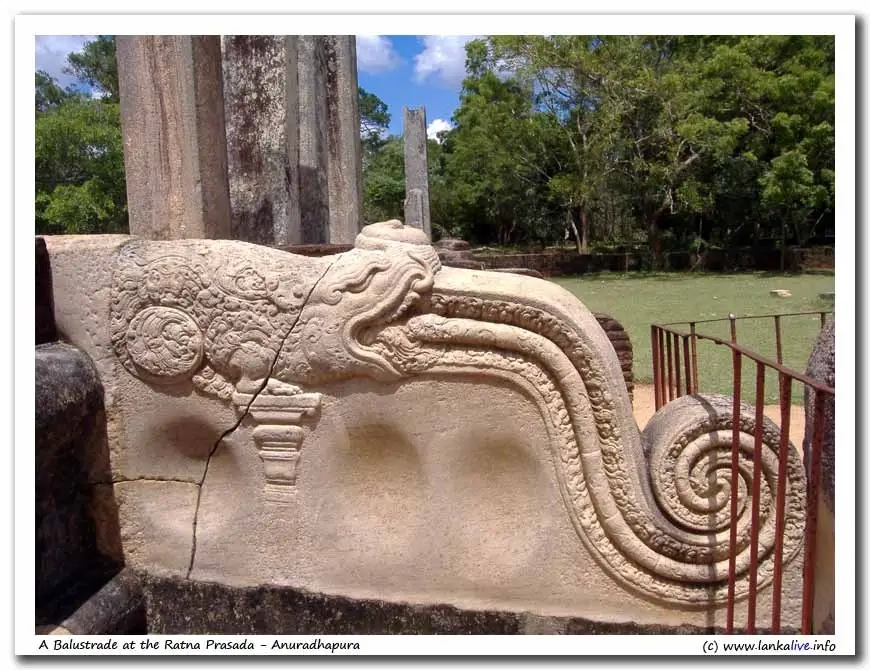
Ratnaprasada
Ancient monastic ruins and intricately carved guardstone in the Abhayagiri complex
15–20 minutes
Note: These are sightseeing estimates for the monuments themselves. You will need extra time to cycle between the stops, take breaks for water and photos, and rest through the hottest part of the day.
12 Tourist Places in Anuradhapura You Can Cover in 2026-27
The twelve sites below are the ones WanderOn's Sri Lanka Operations team tries to curate into every Anuradhapura day, grouped roughly in the order you would reach them on a bicycle loop (charged extra) that starts at Sri Maha Bodhi and ends at Tissa Wewa for sunset. If you would rather have the route handled for you from Colombo onwards, ourSri Lanka group tour packages include Anuradhapura with bicycles, guides, and tickets already arranged.
Top 12 Places to Visit in Anuradhapura
Anuradhapura is home to some of the oldest temples, sacred stupas and archaeological ruins in the country, making it one of the most interesting places to visit in Sri Lanka for history lovers. Here are 12 attractions worth adding to your itinerary, including famous Buddhist shrines and lesser-known historical sites.
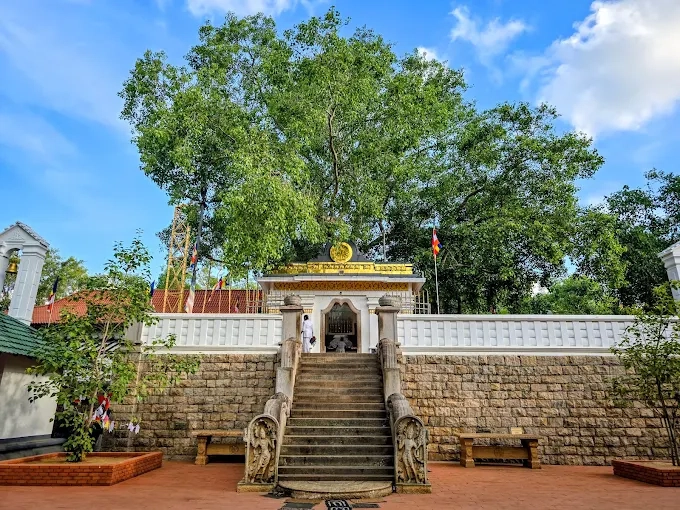
1. Sri Maha Bodhi – The Sacred Tree at the Heart of Anuradhapura
The sacred fig was grown from a cutting of the original Bodhi tree at Bodh Gaya, brought to Sri Lanka by the Buddhist nun Sanghamitta Theri in 288 BCE. Monks have cared for it ever since, making it the oldest planted tree on earth with a continuous recorded history. Undoubtedly, it is one of the famous Buddhist temples in Sri Lanka.
Visit at first light or just before the evening puja. Cover shoulders and knees, remove shoes at the marked point, and keep cameras lowered near the shrine itself. The terrace stone heats up fiercely in the afternoon.
Entry Fee: A separate shrine fee may apply; recent local guides report LKR 200-300 for foreign visitors.
WanderOn Insider Tip: Visit early in the morning before the heat builds up. Cover your shoulders and knees, and remove your shoes before entering the shrine.
2. Ruwanwelisaya – The Famous White Stupa
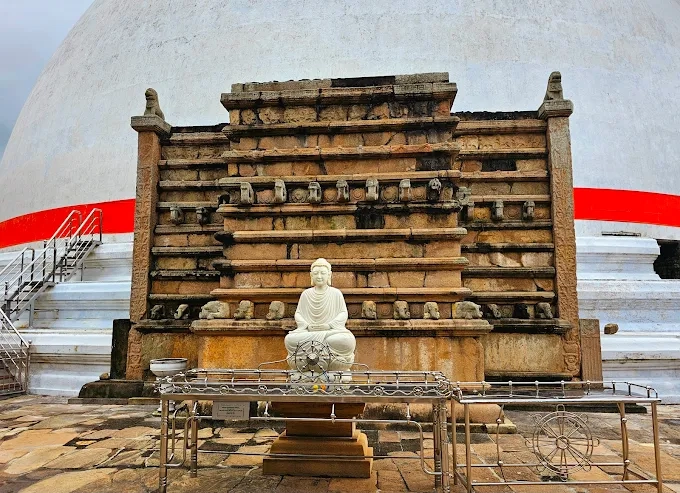
Commissioned by King Dutugemunu in the 2nd century BCE after his victory over the Chola king Elara, the great white stupa was built to hold the relics of the Buddha. Legend has it that his brother draped a cloth painted like the finished pinnacle so the dying king could see it complete.
Visit at sunset for the evening puja, when oil lamps line the terrace and devotees walk the stupa clockwise with offerings. Look for the ring of stone elephants holding up the base. Carry socks; the marble terrace burns underfoot in the afternoon.
Entry Fee: Generally free for the shrine; donations welcome.
WanderOn Insider Tip: Visit after 5 PM for a cooler, more comfortable experience. Carry socks, as you'll need to remove your shoes and the stone courtyard can still be hot.
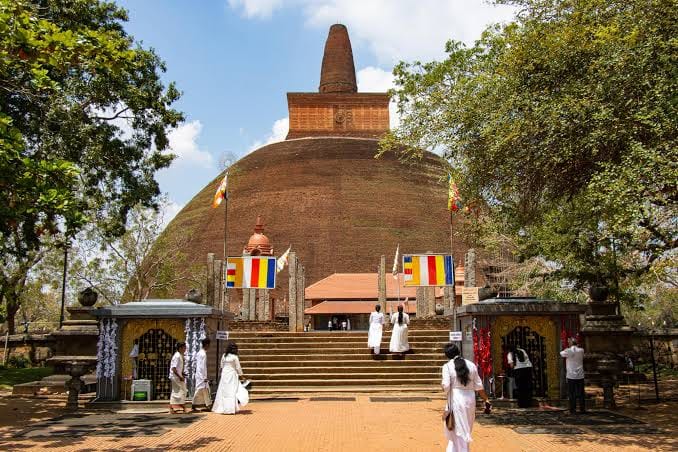
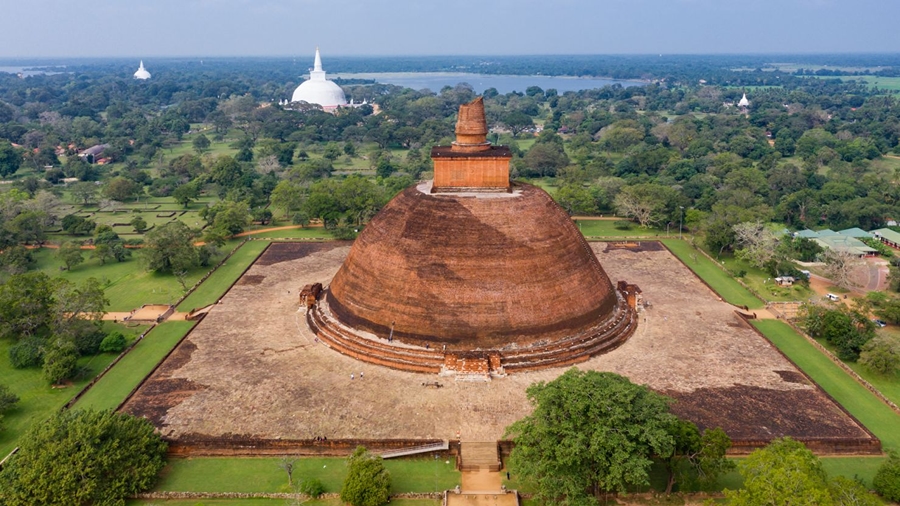
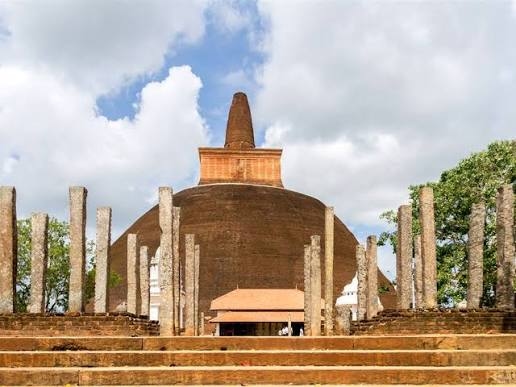
3. Jetavanaramaya – One of the World's Largest Ancient Brick Stupas
Jetavanaramaya was built during the reign of King Mahasena in the late 3rd and early 4th centuries CE. Originally around 122 metres tall, it was among the tallest structures of the ancient world.
The huge brick stupa stands within the ruins of the Jetavana monastery. You can walk around the monument and explore the remains of what was once an important centre of Buddhist learning.
Timings: Plan your visit between 7:00 AM and 5:00 PM, during CCF ticket-counter hours.
Entry Fee: Foreign adults around USD 25 to 30, which covers the wider Anuradhapura sacred heritage zone; SAARC nationals around USD 12 to 15 with a valid passport.
WanderOn Insider Tip: Visit before 10 AM. The area has limited shade, and walking around the large stupa can become tiring in the afternoon.
4. Abhayagiri Monastery – Explore an Ancient Buddhist Monastery
Abhayagiri was established during the reign of King Valagamba in the 1st century BCE. It later grew into one of Sri Lanka's major Buddhist monastic centres, with temples, residential buildings and spaces for religious study. It is one of the monastic complexes that has once housed 5,000 monks.
Today, you can explore the Abhayagiri stupa, stone foundations and remains of ancient buildings spread across the complex.
Entry Fee: Approximately US 30 (LKR9 990) for foreign adults and US 15 (LKR 4,995) for SAARC nationals, including Indians.
WanderOn Insider Tip: Hire a bicycle or tuk-tuk to explore the area. Kuttam Pokuna and the Samadhi Buddha Statue are nearby, so cover all three in one trip.
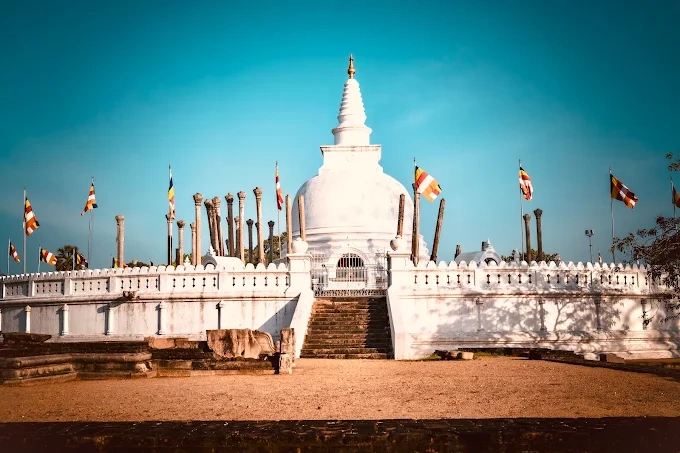
5. Thuparamaya – Sri Lanka's First Buddhist Stupa
Traditionally held to be the first Buddhist stupa built in Sri Lanka, Thuparamaya was commissioned by King Devanampiya Tissa in the 3rd century BCE to enshrine the right collarbone relic of the Buddha.
A short 20 to 30 minute stop that slots between Ruwanwelisaya and Jetavanaramaya on the morning loop. Look closely at the ring of stone pillars around the dome; they once supported a circular wooden roof and are the earliest architectural elements you will see in the city.
Entry Fee: $30.00 USD for foreign adults, $15.00 USD for foreign children (ages 3–12), and $15.00 USD for SAARC nationals
WanderOn Insider Tip: Visit Thuparamaya after Ruwanwelisaya. They're close enough to cover together without making a separate trip.
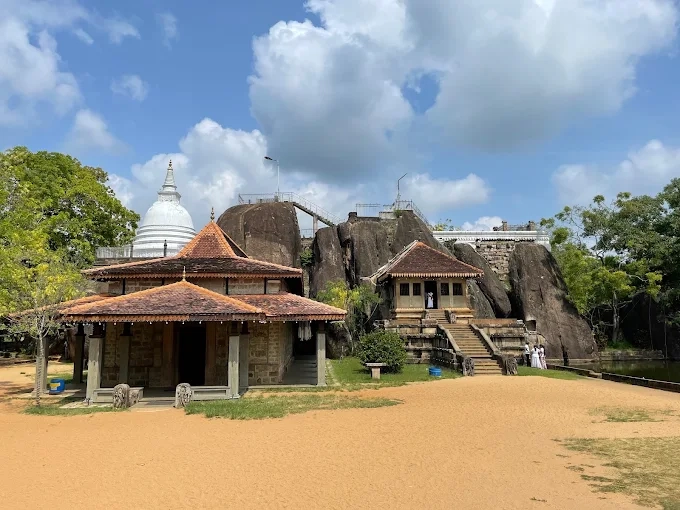
6. Isurumuniya Temple – Famous for Its Ancient Stone Carvings
Founded by King Devanampiya Tissa in the 3rd century BCE, Isurumuniya is best known for the 6th-century Lovers carving. One popular tradition identifies the figures as Prince Saliya, son of King Dutugemunu, and his low-caste bride Asokamala, for whom the prince is said to have renounced his claim to the throne.
The Lovers carving sits inside the small museum beside the temple; the ticket is modest. On the boulder outside, look for the weathered elephants bathing in high relief. Climb to the small dagoba on the rock above for sunset views across the Tissa Wewa tank.
Entry Fee: Separate ticket; reported at LKR 500–1,000 for foreign visitors in 2026, children under 10 years get free entry
WanderOn Insider Tip: Don't miss the elephant carvings beside the pond. If access is permitted, climb the rock for views over the temple surroundings.
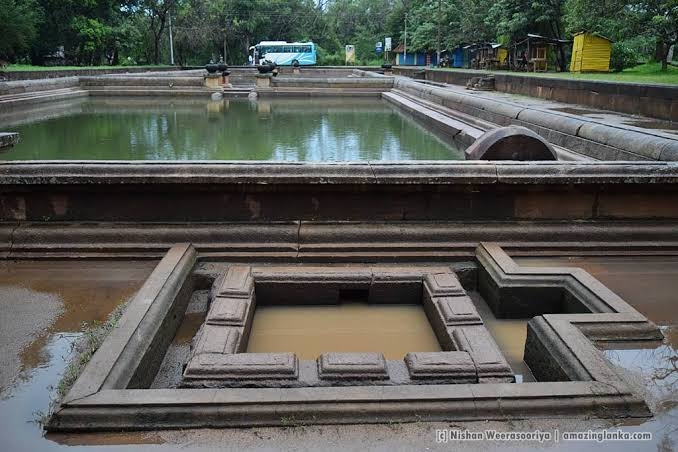
7. Kuttam Pokuna – The Ancient Twin Ponds
Kuttam Pokuna consists of two stone bathing ponds used by monks of the Abhayagiri monastery. Built with carefully arranged steps and an underground water supply system, they show how advanced water engineering was in ancient Anuradhapura.
The ponds are different in size, and their stonework is still clearly visible. You only need around 20–30 minutes to explore the site.
Timings: Best visited during daylight, within archaeological sightseeing hours.
Entry Fee:Entry Fee: USD 30 for foreign adults, USD 15 for foreign children (6–12 years) and SAARC travellers, and free for children under 6.
WanderOn Insider Tip: Combine Kuttam Pokuna with Abhayagiri and the Samadhi Buddha Statue. All three are in the same general area.
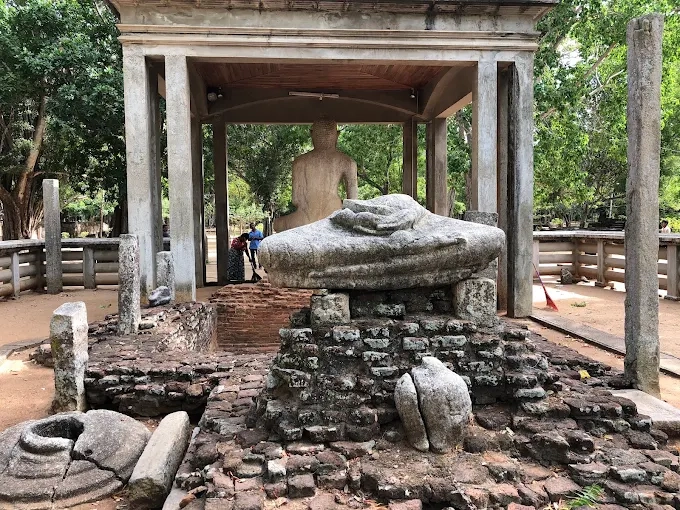
8. Samadhi Buddha Statue – An Ancient Meditation Sculpture
Carved from dolomite in the 4th or 5th century CE, the seated statue shows the Buddha in the dhyana mudra of deep meditation. Jawaharlal Nehru is said to have kept a photograph of this statue in his cell during his years in a British prison.
Sit on the low wall opposite the statue for a few minutes. The calm of the sculpture lands in person far more than in any photograph. As with every Buddha image in Sri Lanka, do not pose with your back to the statue when photographing.
Entry Fee: Approximately USD 25–30 for foreign adults, covered under the Anuradhapura Sacred City archaeological ticket.
WanderOn Insider Tip: Avoid posing with your back directly towards the Buddha statue, as this is considered disrespectful in Sri Lankan Buddhist culture.
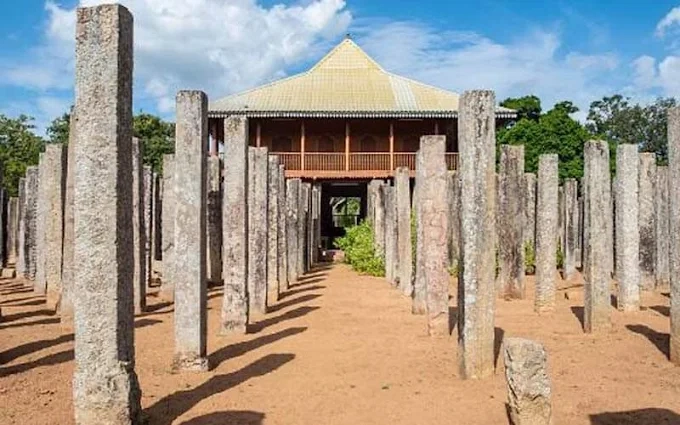
9. Lovamahapaya – The Remains of the Brazen Palace
Lovamahapaya, also called the Brazen Palace, was originally a large monastic building associated with King Dutugemunu. Historical accounts describe it as a multi-storey structure with a roof covered in bronze tiles.
Today, only rows of stone pillars remain. These give visitors an idea of the scale of the original building, which once stood between two of Anuradhapura's most important shrines.
Entry Fee: USD 30 for foreign adults, USD 15 for children aged 6–12, free for children under 6, and approximately USD 12–15 for SAARC nationals.
WanderOn Insider Tip: Stop here while walking between Sri Maha Bodhi and Ruwanwelisaya. You won't need more than 15–20 minutes.
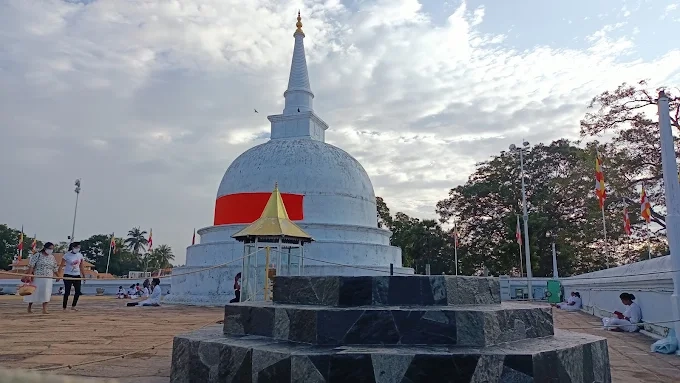
10. Mirisawetiya Stupa – A Historic Buddhist Shrine
King Dutugemunu built Mirisawetiya in the 2nd century BCE, and the shrine still draws daily prayers more than two thousand years later. The large white dome stands inside an open courtyard where worshippers walk the circumambulation path and leave ritual offerings through the day. Mirisawetiya is quieter than many of the city's bigger shrines, which is part of its appeal: you can walk the terrace in near solitude and still feel the weight of an active sacred site.
The courtyard is spacious and often near empty, which is a quiet relief after the Ruwanwelisaya crowds. The usual shrine conduct applies: shoulders and knees covered, shoes off at the terrace.
Entry Fee: USD 30 for foreign adults and USD 15 for children aged 6–12.
WanderOn Insider Tip: If you're short on time, prioritise Ruwanwelisaya. Add Mirisawetiya if you want to explore more of the city's active Buddhist shrines.
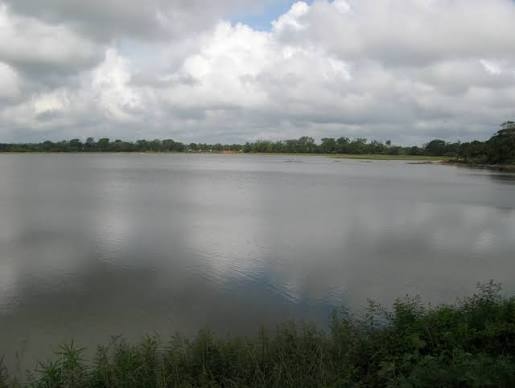
11. Tissa Wewa – An Ancient Reservoir with Scenic Views
Tissa Wewa is an ancient reservoir related to early irrigation system of Anuradhapura. It was built to store water for the city and the nearby farming areas. Today the reservoir is a quiet place to rest from temple sightseeing.The open water and greenery around it are especially nice at sunset.
Timings: Open outdoor area; visit during daylight.
Entry Fee: Free
WanderOn Insider Tip: Visit Tissa Wewa after Isurumuniya Temple, which is nearby. Late afternoon is a good time for photographs and a short break.
12. Ratnaprasada Guard Stone – Famous for Ancient Stone Carvings
Ratnaprasada, also known as the Jewel Palace, is an ancient monastic building within the Abhayagiri complex. Most of the building is now in ruins, but its beautifully carved guardstone remains one of the finest examples of stone craftsmanship from the Anuradhapura period.
The carving shows a guardian figure holding a vase of abundance, with a multi-headed cobra hood above his head. Visitors can also see the remains of stone pillars from the original building.
Timings: Best visited between 7:00 AM and 5:00 PM.
Entry Fee: Included in the Anuradhapura Sacred City ticket, costing USD 30 (approximately LKR 9,690) for foreign adults.
WanderOn Insider Tip: Visit Ratnaprasada while exploring Abhayagiri Monastery. It's a short stop, and the detailed guardstone is the main attraction, so spend a few minutes examining the carvings.
Top Places to Visit Near Anuradhapura
Anuradhapura is a good starting point for exploring Sri Lanka’s Cultural Triangle. From here, you can visit Mihintale’s sacred Buddhist sites, explore the ancient ruins of Polonnaruwa, or head to Sigiriya and Dambulla for their famous rock fortress and cave temples. Most of these places can be visited on a day trip or added to a longer Sri Lanka itinerary.
Destination
Approximate Distance (from Anuradhapura)
Why Visit
Mihintale
15 km east
Sacred Buddhist hill and the site where Buddhism arrived on the island
Wilpattu National Park
40–50 km (to the common entrance)
Leopard safaris in Sri Lanka's largest national park
Dambulla
65–75 km south-east
The painted cave temples of a UNESCO World Heritage site
Sigiriya
70–80 km south-east
The 5th-century rock fortress and palace
Polonnaruwa
100–110 km east
The ruins of Sri Lanka's second great ancient capital
Note: Distances are approximate and depend on the route. Combine Anuradhapura with Polonnaruwa to explore Sri Lanka's two ancient capitals, or follow a Ramayana tour in Sri Lankato visit temples and sites associated with the epic.
Things to Know Before Visiting Anuradhapura Sri Lanka
A little planning can make sightseeing in Anuradhapura much easier. A few things to know before you go, from checking the Anuradhapura entrance fee to observing temple dress codes to choosing the right time to visit.
Buy and carry your archaeological ticket: Purchase your ticket at an authorized CCF counter in Anuradhapura (7 AM–5 PM) or book through the official CCF website. If booking online, show your receipt number at the site counter to collect the physical ticket. Indian passport holders can claim the 50% SAARC discount by presenting a valid passport. Keep your ticket throughout the visit, as staff may check it at individual archaeological sites.
Dress for a working pilgrimage site. Shoulders and knees should be covered at every religious site, which is most of them here. Light, loose clothing in white or pale shades is the comfortable choice in the heat and the one you will see pilgrims wearing. Avoid tight or revealing cuts, even outside the shrines.
Carry socks for the hot stone floors. At Sri Maha Bodhi, Ruwanwelisaya, and the other active shrines, you will remove your shoes at a marked point, and the marble terraces will grow fiercely hot by mid-morning. A pair of socks in your bag is a small kindness to your feet that pays off every time.
Keep your passport within reach. You will usually need it when buying the archaeological ticket, and Indian travelers claiming the SAARC concession will certainly need it at the counter.
Build the day around the heat, not the opening hours. Cover the major sites between 7 and 11 a.m., take a long break through midday, and return from 3:30 p.m. onward. Attempting a long ride between noon and 3 is the single most reliable way to finish the day exhausted.
Carry enough water for the stretches with no shops. Parts of the archaeological zone are quiet enough that the next drink stall could be a kilometer away, and the heat does not warn you before it catches up. A one-litre bottle per person is a sensible minimum for a morning ride.
Watch your photography etiquette at Buddha statues. Never pose with your back directly towards a Buddha image. Selfies turning away from the statue have caused incidents in Sri Lanka in the past, and the rule is taken seriously at every shrine.
Check the calendar for Poya days. Buddhist full-moon holidays are observed as public holidays across the island, and the main shrines fill with pilgrims. The atmosphere is remarkable, but ordinary sightseeing slows to a crawl. Plan around them or lean into them, but know which they are before you arrive.
Settle the ride price before you set off. Whether you are hiring a tuk-tuk, a driver or a bicycle, agree on the rate, the route, and the duration up front. This is standard practice across Sri Lanka and keeps every interaction smooth.
Amazing experience. This was my first ever solo trip. My trip captain was Riddhi. She was very supportive, helpful and encouraging throughout the journey. She was accommodating as well. I am so glad that I got on this trip. Keep it up!
Gunda Sailikhith
23 Jun 2026
Had a great experience.
Stays were good, marshall was good, customer care was good, accomodated extra drop offs and pickups free of cost.
Absolutely worth it, especially the customer support
Ajinkya Desai
21 Jun 2026
Entire Tour was highly appreciated the efforts taken by Our Capitan Prakash Mishra were helped us to enjoy the tour a lot ....Thanks Wander on....
Veenith Adepu
21 Jun 2026
This was an another trip with WanderOn, and just like the previous ones, it was absolutely amazing! A big thanks to our captains Nishant, Tasdeeq, and Harsh for making the journey smooth, fun, and memorable. The breathtaking views and beautiful landscapes were truly the highlights of the trip. Most importantly, I met some wonderful people who turned from strangers into great friends. Looking forward to many more adventures with WanderOn!
Frequently Asked Questions
Your right to Know!
01
What are the best places to visit in Anuradhapura?
The best places to visit in Anuradhapura are Sri Maha Bodhi, Ruwanwelisaya, Jetavanaramaya, Abhayagiri Monastery and Isurumuniya Temple, which together anchor the ancient city. Add Thuparamaya, Kuttam Pokuna, the Samadhi Buddha statue, Lovamahapaya, Mirisawetiya, Tissa Wewa and the sacred hill of Mihintale to fill out a two-day visit comfortably.
02
Is Anuradhapura worth visiting?
Yes, especially if you are drawn to history or Buddhist culture. Anuradhapura Sri Lanka's first great capital, holds some of the island's oldest religious monuments, several of which are still in daily use for worship. UNESCO added the sacred city to its World Heritage list in 1982, and the living pilgrimage here has continued uninterrupted for over two millennia.
03
How many days are enough for Anuradhapura?
One full day is enough to cover the main places to visit in Anuradhapura if you start early at Sri Maha Bodhi, break through the midday heat, and return for the evening puja at Ruwanwelisaya. Two days lets you add Mihintale at sunrise and spend longer at Abhayagiri, which the monastery's scale deserves.
04
What is the Anuradhapura entrance fee?
The standard foreign adult Anuradhapura entrance fee for the archaeological zone is USD 30, as per the official Central Cultural Fund price list published in September 2026. The ticket covers Jetavanaramaya, Abhayagiri, Kuttam Pokuna, the Samadhi Buddha, and the broader ruin field. Indian travellers can claim the SAARC concession. Active shrines such as Ruwanwelisaya and the Sri Maha Bodhi are managed separately, usually on a donation basis.
05
What is Sri Maha Bodhi famous for?
Sri Maha Bodhi is famous for being a sacred fig tree grown from a cutting of the original Bodhi tree in Bodh Gaya, India, the tree under which the Buddha attained enlightenment. Traditionally dated to 288 BCE, it is one of Sri Lanka's most important Buddhist pilgrimage sites and the oldest planted tree on earth with a continuously documented history.
06
Can you visit Anuradhapura without a guide?
Yes, you can comfortably cover the main places to visit in Anuradhapura on your own by bicycle, tuk-tuk or private car, and good signage at the major sites explains the basics. A local guide, however, is the difference between seeing the monuments and understanding them — especially at Abhayagiri and the moonstones, where the symbolism rewards a specialist's eye.
07
What should you wear in Anuradhapura?
Wear light, loose clothing in white or pale shades that covers your shoulders and knees. The major sites are active places of worship, and respectful dress is both expected and more comfortable in the heat. You will remove your shoes and hats at every shrine, so slip-on footwear and a pair of socks for the hot stone floors are worth packing in a day bag.
08
Is Anuradhapura better than Polonnaruwa?
Anuradhapura and Polonnaruwa serve different parts of the same story. Anuradhapura wins on spiritual weight, it holds the active Buddhist pilgrimage sites and the great stupas, while Polonnaruwa's compact archaeological park is better preserved and shows finer carving and palace architecture. If your itinerary allows, do both on consecutive days; if you must pick one, choose Anuradhapura for atmosphere and Polonnaruwa for sculpture.
09
What is the best way to explore Anuradhapura?
A bicycle is the best way to explore the ancient city for travellers comfortable cycling for a few hours in warm weather, because the archaeological zone is designed for slow passage along flat, shaded lanes. Families, travelers visiting in the hottest months, or anyone short on time are better off with a tuk-tuk or private car arranged for the day.
10
Can you visit Mihintale and Anuradhapura in one day?
Technically yes, but it makes for a long and tiring day. The sensible plan is one full day in Anuradhapura and a short morning at Mihintale the following day, starting the climb before sunrise. That rhythm gives both sites the time they deserve without compressing either into a rushed visit.