When people search for bhutan palaces, they often expect grand royal buildings that can be explored like palaces in Rajasthan or Europe. Bhutan is a little different. The country has real palaces, but many of its most famous historic buildings are actually dzongs. If you are planning a cultural trip, our Bhutan Tour Packages make it easy to explore these historic sites along with the country’s monasteries, valleys and mountain landscapes.
A dzong is a traditional fortress that combines religious and administrative functions. A palace, or phodrang, was built for the royal family, a former ruler or an important official. The two can look similar because both use Bhutanese architectural features such as whitewashed walls, wooden windows, painted details and large courtyards.
This distinction is important when planning your sightseeing. Punakha Dzong, Tashichho Dzong, Trongsa Dzong and Paro Rinpung Dzong are dzongs. Dechencholing Palace, Ugyen Pelri Palace and Kuenga Rabten Palace are examples of palaces.
Some palaces are accessible as heritage sites, while others remain working or restricted properties. So, before adding a palace to your itinerary, check whether visitors are currently allowed inside.
Are There Palaces in Bhutan?
Yes, Bhutan has genuine palaces. But no, you cannot assume that every royal palace is open for sightseeing.
The best-known royal residence in Thimphu is Dechencholing Palace. It was built in 1953 during the reign of the third King, Jigme Dorji Wangchuck. The palace continues to have an official role and has been used for important government and diplomatic occasions. In September 2026, for example, the Ministry of Foreign Affairs recorded a credentials ceremony at Dechenchholing Palace.
This makes it different from a regular tourist monument.
There are also historic palaces that visitors can include in a cultural itinerary. Kuenga Rabten Palace near Trongsa was the winter palace of Bhutan's second King and is now looked after by the National Commission for Cultural Affairs. Part of the building is used as a library, while the upper floor has an altar room.
Ugyen Pelri Palace in Paro is another genuine palace. It was built in the early 1900s by the Paro Penlop, Tshering Penjor, and is designed around the idea of Guru Rinpoche's celestial paradise, Zangto Pelri. The Paro Dzongkhag administration describes it as a notable example of Bhutanese palace architecture.
So, the answer is not simply that Bhutan's palaces are off-limits. Access depends on the individual palace and its present use.
For travellers, the country's dzongs are generally the easier and more important places to include in a standard sightseeing route.
Dzong vs Palace: The Two-Minute Explainer
The easiest way to understand the dzong vs palace difference is to look at their purpose.
A palace was mainly connected with a ruler, royal family or senior official. It could contain living quarters, temples, courtyards, rooms for attendants and spaces for official activities.
A dzong had a wider job.
Dzongs were built as fortified centres for both administration and religion. The system became especially important under Zhabdrung Ngawang Namgyel in the 17th century, when dzongs became important centres of Bhutan's political and religious organisation. Bhutan Tourismdescribes these structures as mighty fortresses built for security and administrative purposes.
This is where the confusion starts.
A large dzong can look more impressive than a palace. It may have huge walls, several courtyards, tall towers, ornate woodwork and beautifully painted interiors. But its purpose was never simply to provide a royal home.
Punakha Dzong is a good example. It was an important seat of government and remains a major religious centre. Bhutan Tourism describes it as a fortress serving both administrative and monastic functions.
The architecture can also make the two difficult to separate visually. Bhutan's official architectural guidelines note that palace architecture is very similar to dzong architecture.
So, when you see a massive white fortress in Bhutan, do not automatically call it a palace. In most cases, it is a dzong.
Dzongs in Bhutan You Can Visit
The dzongs of bhutan are among the country's most important cultural sights. Several can be included in a classic Paro, Thimphu and Punakha itinerary, while others are worth visiting if you travel deeper into central Bhutan.
1. Punakha Dzong
Punakha Dzong is one of the most recognisable buildings in Bhutan.
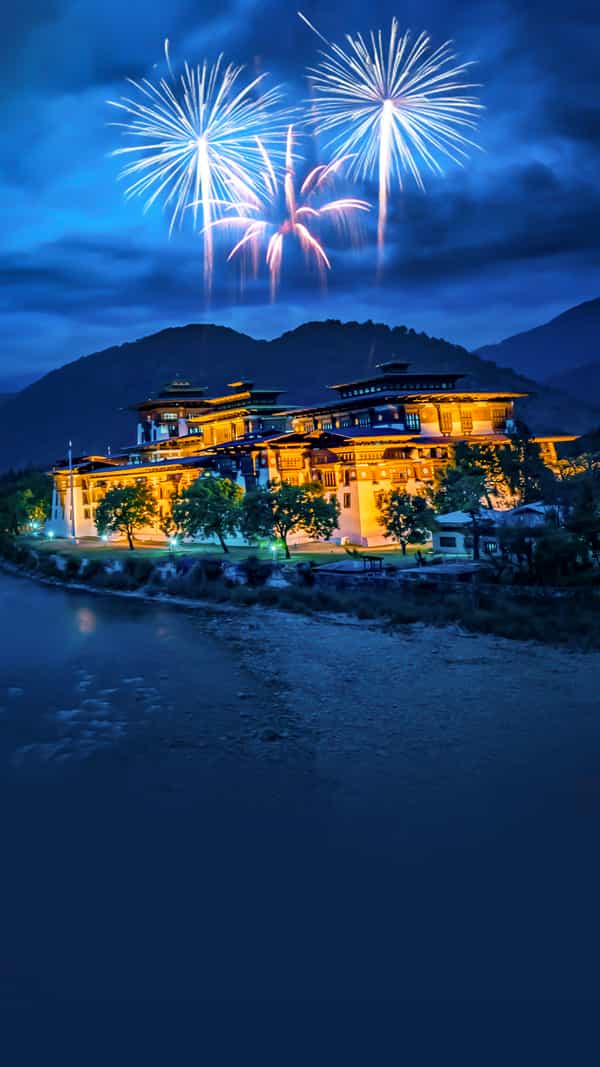
It stands at the meeting point of the Pho Chhu and Mo Chhu rivers, with mountains rising around the valley. The setting is beautiful throughout the year, but spring adds something extra. Jacaranda trees around the dzong burst into violet flowers, creating one of the most photographed scenes in Punakha.
The building is also deeply connected with Bhutan's history.
Punakha was once the country's seat of government before the capital moved to Thimphu in 1955. The dzong continues to serve as an important religious centre and is the winter residence of the Central Monastic Body.
It also has a strong connection with Bhutan's monarchy. The country's first King, Ugyen Wangchuck, was crowned at Punakha in 1907.
That royal connection can make the building look like a palace in photographs. But its function and history clearly place it in the dzong category.
Entry and timings: Bhutan Tourism currently says most monuments are open from around 9 AM to 5 PM, although individual sites can have different arrangements. A guide is also required to enter monuments and dzongs. Check the latest timings and entry fee before your visit.
Located beside the Wang Chhu River, it is both a government and religious centre. The complex houses government offices and the Central Monastic Body. The King's throne room and offices are also within the dzong complex.
That working role affects how you visit it.
Tashichho Dzong is not simply a monument that remains frozen in the past. Government offices continue to operate there, while monks use parts of the complex for religious activities.
For that reason, visitor access can be more structured than at an ordinary sightseeing attraction. Do not assume that every part of the building will be open throughout the day. Your guide can confirm the current visitor window and any areas that are temporarily restricted.
This is also why an evening visit can sometimes work differently from a daytime sightseeing stop. The exact access arrangement should be checked for your travel date rather than relying on an old itinerary.
3. Trongsa Dzong
If you want to understand Bhutan's royal history, Trongsa is an important stop.
Trongsa Dzong stretches across a mountain slope above the Mangde Chhu gorge. Its many courtyards, passages and buildings follow the shape of the hillside, making it feel almost like a small fortified town.
The location was strategic. Trongsa controlled an important route between western and eastern Bhutan, giving the dzong considerable political and defensive importance.
Its connection with the monarchy is equally interesting. The first and second Kings ruled Bhutan from this historic seat of power before the capital eventually shifted to Thimphu.
For travellers following a western Bhutan itinerary, Trongsa usually requires additional travel time. But if you are planning a longer central Bhutan journey, it adds a completely different layer to the country's history.
4. Paro Rinpung Dzong and Ta Dzong
Paro gives you two historic buildings that work well together.
Rinpung Dzong sits above the Paro Valley and is one of the town's most recognisable landmarks. Like other major dzongs, it combines religious and administrative history with traditional Bhutanese architecture.
Above the dzong is Ta Dzong, the former watchtower that now houses the National Museum.
The two buildings help explain how Bhutan's old defensive system worked. Rinpung served as a major dzong, while Ta Dzong was built as a watchtower overlooking the valley.
There is also a genuine palace nearby.
Ugyen Pelri Palace sits in a secluded wooded compound close to Rinpung Dzong. It was built by Paro Penlop Tshering Penjor in the early 20th century and was designed after Zangto Pelri, the celestial paradise associated with Guru Rinpoche.
However, being close to a tourist attraction does not mean a palace is automatically open to visitors. Ugyen Pelri is currently associated with the Queen Mother and is reported as closed to the public.
That is a useful distinction to keep in mind.
The Royal Palaces, From a Distance
If your main interest is the Bhutan Royal Palace, you will find more than one historic building worth knowing about.
Dechencholing Palace in Thimphu is one of the best-known. It was constructed in 1953 and has been used for official royal and diplomatic functions. It remains connected with the country's present-day monarchy, so visitors should not treat it like an ordinary sightseeing attraction.
Samteling is associated with the present royal residence in Thimphu, while Lingkana Palace is another palace site in the Punakha area.
Bhutan's official architectural guidelines list several historic palace buildings, including Wangduecholing and Lami Goenpa in Bumthang, Ugyen Pelri in Paro, Kuenga Rabten and Samdrupcholing in Trongsa, and Dechencholing in Thimphu.
This is why the phrase can you visit Bhutan Royal Palace needs a palace-by-palace answer.
Some historic royal residences can be visited or viewed as heritage sites. Others are working residences or restricted properties. Thruepang Palace near Trongsa, for example, is a recognised heritage site but is currently off-limits to visitors.
When you come across a royal residence during your journey, follow your guide's instructions. Do not approach gates, guards or restricted areas simply for a better photograph.
Dzongs at Festival Time
A dzong feels completely different during a tshechu.
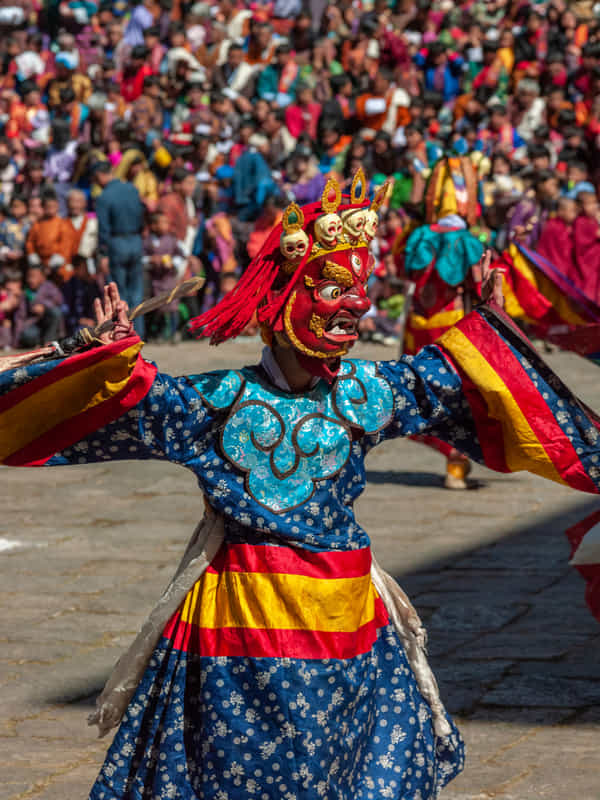
The courtyards fill with people, music and sacred mask dances known as cham. Monks and dancers perform traditional sequences based on Buddhist teachings and stories.
Punakha also hosts the Punakha Drubchen, while Trongsa has one of Bhutan's older tshechus. These festivals turn historic dzong courtyards into active community spaces rather than quiet monuments.
Visiting Etiquette
Visiting a dzong is not the same as walking through a museum. Many remain active religious or administrative spaces.
Here are a few simple rules to follow:
Dress appropriately: There is no general dress rule for visitors, but clothing covering the shoulders to knees is appropriate at places of religious significance. For temples, long sleeves and covered legs are recommended.
Remove your shoes when required: Shoes should be removed before entering temples and other areas where your guide or the site staff asks you to do so.
Do not photograph inside sacred spaces unless permitted: visitors are requested to refrain from photography inside sacred sites. Rules can differ by location, so follow the instructions given at each dzong.
Keep your voice low. Monks may be praying or carrying out religious activities nearby.
Ask before photographing people. This is especially important during festivals, when visitors may be tempted to photograph dancers, monks and worshippers without thinking about the setting.
You may also see local men wearing a kabney with their gho during official or formal occasions. The kabney is a traditional ceremonial scarf, and its colour can indicate the wearer's position or status. Visitors do not need to wear one, but dressing respectfully is always appreciated.
Planning Your Bhutan Dzong Trail
For a first trip, you do not need to visit every historic fortress in the country.
The classic western circuit gives you a strong introduction to Bhutanese architecture. In Paro, visit Rinpung Dzong and Ta Dzong. In Thimphu, include Tashichho Dzong. Then travel to Punakha for the riverside Punakha Dzong.
If you have more days, continue towards Trongsa. This adds another important chapter to Bhutan's political and royal history and lets you see one of the country's largest historic dzongs.
Those travelling further into central Bhutan can also explore historic palace sites such as Kuenga Rabten and Wangduecholing, subject to current visitor arrangements. Kuenga Rabten is particularly interesting because of its connection with the second King and its present heritage use.
We went to Bhutan thru wander on .
I must say they are very reliable n supportive .
They were always there whenever we needed them
Everything was managed in a very planned manner
Special thanks to mr Rahul and mr Mukul
They were very helpful through out our trip .
Looking forward for many more trips with them
Thanks
BHARATI CHATURVEDI
23 Jun 2026
Went to trip of Bhutan organised by Wander On .It was a well organised trip.Mukul and Rahul along with their team were cooperative,helpful .Looking forward to next one . Thanks 👍
venigalla pranavi
22 Jun 2026
My trip to Bhutan with WanderOn was an unforgettable adventure, packed with everything from stunning mountain landscapes to a literal 5.8 magnitude earthquake in Thimphu!. A huge shoutout to our trip captain ABHIJAY👏, who was incredibly proactive, present, and helpful the entire time. He stayed right with the group during the tough stretches of the trek, ensuring everyone made it back safely down the mountain. His supportive attitude made a massive difference."
Ayesha Rukhsar
22 Jun 2026
This was my third trip with WanderOn, this time to Bhutan in June 2026, and I can confidently say I’ve seen a remarkable upgrade since my first trip with them in December 2023.
The two biggest reasons I keep choosing WanderOn are women’s safety and their seamless trip coordination. They’ve built such trust that even my parents now ask, “Why aren’t you booking with WanderOn instead of other vendors?” That’s the kind of confidence and impact they’ve created over the years.
Yes, they may be slightly premium compared to others, but the experience makes it worth every penny. One thing they never compromise on is the quality of stays. All our accommodations in Bhutan were comfortable, beautiful, and well chosen. The food included in the package was decent, the local guides were amazing, and the itinerary was thoughtfully planned.
There was a minor delay on Day 1 due to flight delays, and the team tried their best to accommodate everyone, which eventually led to a delayed border crossing from Jaigaon to Phuentsholing. However, these things can happen while managing a large group, and it was handled professionally.
A special mention to our Trip Captain, Abhijay (Avi). Calm, composed, energetic, professional, and incredibly humble—he truly made the trip memorable. It was my birthday during the trip, and I hadn’t mentioned it because I usually don’t celebrate birthdays. But Avi and my fellow travellers changed that for me and made the day feel special. Thank you for that memory.
The only disappointment of the trip was the last night’s stay and the vehicle arranged for our drop back to Siliguri. The journey felt quite congested and suffocating, and honestly, it didn’t do justice to the price paid or to the otherwise excellent experience.
Overall, this was another wonderful journey with WanderOn, and despite a few shortcomings at the end, I returned with beautiful memories, new friendships, and yet another reason to travel with them again.
Frequently Asked Questions
Your right to Know!
01
Can you visit the King of Bhutan's palace?
Most royal residences, including Dechencholing Palace, are not open for regular tourist visits. They are working royal spaces with restricted access. Visitors can still learn about Bhutan's monarchy by exploring historic dzongs, museums and heritage sites across the country.
02
What is the difference between a dzong and a palace?
A dzong is a traditional fortress that combines Buddhist religious activities with government administration. A palace is mainly a royal residence or official home. They may look similar because both use traditional Bhutanese architecture, but their original purposes are different.
03
Which dzongs can tourists visit?
Tourists can visit several famous dzongs, including Punakha Dzong, Tashichho Dzong, Paro Rinpung Dzong and Trongsa Dzong. Access and opening hours can vary, especially during religious events or government activities, so check the current arrangements with your guide before visiting.
04
What is Punakha Dzong famous for?
Punakha Dzong is famous for its beautiful location between the Pho Chhu and Mo Chhu rivers. It also has major historical and religious importance. Bhutan's first King, Ugyen Wangchuck, was crowned here in 1907, adding to its royal significance.
05
What should I wear inside a dzong?
Wear modest clothes when visiting a dzong. Long sleeves and trousers or clothing that covers your shoulders and knees are a safe choice. You may also need to remove your shoes before entering certain sacred areas, so follow your guide's instructions.
06
Can you take photos inside dzongs?
Photography rules vary between different areas of a dzong. Photos may be allowed outside, but photography is generally not permitted inside sacred temple spaces. Always check the signs and ask your guide before taking pictures, especially during prayers or religious ceremonies.