Bhutan's markets show you everyday life up close. Farmers sell fresh produce in Thimphu. Artisans lay out handwoven textiles and traditional handicrafts. Whether you are wandering the busy Centenary Farmers Market or browsing the craft shops along Norzin Lam, shopping here shows you Bhutanese culture beyond its monasteries and mountain landscapes.
A few practical details help before you shop. Market timings vary. Textile prices depend on the material and weaving technique. Certain antiques and religious artefacts cannot leave Bhutan without meeting export requirements. Carry suitable cash and know what to look for. It makes shopping easier.
We cover the key details you should know before booking your Bhutan tour packages, including the popular Bhutan markets, what to buy in Bhutan, Bhutan textile prices, shopping in Paro and Thimphu, and the rules for exporting antiques. Get these basics sorted early and you can shop with confidence and bring home souvenirs that reflect Bhutan's traditions.
Bhutan's Markets at a Glance
Most visitors begin their shopping in Thimphu, where the main farmers' market and craft shops are easy to include in a sightseeing day. Paro is another convenient stop, particularly before departure, while Punakha and Bumthang offer smaller local shopping experiences.
Market
Where
When to visit
What it's for
Centenary Farmers Market
Near Wang Chhu River, Thimphu
Weekend mornings are particularly busy
Fresh produce, red rice, chillies, cheese, and local food
Thimphu Craft Bazaar
Norzin Lam, Thimphu
During daytime shopping hours
Handicrafts, textiles, souvenirs, and traditional products
Paro Market
Paro town
During regular shop hours
Textiles, souvenirs, clothing, and local products
Punakha local markets
Punakha and nearby settlements
Depends on the local market and trading day
Fresh produce, spices, and everyday goods
Bumthang local shops
Jakar and surrounding areas
During local business hours
Regional food products, honey, cheese, and handicrafts
The Centenary Farmers Market and the craft bazaar serve different purposes. The first is mainly about food and everyday shopping, while the second is where you should look for traditional crafts and gifts.
The Centenary Farmers Market
The Centenary Farmers Market is one of the busiest shopping spots in Thimphu. Located near the Wang Chhu River, it brings together farmers, traders, and shoppers from across the region. For visitors, it is a chance to see what people eat, cook, and buy in their daily lives.
The market is often called the Thimphu weekend market, but it is not simply a place for tourists. Local families come here to buy vegetables, rice, spices, and other household essentials.
What you will find inside
The market has different sections for fresh produce and other goods. The produce area is where you will see piles of green vegetables, potatoes, seasonal fruits, and dried red chillies. Bhutanese food uses chillies extensively, and you will notice them being sold in large quantities.
Red rice is another product worth looking for. It is a staple in Bhutanese homes and makes a practical souvenir if you want to take home something edible.
Cheese is also part of the local food culture. Datse, a traditional Bhutanese cheese used in dishes such as ema datshi, is worth asking about. You may find fresh or dried varieties, depending on the vendor and availability.
The market also has stalls selling dried foods, grains, household goods, and other products. The selection changes with the season and the day.
The weekend rhythm
Weekends are when the market is particularly lively, with farmers and shoppers arriving from different parts of the region. Saturday and Sunday mornings are popular times to visit.
If you want to see the market at its busiest, arrive early rather than leaving it until the afternoon. You will have more time to walk through the stalls, compare products, and speak with vendors.
Opening days and individual stall hours can change, so check locally before making a special trip.
Market etiquette
The market is a working place for local vendors, not just a tourist attraction. Ask before photographing sellers or their stalls, particularly when they are serving customers.
If you want to try a local product, ask the vendor first. Carry small cash denominations, and avoid blocking narrow aisles while taking photographs or browsing.
The Craft Bazaar and What to Buy
The Thimphu craft bazaar on Norzin Lam is where to go when you want to shop for traditional Bhutanese products. The stalls and nearby handicraft shops sell textiles, woven bags, wooden objects, incense, and souvenirs inspired by Bhutanese art and religious traditions.
Unlike the farmers' market, this shopping area is more focused on crafts. You can browse several stalls in one visit, compare designs, and ask sellers about the materials used.
Here are the main things worth looking for.
1. Textiles: Yathra, Kira Fabric, and Woven Scarves
Bhutan has a long weaving tradition, and textiles are among the most recognisable products to buy here.
Yathra is a traditional woven woollen textile associated with the Bumthang region. It is known for its colourful patterns and is used to make items such as blankets, bags, and decorative pieces. You may find yathra-inspired products in Thimphu, although the place of sale does not necessarily indicate where the fabric was made.
The kira is the traditional garment worn by Bhutanese women. Shops sell complete garments, fabric pieces, and accessories. The gho, worn by Bhutanese men, is also available in traditional clothing stores.
If you do not want to buy a full garment, look for scarves, table runners, cushion covers, or smaller woven pieces. These are easier to pack and can still make useful souvenirs.
Bhutan textile prices
There is no single fixed price for Bhutanese textiles. The cost depends on the fibre, weaving technique, complexity of the design, size, and amount of work involved.
Textile
What affects the price
Yathra products
Wool quality, size, pattern, and weaving
Kira fabric
Material, design complexity, and whether it is handwoven
Gho
Fabric quality, pattern, and whether it is ready-made
Woven scarves
Fibre, dimensions, and finishing
Handwoven textiles can cost considerably more than machine-made alternatives. Intricate designs and fine materials require more time and skill, which is reflected in the price.
For an honest price comparison, ask for the material and whether the product is handwoven. Compare similar items across shops rather than comparing a simple machine-made scarf with an elaborate handwoven piece.
We would avoid giving a single price band in Nu or INR without checking current shop prices. Prices vary widely, and an outdated range can mislead travellers, especially when shopping for expensive garments.
2. Wooden Bowls and Dapa
Wooden bowls and traditional serving vessels are another category worth exploring. You may come across dapa, traditional wooden bowls used for serving food and other purposes.
Some bowls have simple designs, while others feature decorative patterns and detailed finishing. They can be useful souvenirs, but check the size, material, and condition before buying.
Ask whether the object is intended for food use or decoration. This matters if you plan to use it at home rather than display it.
Larger wooden products can be difficult to pack, so check your luggage allowance before purchasing bulky items.
3. Incense and Prayer Goods
Incense, prayer flags, prayer wheels, and other religious goods are widely available in Bhutanese shops.
Incense is used in religious practices and is also associated with traditional Bhutanese homes and monasteries. You may find packaged incense sticks and locally inspired products in handicraft shops.
Prayer flags are another common souvenir. Their colours and printed symbols have religious significance, so it is worth understanding their use before purchasing them as decorations.
If you are buying religious objects, choose a reputable seller and ask about the product's origin. Newly made prayer goods and souvenirs are different from old religious artefacts, which may be subject to export restrictions.
4. Made in Bhutan or Imported?
Not every product sold in a Bhutanese market is necessarily made in Bhutan.
Some shops sell locally produced textiles and handicrafts alongside imported souvenirs and machine-made goods. This is particularly important if you are paying a higher price for something described as traditional or handmade.
Before purchasing, ask the seller:
Where was the product made?
Is it handmade or machine-made?
What material has been used?
Is the design traditional, or is it a modern reproduction?
A receipt and clear information about the product are useful, especially for expensive purchases.
If buying a traditional textile is important to you, look beyond the design. The material, weaving quality, and origin matter just as much.
The Antiques Rule
Bhutan has restrictions on exporting cultural and historical objects. This is particularly important if you are shopping for old religious statues, traditional paintings, masks, or other objects that may have cultural or archaeological value.
Do not assume that an antique sold in a shop can legally be taken out of Bhutan.
Bhutan's cultural heritage laws regulate the removal of protected objects, and certain religious artefacts and antiques require official clearance or may not be eligible for export.
The age of an object can matter, but age alone is not the only consideration. Its religious, historical, archaeological, or cultural significance can also affect whether it may be exported.
What should tourists do?
If you are considering buying an old or valuable object:
Ask whether it is a genuine antique or a newly made reproduction.
Request a proper receipt with the seller's details and a description of the item.
Check whether an export certificate or official permission is required.
Confirm the current rules with Bhutanese customs or the relevant cultural heritage authority before purchasing.
For valuable religious objects, do not rely only on the seller's assurance that the item can be taken home.
Newly made handicrafts and certified modern reproductions are generally easier to purchase than genuine antiques, but the applicable rules still depend on the object.
Important: Export restrictions and administrative requirements can change. Verify the rules with the relevant Bhutanese authorities on the date of purchase. This guide is dated 24 September 2026; it does not establish that any particular antique is eligible for export.
For most travellers, a newly made textile, handmade paper product, or modern wooden handicraft is a simpler choice than an antique religious object.
Prices and Paying in Bhutan
Shopping in Bhutanis manageable if you carry some cash and compare prices before making expensive purchases.
Cash and Indian Rupees
Bhutan's currency is the Ngultrum (Nu.), which is pegged at par with the Indian Rupee. Indian currency is widely accepted in Bhutan, but there are restrictions on certain denominations.
For current currency details, exchange guidance, and restrictions on Indian banknotes, check the applicable rules before travelling. Do not assume every denomination will be accepted by every shop.
Is bargaining allowed?
Bargaining may be possible at some craft stalls and smaller souvenir shops, but it is not expected everywhere.
At established stores, prices may be fixed. At smaller stalls, you can politely ask whether a discount is available, especially if you are purchasing several items.
Keep bargaining reasonable. Handmade textiles and traditional crafts take time and skill to produce, so the lowest price is not always the best deal.
For expensive purchases, compare similar products and ask for a receipt.
The Thimphu Market Circuit
You can explore the main Bhutan markets in Thimphu without setting aside an entire day just for shopping. The farmers market, craft bazaar, and central shopping streets can fit naturally into a sightseeing itinerary.
Here is a simple way to plan your day.
Time
What to do
Morning
Visit the Centenary Farmers Market and explore the produce and local food stalls.
Late morning
Head towards Norzin Lam to browse the craft bazaar and handicraft shops.
Afternoon
Explore Thimphu's cultural attractions and traditional shopping streets.
Evening
Enjoy a relaxed walk through the city and stop at local shops if they are open.
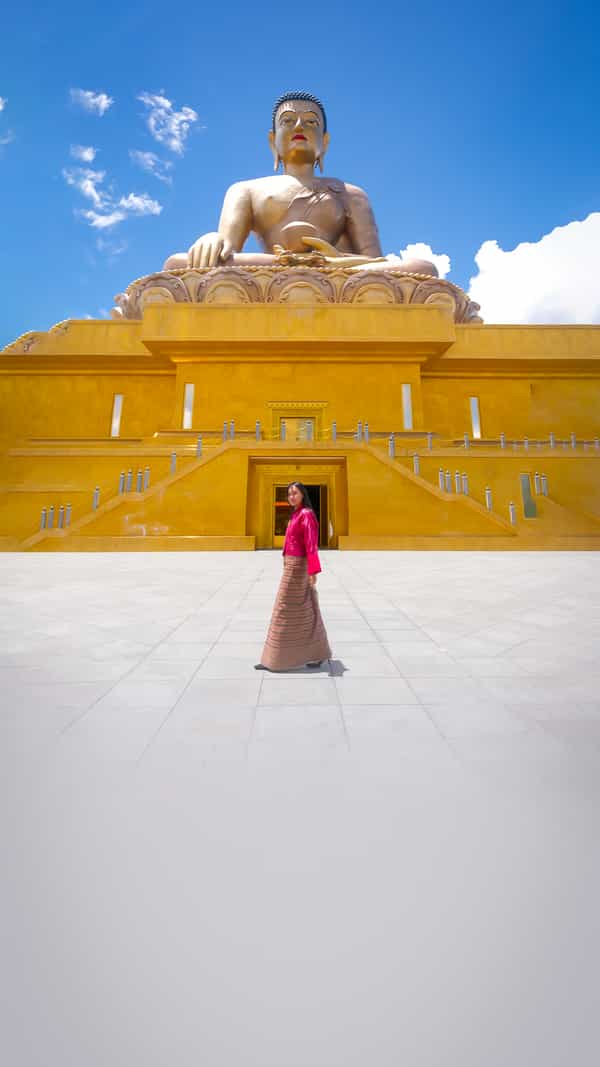
If you want to explore more of the capital, combine your shopping with Buddha Dordenma, Tashichho Dzong, or the National Memorial Chorten, depending on your itinerary.
The market circuit is particularly convenient for travellers staying in Thimphu for one or two nights. You can shop for food and souvenirs without rushing between attractions.
Planning Your Bhutan Market Visit
If you want to experience the Thimphu weekend market, plan your visit around a Friday, Saturday, or Sunday. Saturday and Sunday mornings are particularly suitable for exploring the farmers market.
Keep some time aside for the craft bazaar on Norzin Lam, especially if you want to compare textiles or purchase handmade souvenirs. If you are travelling to Paro towards the end of your trip, you can also explore its shops before departure.
A few things to remember:
Check market and shop timings locally before visiting.
Carry cash in suitable denominations.
Ask about the origin and material of expensive handicrafts.
Keep receipts for valuable purchases.
Confirm export requirements before buying antiques or religious artefacts.
If you are planning a group holiday, our Bhutan Tour Packages cover the country's cultural attractions, scenic valleys, and local experiences. You can explore the available departures and choose an itinerary that gives you time to discover Thimphu, Paro, and other parts of Bhutan.
Bhutan's markets are worth exploring at a relaxed pace. Whether you leave with a handwoven scarf, local spices, or a simple handmade souvenir, the experience offers a closer look at the people and traditions that make the country what it is.
We went to Bhutan thru wander on .
I must say they are very reliable n supportive .
They were always there whenever we needed them
Everything was managed in a very planned manner
Special thanks to mr Rahul and mr Mukul
They were very helpful through out our trip .
Looking forward for many more trips with them
Thanks
BHARATI CHATURVEDI
23 Jun 2026
Went to trip of Bhutan organised by Wander On .It was a well organised trip.Mukul and Rahul along with their team were cooperative,helpful .Looking forward to next one . Thanks 👍
venigalla pranavi
22 Jun 2026
My trip to Bhutan with WanderOn was an unforgettable adventure, packed with everything from stunning mountain landscapes to a literal 5.8 magnitude earthquake in Thimphu!. A huge shoutout to our trip captain ABHIJAY👏, who was incredibly proactive, present, and helpful the entire time. He stayed right with the group during the tough stretches of the trek, ensuring everyone made it back safely down the mountain. His supportive attitude made a massive difference."
Ayesha Rukhsar
22 Jun 2026
This was my third trip with WanderOn, this time to Bhutan in June 2026, and I can confidently say I’ve seen a remarkable upgrade since my first trip with them in December 2023.
The two biggest reasons I keep choosing WanderOn are women’s safety and their seamless trip coordination. They’ve built such trust that even my parents now ask, “Why aren’t you booking with WanderOn instead of other vendors?” That’s the kind of confidence and impact they’ve created over the years.
Yes, they may be slightly premium compared to others, but the experience makes it worth every penny. One thing they never compromise on is the quality of stays. All our accommodations in Bhutan were comfortable, beautiful, and well chosen. The food included in the package was decent, the local guides were amazing, and the itinerary was thoughtfully planned.
There was a minor delay on Day 1 due to flight delays, and the team tried their best to accommodate everyone, which eventually led to a delayed border crossing from Jaigaon to Phuentsholing. However, these things can happen while managing a large group, and it was handled professionally.
A special mention to our Trip Captain, Abhijay (Avi). Calm, composed, energetic, professional, and incredibly humble—he truly made the trip memorable. It was my birthday during the trip, and I hadn’t mentioned it because I usually don’t celebrate birthdays. But Avi and my fellow travellers changed that for me and made the day feel special. Thank you for that memory.
The only disappointment of the trip was the last night’s stay and the vehicle arranged for our drop back to Siliguri. The journey felt quite congested and suffocating, and honestly, it didn’t do justice to the price paid or to the otherwise excellent experience.
Overall, this was another wonderful journey with WanderOn, and despite a few shortcomings at the end, I returned with beautiful memories, new friendships, and yet another reason to travel with them again.
Frequently Asked Questions
Your right to Know!
01
When is the Thimphu weekend market?
The Thimphu weekend market is busiest from Friday to Sunday, especially on Saturday and Sunday mornings. The Centenary Farmers Market is usually most active during these days. Check locally for current timings, as market hours and vendor schedules can change.
02
What should I buy in Bhutan?
Popular things to buy in Bhutan include handwoven textiles, scarves, wooden bowls, handmade paper, prayer flags, incense, local spices, dried chillies, honey, and traditional handicrafts. Always check the product quality and ask whether it is made locally before buying.
03
Can I take antiques out of Bhutan?
Not always. Bhutan has rules protecting old cultural and religious objects, and some antiques cannot be exported. If you want to buy an old item, ask for proper documents and confirm the current export rules with Bhutanese authorities before taking it home.
04
How much do Bhutanese textiles cost?
Bhutanese textile prices vary based on the material, weaving method, design, size, and amount of work involved. Handwoven fabrics usually cost more than machine-made ones. Ask whether the textile is handwoven and compare similar products at different shops before buying.
05
Is bargaining expected in Bhutan markets?
Bargaining is not expected everywhere in Bhutan markets. Some small stalls may allow polite negotiation, while established shops often have fixed prices. If you want a discount, ask respectfully. Avoid aggressive bargaining, especially when buying handmade textiles or crafts.
06
Do markets accept Indian rupees?
Indian Rupees are widely accepted in Bhutan, particularly in popular tourist areas. However, smaller vendors may not accept every denomination or may prefer Bhutanese Ngultrum. Carry smaller INR notes and some local currency for markets, rural areas, and small purchases.