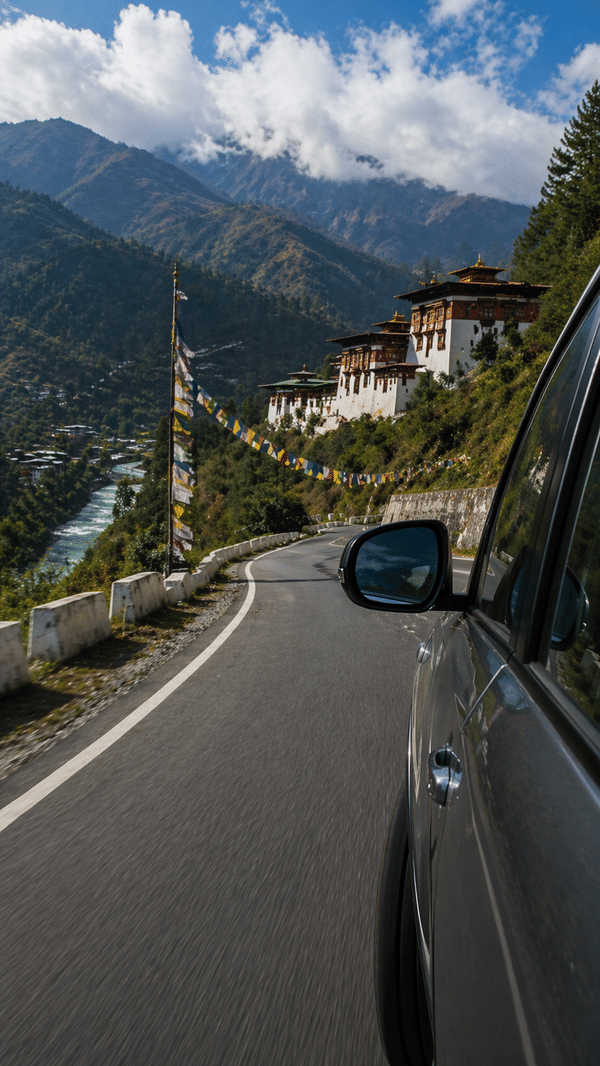
Thimphu is a capital city of Bhutan with a personality of its own. There are no traffic lights, the roads are surprisingly calm, and one of the busiest junctions is managed by a traffic policeman whose hand movements have become part of the city’s charm. The things to do in Thimphu are just as captivating, from giant hilltop Buddhas and old temples to local markets and evening walks.
You can spend a morning looking across the valley, stop at a centuries-old lhakhang before lunch and meet Bhutan’s national animal later in the day. There is plenty to see, but Thimphu does not reward rushing. Give it 1.5 to 2 days, and you will have enough time for the major sights without spending the whole trip checking your watch.
For travellers planning their trip with Bhutan Tour Packages, Thimphu also fits neatly into the popular Paro-Thimphu-Punakha route.
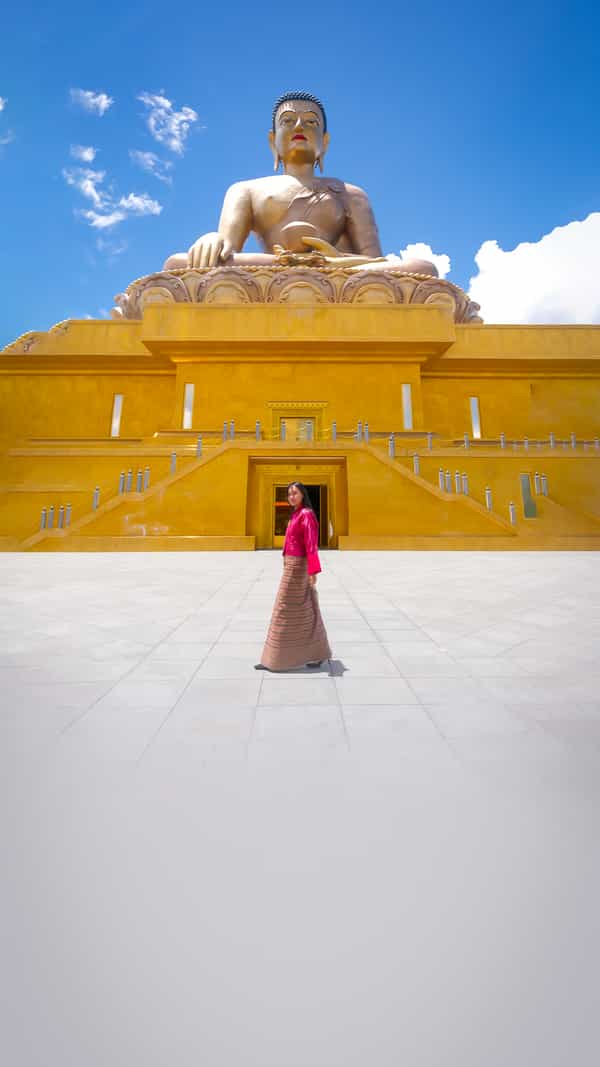
1. Enjoy Panoramic Valley Views at Buddha Dordenma
Buddha Dordenma is hard to miss. The gilded Buddha statue stands about 52 metres high on a hill overlooking Thimphu Valley, so you can spot it from several parts of the city.
The viewpoint is the obvious highlight. On a clear day, the valley opens up below you with forested mountains surrounding the city.
But do not leave after taking the standard photograph.
The interior beneath the statue houses a large meditation hall and thousands of smaller Buddha images. The scale becomes much easier to appreciate once you are inside.
Morning is generally a good time to visit for valley views. Visiting arrangements can change around religious events and official schedules, so check the current timings before you go.
2. Explore Bhutanese Architecture at Tashichho Dzong
Tashichho Dzong looks like a fortress from a distance, but its role is much bigger than that. It is an important government centre as well as a major religious complex.
The white walls, red roofs and detailed woodwork make it one of the most striking buildings in Thimphu. Its position beside the Wang Chhu adds to the setting.
There is one practical thing to remember: this is a working government and monastic complex, not a museum that you can enter whenever you feel like it.
Tourist visits are generally arranged after government working hours, subject to the day’s schedule. Check with your guide or Trip Captain before heading there because access and timings can change.
3. Observe Local Buddhist Traditions at the National Memorial Chorten
The National Memorial Chorten is one of the best places to observe everyday religious life in Thimphu.
Throughout the day, locals come here to pray and walk around the chorten clockwise. The movement has a steady rhythm, with people often turning the prayer wheels as they pass.
Visitors can join the circumambulation, but remember that this is an active place of worship. Walk in the same clockwise direction, keep your voice down and avoid getting between people and their prayers.
The white-and-gold structure is beautiful, but the real experience is watching locals use the space as part of their normal day.
4. Experience Spiritual Calm at Changangkha Lhakhang
Perched above the city, Changangkha Lhakhang is one of Thimphu’s oldest temples and a peaceful place to escape the busier parts of town.
The temple has a special connection with families. Parents traditionally bring babies and young children here to receive blessings and protection.
Inside, you will find colourful murals, traditional Buddhist details and prayer wheels. Outside, the hilltop location gives you a wide view across Thimphu Valley.
Do not treat this as a quick photo stop. Take a few quiet minutes to observe the temple and its surroundings. As with other religious sites, dress modestly and follow local customs.
The Living-Culture Stops
1. Spot Bhutan’s National Animal at Motithang Takin Preserve
Bhutan’s national animal is the takin, and it is definitely not what most people expect when they hear the word “national animal."
The takin has a large body, short legs, and a face that looks like someone combined a goat and a cow. It is unusual enough that you will probably remember it long after the trip.
The Motithang Takin Preserve, located in the hills above Thimphu, is where visitors can see these animals.
There is also a famous local legend behind the takin. It is associated with Drukpa Kunley, the Buddhist saint popularly known as the Divine Madman. According to the story, he created the animal from the remains of a goat and a cow after someone asked him to perform a miracle.
The preserve is easy to fit into a day in the city and does not require a long visit.
2. Experience Traditional Bhutanese Life at Simply Bhutan or the Folk Heritage Museum
If you only have time for one, choose Simply Bhutan.
It offers a quick, interactive introduction to traditional Bhutanese life, including old-style homes, clothing, food, customs and cultural practices. It is especially useful for first-time visitors who want to understand what life looked like beyond the monasteries.
The Folk Heritage Museum is the better choice if you are more interested in rural history. It focuses on traditional homes, household objects, tools and everyday life.
For a tight itinerary, Simply Bhutan wins because it is easier to experience in a shorter visit. If you have another half-day and enjoy history, add the Folk Heritage Museum instead.
3. Watch Traditional Arts and Crafts in Progress at the Painting School
The National Institute for Zorig Chusum is often called Thimphu’s painting school, although painting is only one of the traditional skills taught there.
Students learn Bhutan’s 13 traditional arts and crafts, including painting, wood carving, sculpture, embroidery, weaving, paper making and calligraphy.
The best part is seeing the work in progress. If visitor access is open, you may see students practising detailed traditional techniques rather than simply looking at finished pieces in a gallery.
Do check before visiting. Access can depend on classes, holidays and institutional schedules, so it is better to verify than arrive expecting a full tour.
The Market Layer
Markets add another layer to the city because this is where you see Thimphu doing its everyday thing. Fresh produce, local ingredients, handicrafts and regular shopping all happen side by side.
The weekend is particularly lively, so keep some time for wandering rather than treating the market as a quick stop. You can also explore WanderOn’s Bhutan tourism for more ideas on local experiences.
And while you are moving around the city, watch for the traffic guard at one of the main junctions. There are no lights telling everyone what to do. The officer does it all by hand, and somehow the system works.
Spending Evenings in Bhutan
Thimphu is much more enjoyable in the evening when you stop trying to fit another monument into the schedule.
Begin around Clock Tower Square. Grab something to drink, browse the nearby shops or simply sit for a while. Then take a relaxed walk along Norzin Lam. This central street is lined with cafés, restaurants, shops and traditional Bhutanese buildings. It is not a grand city boulevard, but that is exactly why the stroll feels pleasant.
If luck is on your side, you might also find an archery match at one of the city’s grounds.
Archery is Bhutan’s national sport, and traditional matches can be surprisingly lively. Players cheer, sing and celebrate successful shots. If you see a match happening, stay for a few minutes. You do not need to understand every rule to enjoy the atmosphere.
A One-Day Thimphu Plan
If your itinerary is tight, you can cover the major sights in one day. The trick is to start early and avoid trying to squeeze every museum into the schedule.
8:00 AM: Start at the National Memorial Chorten. The morning lets you see locals coming for their daily prayers and circumambulation.
9:00 AM: Head to Buddha Dordenma. Spend time at the viewpoint and go inside the complex instead of leaving after a few photographs.
10:30 AM: Continue to Changangkha Lhakhang. Explore the temple and enjoy the view from the hill.
11:30 AM: Drive towards Motithang Takin Preserve. The visit is relatively short, so it fits neatly before lunch.
12:30 PM: Stop for lunch in the city. Try a Bhutanese dish, but ask about the spice level first if you are not used to chillies.
2:00 PM: Pick Simply Bhutan or the Folk Heritage Museum. One is enough for a tight day.
3:30 PM: Head towards Tashichho Dzong, provided it is open for visitors according to that day’s schedule. If access is not available, use the time for the market or another cultural stop.
5:00 PM: Walk around the market area and Norzin Lam.
6:00 PM onwards: Finish at Clock Tower Square. Have a drink, look around the shops, or simply sit and watch the city slow down.
This is a realistic Thimphu sightseeing route. It covers the important places without pretending you can properly experience everything in a single afternoon.
If you have an extra half-day, move the museum visit to the second day. You will enjoy it much more without watching the clock.
Planning Your Thimphu Days
Thimphu fits naturally into the classic Paro-Thimphu-Punakha circuit.
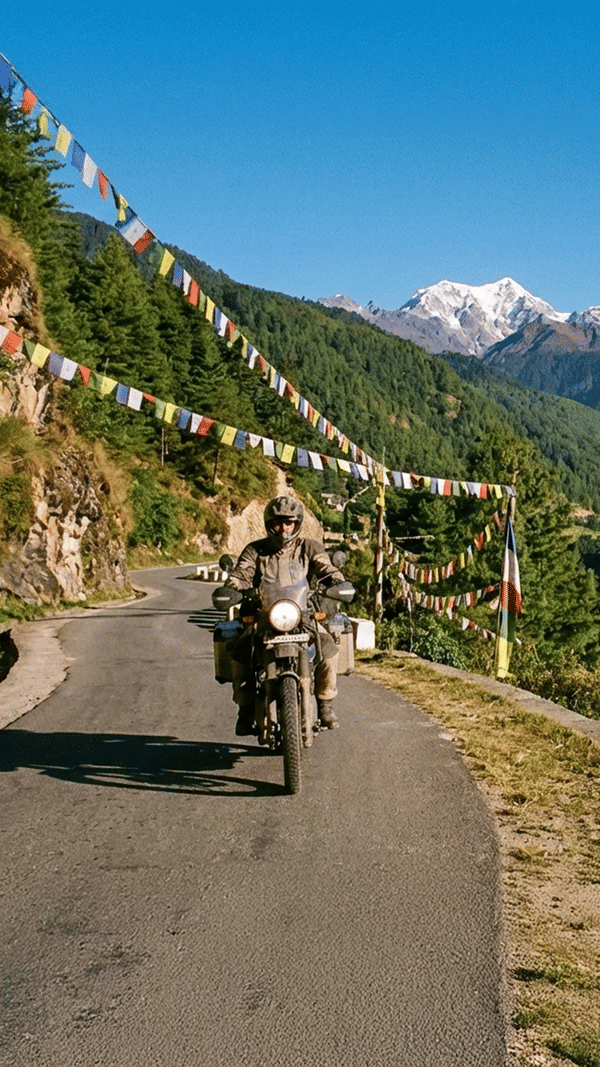
Most travellers arrive at Paro, explore the valley and then drive towards Thimphu. From here, the journey continues towards Punakha, usually passing through the mountain scenery around Dochula Pass.
The roads are winding, so travel times can be longer than they look on a map. Keep that in mind when planning your sightseeing and avoid packing too many activities around your transfer days.
For Indian travellers, an entry permit is required, while the current Sustainable Development Fee is Nu 1,200 per person per night. Requirements and fees can change.
WanderOn Bhutan group tourdepartures can also make the route simpler, especially if you prefer travelling with a Trip Captain and fellow travellers while the major logistics are taken care of.
The city does not need a long checklist to impress you. Give it a day and a half or two days, see the major sights, leave some room for local life and take an evening walk without a destination.
That is when Thimphu starts to feel less like another stop on your Bhutan itinerary and more like a place you actually experienced.
We went to Bhutan thru wander on .
I must say they are very reliable n supportive .
They were always there whenever we needed them
Everything was managed in a very planned manner
Special thanks to mr Rahul and mr Mukul
They were very helpful through out our trip .
Looking forward for many more trips with them
Thanks
BHARATI CHATURVEDI
23 Jun 2026
Went to trip of Bhutan organised by Wander On .It was a well organised trip.Mukul and Rahul along with their team were cooperative,helpful .Looking forward to next one . Thanks 👍
venigalla pranavi
22 Jun 2026
My trip to Bhutan with WanderOn was an unforgettable adventure, packed with everything from stunning mountain landscapes to a literal 5.8 magnitude earthquake in Thimphu!. A huge shoutout to our trip captain ABHIJAY👏, who was incredibly proactive, present, and helpful the entire time. He stayed right with the group during the tough stretches of the trek, ensuring everyone made it back safely down the mountain. His supportive attitude made a massive difference."
Ayesha Rukhsar
22 Jun 2026
This was my third trip with WanderOn, this time to Bhutan in June 2026, and I can confidently say I’ve seen a remarkable upgrade since my first trip with them in December 2023.
The two biggest reasons I keep choosing WanderOn are women’s safety and their seamless trip coordination. They’ve built such trust that even my parents now ask, “Why aren’t you booking with WanderOn instead of other vendors?” That’s the kind of confidence and impact they’ve created over the years.
Yes, they may be slightly premium compared to others, but the experience makes it worth every penny. One thing they never compromise on is the quality of stays. All our accommodations in Bhutan were comfortable, beautiful, and well chosen. The food included in the package was decent, the local guides were amazing, and the itinerary was thoughtfully planned.
There was a minor delay on Day 1 due to flight delays, and the team tried their best to accommodate everyone, which eventually led to a delayed border crossing from Jaigaon to Phuentsholing. However, these things can happen while managing a large group, and it was handled professionally.
A special mention to our Trip Captain, Abhijay (Avi). Calm, composed, energetic, professional, and incredibly humble—he truly made the trip memorable. It was my birthday during the trip, and I hadn’t mentioned it because I usually don’t celebrate birthdays. But Avi and my fellow travellers changed that for me and made the day feel special. Thank you for that memory.
The only disappointment of the trip was the last night’s stay and the vehicle arranged for our drop back to Siliguri. The journey felt quite congested and suffocating, and honestly, it didn’t do justice to the price paid or to the otherwise excellent experience.
Overall, this was another wonderful journey with WanderOn, and despite a few shortcomings at the end, I returned with beautiful memories, new friendships, and yet another reason to travel with them again.
Frequently Asked Questions
Your right to Know!
01
What should I not miss in Thimphu?
Do not miss Buddha Dordenma, Tashichho Dzong, National Memorial Chorten, Changangkha Lhakhang, and Motithang Takin Preserve. Keep some time for Ka Ja Throm market and an evening walk around Clock Tower Square and Norzin Lam.
02
How many days are enough for Thimphu?
Around 1.5 to 2 days is enough to explore the main sights of Thimphu without rushing. One full day covers the major attractions, while an extra half-day gives you time for markets, walks, cafés, and local experiences.
03
What is the Buddha Dordenma?
Buddha Dordenma is a huge golden Buddha statue sitting on a hill overlooking Thimphu Valley. It is one of Bhutan’s most famous landmarks. The site offers beautiful valley views and a peaceful setting for visitors to explore.
04
What is a takin?
A takin is Bhutan’s national animal. It has a large body, short legs, and a face that looks a little like a goat. You can see these unusual animals at the Motithang Takin Preserve in Thimphu.
05
Can you visit Tashichho Dzong in the evening?
Yes, Tashichho Dzong can be visited in the evening on weekdays, when it opens from 4:30 PM onwards. On weekends, it is generally open from 9 AM to 5 PM. Timings can change, so check before planning your visit.
06
Is Thimphu walkable?
Yes, parts of Thimphu are easy to explore on foot, especially around Norzin Lam, Clock Tower Square, markets, cafés, and nearby streets. However, attractions outside the central area are spread across the valley, so you may need a vehicle.