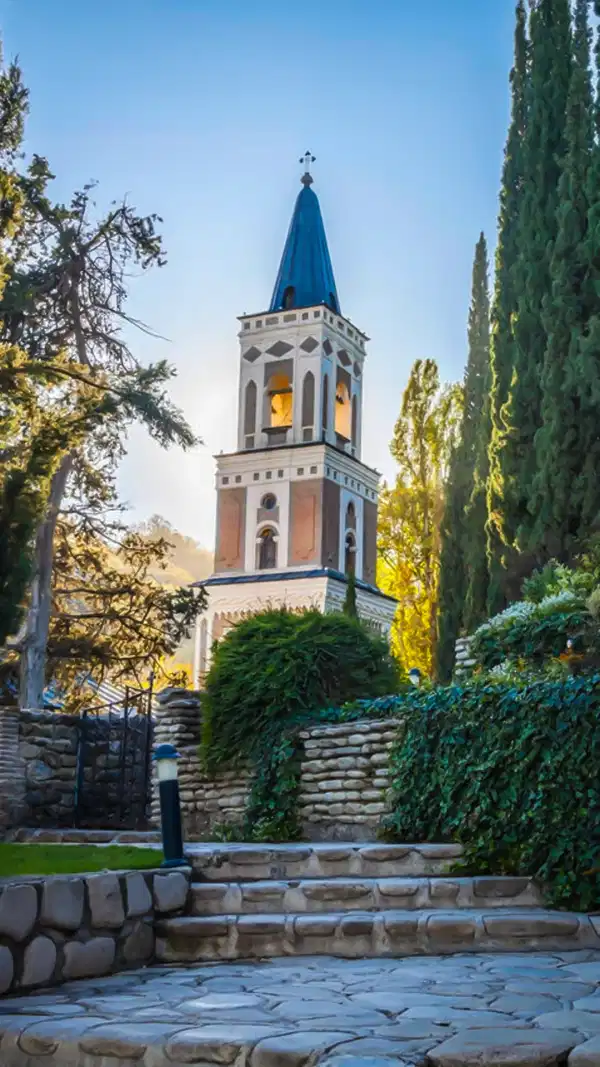
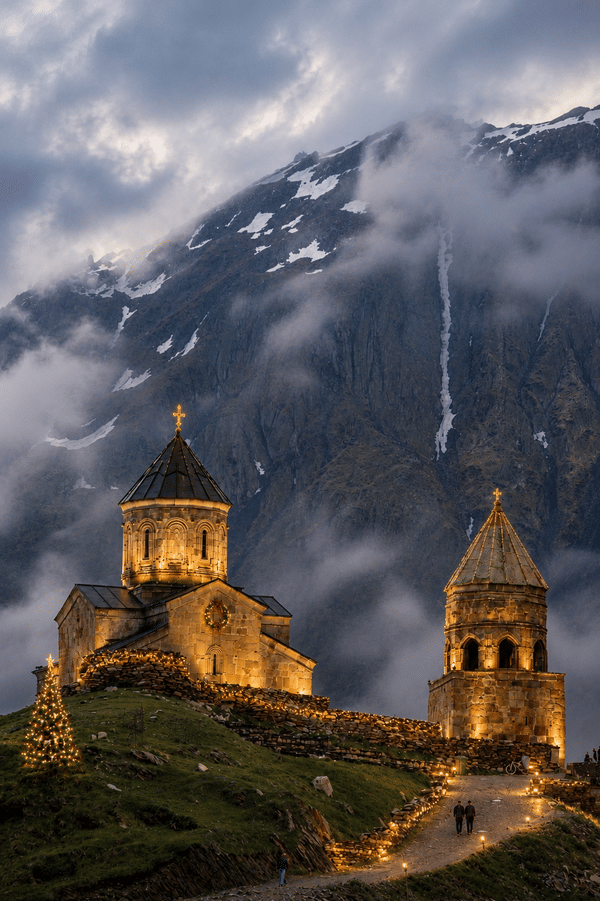
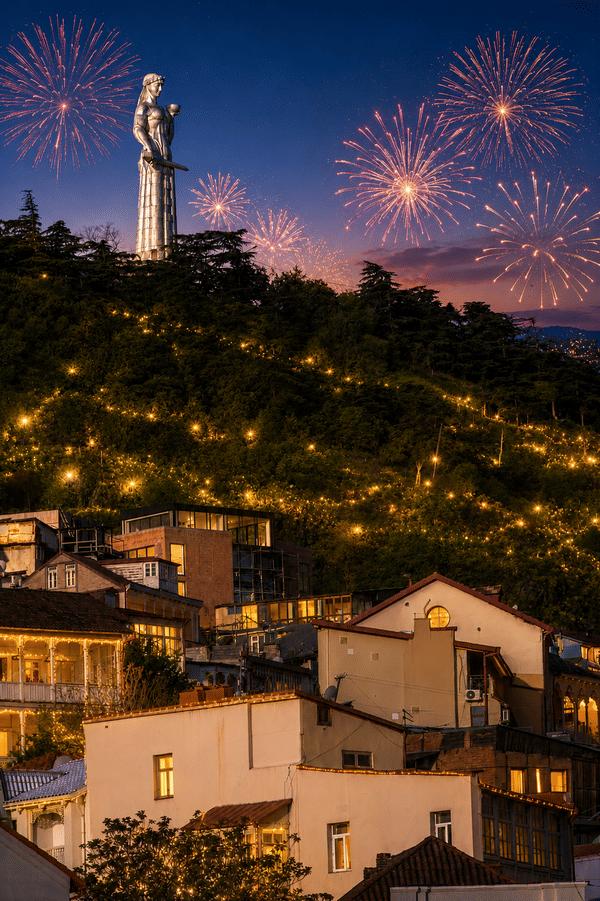
Georgia's historical monuments offer an interesting glimpse into the history, architecture and cultural traditions of the country, which are centuries old. Georgia’s cities, valleys and mountain regions are scattered with heritage sites, ranging from ancient churches and monasteries to hilltop fortresses and incredible cave settlements. Particularly interesting from the historical and architectural point of view are Mtskheta, Gelati, Upper Svaneti, Vardzia and Uplistsikhe.
For travellers interested in history, Georgia offers more than individual monuments. Ancient capitals, UNESCO-listed monasteries, defensive fortresses and traditional mountain settlements are spread across different regions, making the route just as important as the sites themselves. Some can be explored as day trips from Tbilisi, while others require dedicated journeys into western, southern or mountainous Georgia.
If you want to combine these heritage sites with Georgia’s cities, mountains and local experiences, explore our Georgia tour packages for itineraries that bring different parts of the country together.
Georgia’s Heritage at a Glance
Georgia’s historical heritage is spread across ancient towns, mountain villages, monasteries, fortresses and archaeological sites.
For a broader introduction to the country’s culture, regions and travel experiences, explore our Georgia tourism guide before deciding which historical sites to add to your itinerary. The table below gives you a quick overview of the major monuments, their historical period, location, convenient base and typical entry requirements.
Most active churches and monasteries do not charge a general entrance fee, while archaeological sites such as Vardzia and Uplistsikhe are ticketed. Fees and opening hours can change, so check current visitor information shortly before your visit.
UNESCO World Heritage Sites in Georgia
Georgia’s UNESCO-listed cultural heritage covers three very different experiences: the historic religious centre of Mtskheta, the medieval Gelati Monastery near Kutaisi, and the mountain villages and tower-houses of Upper Svaneti.
Together, they offer a glimpse into Georgia’s religious traditions, medieval architecture, scholarship, and distinctive mountain settlements. These are also among the most significant places to visit in Georgia for travellers interested in the country’s history and culture.
Mtskheta: Jvari Monastery and Svetitskhoveli Cathedral
Mtskheta was the ancient capital of the Kingdom of Kartli and remains one of Georgia’s most important religious centres. Christianity was proclaimed the state religion here in the 4th century, and the town continues to hold a central place in Georgian religious history. The UNESCO property, inscribed in 1994, includes Jvari Monastery, Svetitskhoveli Cathedral and Samtavro Monastery.
Jvari Monastery sits on a hill above the confluence of the Mtkvari and Aragvi rivers. Dating to the 6th century, the church is known for its distinctive early medieval architecture and elevated position overlooking Mtskheta. The viewpoint also makes it one of the most recognisable heritage stops in the region.
In the town below, Svetitskhoveli Cathedral is the largest architectural landmark. The present cathedral dates to the 11th century and was built on the site of earlier Christian structures. Its carved stone exterior, frescoes and religious significance make it an important stop for understanding Georgia’s Christian heritage.
Mtskheta is around 20 km from Tbilisi, making it one of the easiest UNESCO heritage excursions from the capital. Jvari and Svetitskhoveli can comfortably be covered in a half-day, although spending longer in the historic town allows for a more relaxed visit.
Gelati Monastery: The Academic Legacy Near Kutaisi
Founded by King David IV in 1106, Gelati Monastery represents the cultural and intellectual achievements of medieval Georgia. Alongside its religious role, the complex became an important centre of education and scholarship, with its academy contributing to Georgia’s medieval intellectual life.
The monastery is particularly notable for its architecture, medieval frescoes and the 12th-century mosaic in the main church. The complex is also closely associated with David IV, known as David the Builder, whose tomb is located at Gelati.
Gelati is located near Kutaisi in western Georgia, so it fits naturally into a west Georgia itinerary rather than a Tbilisi-based day trip. Combining the monastery with Kutaisi and other nearby attractions allows you to experience more of the region without adding unnecessary long-distance travel.
Upper Svaneti: Medieval Towers in the Mountains
Upper Svaneti offers a very different kind of UNESCO experience. Instead of a single monument, the UNESCO-listed area encompasses traditional villages and medieval tower-houses set within the mountainous landscape of the Caucasus.
The distinctive stone towers were historically used for defensive and residential purposes and remain a defining feature of Svaneti’s villages. Ushguli is among the best-known settlements in the region, with its traditional towers set against dramatic mountain scenery.
For travellers exploring Georgia historical sites, Upper Svaneti is also a reminder that the country’s heritage extends beyond individual churches and fortresses. Here, the villages, architecture and surrounding landscape form part of the heritage experience itself.
Upper Svaneti is the most time-intensive of Georgia’s three cultural UNESCO properties. Reaching Mestia and continuing towards places such as Ushguli requires considerably more travel time than a visit to Mtskheta from Tbilisi. It is therefore better planned as a dedicated part of your Georgia itinerary rather than squeezed into a short city break.
Georgia’s Famous Cave Cities: Vardzia and Uplistsikhe
Among the most distinctive historical monuments in Georgia are its rock-cut settlements, where homes, religious spaces and public areas were carved directly into cliffs and rocky landscapes. Vardzia and Uplistsikhe are two of the country’s most remarkable cave complexes, but they belong to different periods and offer distinctly different experiences.
Vardzia Cave City
Vardzia is a medieval cave complex in the Samtskhe-Javakheti region, built into the cliffs above the Mtkvari River. It developed mainly during the reign of Queen Tamar in the late 12th and early 13th centuries and once contained hundreds of chambers connected by tunnels, stairways and passages. The complex functioned as a fortified religious settlement, with the Church of the Dormition at its centre.
An earthquake later exposed many of the rooms by collapsing sections of the cliff, giving Vardzia much of its distinctive appearance today. Exploring the site involves stairs, uneven surfaces and narrow passages, so comfortable footwear is useful. Since Vardzia is also an active religious site, modest clothing is appropriate.
For travellers exploring Georgia historical sites, Vardzia can be combined with nearby Akhaltsikhe and Rabati Castle, making it a practical addition to a southern Georgia route. It is considerably farther from Tbilisi than Mtskheta or Uplistsikhe, so visiting usually requires more time in the region.
Uplistsikhe
Uplistsikhe is an ancient rock-cut settlement near Gori, with archaeological evidence showing occupation across several historical periods. Unlike Vardzia, which is primarily associated with medieval Georgia, Uplistsikhe has much older origins and developed as a significant settlement carved into sandstone cliffs.
The site includes rock-cut chambers, halls, wine-making areas, tunnels, a water system and a later Christian church. Its elevated position also gave the settlement strategic importance, overlooking the surrounding landscape and the Mtkvari River valley.
Uplistsikhe is one of the more accessible UNESCO sites Georgia country travellers may research alongside other heritage attractions, although the cave city itself is not part of Georgia’s UNESCO World Heritage properties. Its proximity to Gori also makes it relatively easy to visit as a day trip from Tbilisi.
Uplistsikhe or Vardzia: Which One Fits Your Route?
Choose Uplistsikhe if your itinerary is centred around Tbilisi and Gori or if you are interested in Georgia’s ancient and pre-Christian history. Vardzia works better for travellers exploring southern Georgia and looking for a medieval cliffside complex with a strong religious and architectural character.
Both sites offer a very different perspective on Georgia’s past, so including both can add useful contrast to a wider historical itinerary.
Fortresses and Watchtowers in Georgia
Beyond monasteries and cave cities, historical monuments in Georgia also include hilltop fortresses, defensive walls and medieval watchtowers that reflect the country’s strategic importance over centuries. Built to protect settlements and trade routes, these structures are spread across Tbilisi, eastern Georgia and the mountain regions of the Caucasus.
Ananuri Fortress: A Scenic Stop on the Military Highway
Located beside the Aragvi River along the Georgian Military Highway, Ananuri Fortress is one of the country’s most recognisable fortified complexes. The site developed mainly between the 16th and 17th centuries and includes defensive walls, towers and churches decorated with carved stonework.
Its setting makes Ananuri particularly memorable, with the fortress overlooking the reservoir and surrounding mountains. It is also a convenient stop when travelling between Tbilisi and destinations such as Gudauri and Kazbegi, rather than requiring a separate detour.
Narikala Fortress: Tbilisi’s Historic Landmark
Standing above Tbilisi’s Old Town, Narikala Fortress has medieval origins and has been expanded and rebuilt over different periods. Its elevated position made it an important defensive structure, while today the fortress is best known for its panoramic views across the city and the Mtkvari River.
A visit to Narikala can easily be combined with other things to do in Georgia, including exploring the Old Town, walking around the sulphur-bath district and visiting nearby viewpoints. The fortress is especially convenient for travellers who want to experience Georgia’s history without leaving Tbilisi.
Rabati Castle: A Multilayered Heritage Complex
Rabati Castle in Akhaltsikhe represents a different kind of historical site, bringing together architectural influences from different periods and communities. The complex includes fortifications, religious buildings, courtyards and restored structures, reflecting Akhaltsikhe’s position at an important crossroads in southern Georgia.
For travellers exploring Georgia historical sites, Rabati works particularly well alongside Vardzia. The two can be combined on a southern Georgia itinerary, giving travellers a chance to experience both a restored fortified complex and a medieval cave settlement.
Svaneti’s Medieval Watchtowers
The mountain region of Svaneti is known for its distinctive stone tower-houses, particularly around settlements such as Mestia and Ushguli. These towers served defensive and residential purposes and remain closely integrated into the traditional mountain villages.
Unlike standalone fortresses, Svaneti’s towers are part of a wider cultural landscape, where historic homes, churches and villages sit within the dramatic Caucasus mountains. Their location also makes the experience more immersive, as reaching many of the settlements involves travelling deeper into the region.
How to Route Georgia’s Historical Monuments
Seeing all of the historical monuments in Georgia in one trip requires some planning because the major sites are spread across different regions. Mtskheta and Tbilisi work well together, while Uplistsikhe can be paired with Gori. Vardzia and Rabati are better suited to a southern Georgia route, and Gelati and Svaneti require time in the west and north of the country.
A Tbilisi-Based Heritage Route
If you are staying in Tbilisi, start with the monuments that can be covered on shorter day trips. Mtskheta is the easiest addition, with Jvari Monastery and Svetitskhoveli Cathedral forming the core of the visit. The Mtskheta Jvari Monastery viewpoint is particularly worthwhile for travellers interested in both the monument and its landscape.
Uplistsikhe can then be combined with Gori on another day. This keeps the ancient cave settlement separate from the Mtskheta route while avoiding unnecessary backtracking.
Western Georgia and Svaneti
Travellers heading towards Kutaisi can add Gelati Monastery to their itinerary, followed by a longer journey into Svaneti. The Gelati Monastery Kutaisi route works well as part of a western Georgia itinerary, while Mestia and Ushguli need additional time because of their mountainous location.
Rather than trying to cover Svaneti as a quick stop, allow several days if the region is a priority. This gives you more time for its historic villages, tower-houses and surrounding landscapes.
Southern Georgia Route
Vardzia and Rabati Castle are natural additions to a southern Georgia circuit. They can be combined with Borjomi or Akhaltsikhe depending on the route and available time. This is a better approach than attempting Vardzia as a rushed day trip from Tbilisi.
Planning Around the Season
Seasonality can affect mountain travel, road conditions, and the amount of daylight available for sightseeing. If you are considering Georgia tour packages in winter, check the planned route carefully, particularly for Svaneti and other higher-altitude areas. Winter itineraries may need additional flexibility compared with trips during the warmer months.
For a first visit, a route combining Tbilisi, Mtskheta, Uplistsikhe, and one of the western or southern heritage regions can provide a balanced introduction without trying to cover every monument in a single itinerary.
Visiting Etiquette and Practical Tips
Visiting historical monuments in Georgia often means entering active churches, monasteries and traditional communities, so respecting local customs is an important part of the experience. For more practical advice on planning your trip, you can also refer to our travel tips for Georgia guide before exploring the country’s heritage sites.
- Dress Modestly at Religious Sites: Churches and monasteries such as Jvari and Svetitskhoveli Cathedral remain active religious spaces. Visitors should dress modestly, particularly when entering churches, with shoulders and knees covered. Some sites may also ask women to cover their heads.
- Check Photography Rules: Photography is generally possible around many monuments, but restrictions can apply inside churches or during religious services. Look for signs or ask before photographing interiors, frescoes, or ceremonies. Avoid using flash where it could affect historic artworks.
- Wear Comfortable Footwear: Several heritage sites involve uneven stone paths, stairs, and narrow passages. This is particularly relevant at Vardzia, Uplistsikhe, and some mountain settlements. Comfortable walking shoes and a small bottle of water are useful for longer sightseeing stops.
- Be Mindful in Villages: Historic areas such as Svaneti are also living communities rather than open-air museums. Avoid entering private homes or properties without permission, and ask before photographing residents. Respecting local spaces helps preserve the character of these traditional settlements.
- Check Visa Requirements: Indian travellers should check the latest entry and visa requirements before planning their trip. For the required documents and application process, refer to our Georgia visa for Indians guide before travelling.
- Plan for Weather and Access: Routes to places such as Svaneti can take longer than expected, and winter conditions may affect accessibility, so it's worth allowing some flexibility rather than planning every stop around a strict timetable. Tbilisi evenings are best kept open too. After a day of sightseeing, there's plenty to fill them with, whether that's exploring Georgia nightlife, hunting down delicious local food, or just wandering through the shopping streets at a relaxed pace.