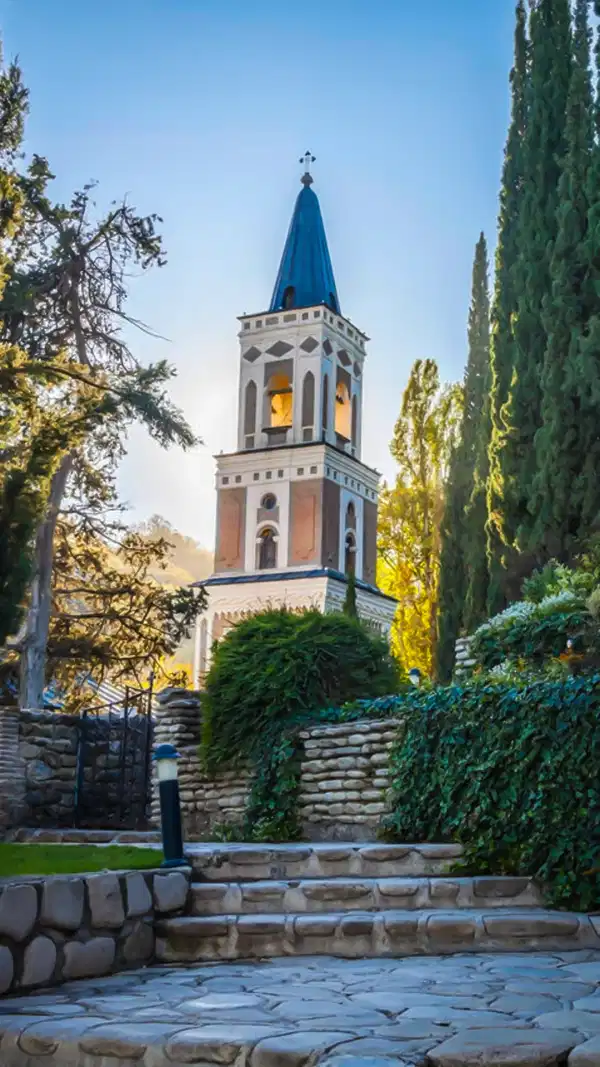
Georgia is one of those countries that offers different experiences every time you land. Show up in July and you'll find Tbilisi at 33°C, the Black Sea packed at Batumi, and every high-altitude trail in Svaneti wide open. Land in January and you're looking at fresh powder in Gudauri, sulphur baths in the old city, and hotel rates that make you check twice. So the best time to visit Georgia isn't a single month or season; it depends on whether you want snow or wildflowers, wine harvest or ski season, empty trails or the full-blown summer buzz.
We've been running fixed-departure group trips for over nine years, and Georgia is one of the destinations where we get the most "which month should I pick?" questions.
This guide is our honest breakdown of what each season actually feels like, what's open, what's shut, and what is actually worth it. If you want to avoid the planning stress, you can also consider our Georgia tour packages curated for every season.
Best Season to Visit Georgia: Two Windows Worth Booking Around
If you want the honest answer about the best time to visit Georgia, then consider late April to mid-June and mid-September to late October as the ideal window.
These two windows give you comfortable daytime temperatures, open mountain roads, clear views of the Caucasus range, and prices that sit well below peak. The best season to visit Georgia for most first-timers is autumn, specifically September and October, because the weather holds, the harvest is on in Kakheti, and the summer crowds have thinned out.
That said, plenty of our guests come back saying winter was their favorite.
Best Time to Visit Georgia- What Month You Should Actually Pick?
For a standard 7–8 day trip covering Tbilisi, Kazbegi, Kakheti and Mtskheta, October is the month we'd pick. Tbilisi sits around 19–21°C, the Georgian Military Highway is reliably open, the vineyards are mid-harvest, and Gergeti gets that clean autumn light.
Add Svaneti or Tusheti and October is too late, those roads need June to September. If snow is the point, look at Georgia tour packages in winter instead.
Five days works in any season since you stay near Tbilisi, and the places to visit in Georgia within two hours like Mtskheta, Signagi, Ananuri, Uplistsikhe are open year-round.
Best Time to Visit Georgia: What Each Month Looks Like
Here's the Georgia weather by month, split between Tbilisi (low altitude, where you'll spend most nights) and Gudauri (2,200m, representative of the mountain regions). Figures are long-term averages, except for year-to-year swings of a few degrees.
Note: Batumi is its own weather system. It's the wettest part of the country by a distance, and September to December there can be genuinely soggy even when Tbilisi is dry.
Georgia in Every Season: Weather, Access, and What's Worth Doing
Georgia in Spring (March to May)
Spring is the quiet win. Georgia in spring means green hillsides, wildflowers across the Kakheti countryside, and Tbilisi at a very walkable 18–24°C by late April.
The catch is altitude. Through March and most of April, high passes stay closed and mountain trails are still under snow or slush. The Abano Pass into Tusheti doesn't open until around June. Kazbegi is reachable, but the surrounding hikes are hit-or-miss until May.
Our Advice: If you're visiting in spring, aim for the second half of May. You get the greenery without the mud, and Gergeti becomes hikeable again. Pack a light down layer regardless; mountain mornings still drop close to freezing.
Georgia in Summer (June to August)
Georgia in summer splits into two very different trips. Down in Tbilisi and the Kakheti plains, it's genuinely hot, 32–35°C afternoons are normal in July, and sightseeing needs an early start. Up in the Caucasus, it's the only time everything is fully open: Ushguli, Tusheti, the Mestia trekking routes, Chaukhi Pass, Koruldi Lakes.
This is also the peak window for Indian travellers because of school holidays, which means higher flight fares and hotels booking out early in Kazbegi and Mestia. Our summer departures for Georgia typically fill four to five months ahead for exactly that reason.
Our Advice: Build your itinerary so you're in the mountains during the middle of the trip and in the cities at either end. And don't skip Batumi in summer, the Black Sea sits around 25–26°C in August, and it's the one time of year the coast is worth the detour.
Georgia in Autumn (September to November)
Georgia in autumn is our team's collective favourite. September still carries summer warmth without the burn. October brings the colour, the vineyards in Kakheti turn gold and rust, and the Caucasus foothills follow.
Two things make autumn special. Rtveli, the grape harvest, runs from late September through October across Kakheti, and most family wineries will happily hand you a basket and put you to work. And Tbilisoba, the city's founding festival, takes over the old town in early October with food stalls and street performances.
November is the awkward one. Georgia in November is cold, often wet, and the mountains are in that in-between state, too snowy to hike, not snowy enough to ski. It's the cheapest month of the year for a reason. If your priority is budget and you're happy sticking to Tbilisi, Mtskheta, and the wine region, it works.
Georgia in Winter (December to February)
Georgia winter is a completely different holiday and a badly underrated one. Gudauri turns into a legitimate ski destination with lift passes at a fraction of European rates. Tbilisi's sulphur baths in Abanotubani make far more sense at 3°C than at 30°C. And the supra, the long Georgian feast, hits differently when there's frost outside.
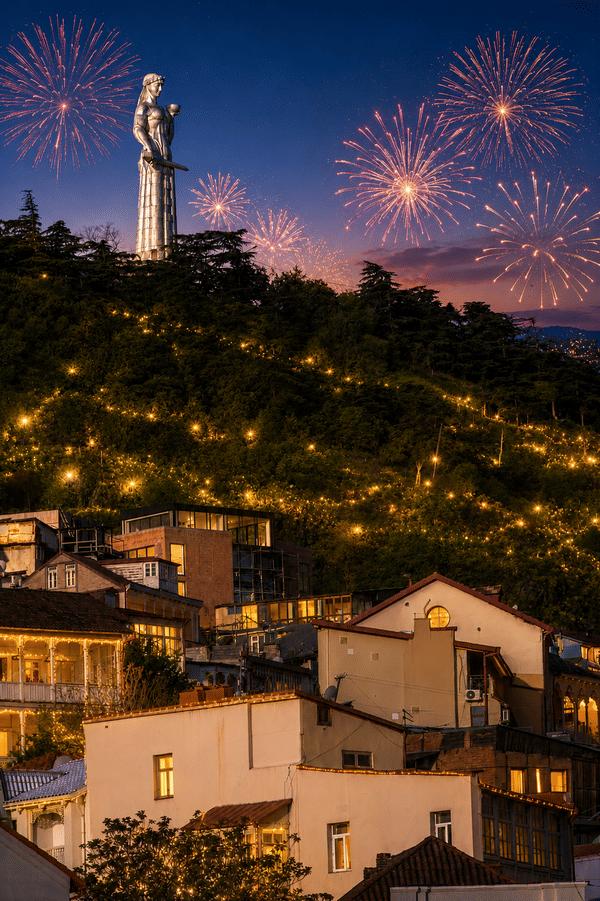
December is the busiest of the three. Georgia in December means Christmas markets, illuminated Rustaveli Avenue, and a genuinely huge New Year's Eve in Tbilisi. Rates climb sharply from around 26 December to 5 January, and Georgian Christmas falls on 7 January, so the festive stretch runs long.
Georgia in January, once the first week is done, is the cheapest and emptiest we've seen the country. Snow conditions are excellent, Tbilisi hotels are heavily discounted, and you'll have the museums to yourself.
Our Advice: The Jvari Pass on the road to Kazbegi can close temporarily after heavy snowfall, sometimes for a day or two. We include a buffer day in our winter itineraries that cover Stepantsminda, and we recommend doing the same if you're planning independently. Don't book a tight international connection off the back of a Kazbegi night.
Best Time to Visit Georgia for Snowfall: When & Where
Snow in Georgia largely depends on altitude. Tbilisi, at 450m, records only a handful of light snow days a year, usually in January, and it rarely settles. Conditions change substantially with elevation, skiing, snowshoeing, and ice-climbing rank among the main winter things to do in Georgia, and each requires a base above 1,500 m.
Snowfall in Georgia typically starts in the high Caucasus around late November, but the base doesn't build properly until mid-December. If skiing or snowboarding is the reason for the trip, January and February are the safe bets. Early December departures are a gamble on natural cover, though Gudauri does run snowmaking on its lower runs.
Things Our Trip Leaders Flag Every Season for Georgia
A few things that do not show up in weather charts but affect how a trip runs. These come from what our on-ground guides report back after each Georgia departure, and they sit alongside the broader travel tips for Georgia worth reading before you book:
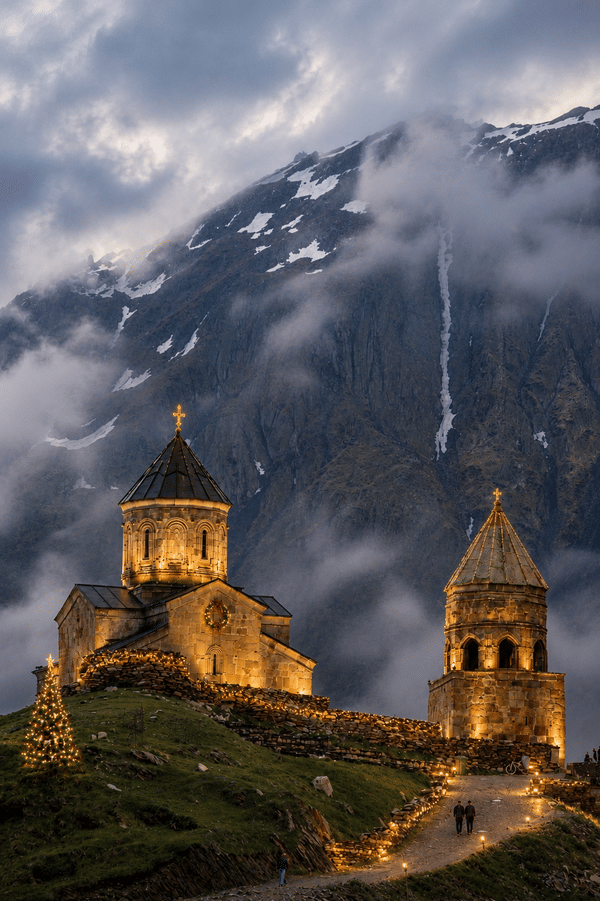
- Mountain weather ignores the forecast: Kazbegi can be clouded in for two days and then open up completely on the third. If Gergeti Trinity Church is on your must-see list, allow two nights in Stepantsminda rather than one. We've seen too many single-night groups leave without the view.
- Georgia is a cash-friendly country but not a cash-only one: Cards work almost everywhere in Tbilisi and Batumi. Carry Georgian Lari for village guesthouses, marshrutka rides and small wineries.
- Layers beat heavy jackets in shoulder season: An April or October day can start at 4°C and hit 20°C by afternoon. A fleece plus a windproof shell handles it better than one thick coat.
- Sundays are quieter than you expect: Some family wineries and smaller museums outside Tbilisi close or run limited hours. Worth checking if you have a tight itinerary.
- The Georgian Military Highway is the trip, not the transfer: Ananuri, Zhinvali reservoir and the Russia–Georgia Friendship Monument all sit on that road. Don't schedule it as a straight-through drive.
- Not every winery near Signagi is worth the stop: This is where a local guide earns their keep, the difference between a family cellar doing qvevri wine properly and a tour-bus tasting room is enormous, and it isn't obvious from the outside.