Interlaken is a Swiss resort town in the Bernese Oberland region, sitting on a narrow strip of land between Lake Thun to the west and Lake Brienz to the east. The town owes its name to this geography, with "Interlaken" translating literally to "between the lakes." It has served as a gateway to the Swiss Alps since the 19th century, when British Victorian travellers made it one of Europe's original alpine resort destinations.
The real value of the town lies in what surrounds it rather than what sits within it. Interlaken Switzerland is the launchpad for the Jungfrau region, home to the Eiger, Mönch and Jungfrau peaks along with world-famous excursions like Jungfraujoch (the "Top of Europe" at 3,454 metres), Grindelwald with its First Cliff Walk, Lauterbrunnen with its 72 waterfalls, and Schilthorn with its James Bond-era Piz Gloria revolving restaurant. The town itself carries Harder Kulm viewpoint, Höhematte paragliding landing field, and access to both lakes for cruises and swimming.
Interlaken has also earned its reputation as Switzerland's adventure capital, with paragliding, canyoning, skydiving, rafting and mountain biking all operating out of the town at scale. Multi-country Europe tour packages typically slot it between Zurich or Lucerne on the entry side and Zermatt or Geneva on the exit side, positioning it as the alpine and adventure anchor of the trip.
Interlaken At A Glance
The essential picture about Interlaken Switzerland before we go into logistics:
Detail
Information
Location
Bernese Oberland, Switzerland
Sits between
Lake Thun and Lake Brienz
Getting in from India
Fly to Zurich, then around 2 hours by direct train to Interlaken Ost
Getting in from Europe
Direct trains from Zurich, Bern and Lucerne; Geneva requires a change
Recommended stay
2–3 nights; 3–4 nights for broader Jungfrau region exploration
Typical mid-range budget
CHF 200–400 per person per day, depending on accommodation, dining and activities
Currency
Swiss Franc (CHF); euros are accepted at many businesses, but change is generally given in CHF
Main train stations
Interlaken Ost and Interlaken West
The Jungfraujoch
Excursion
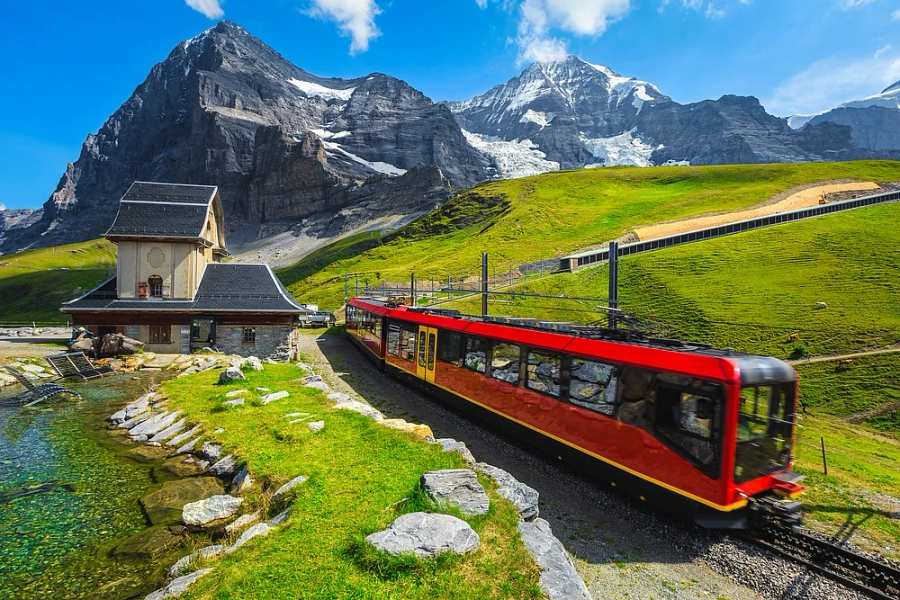
The Jungfraujoch excursion is the single most-asked-about experience in Interlaken, and it's the piece where honest cost framing matters most. Jungfraujoch is billed as the "Top of Europe" and sits at 3,454 metres, reached via a scenic cog railway that runs through tunnels drilled into the Eiger and Mönch peaks.
The Jungfraujoch from Interlaken cost: The standard return ticket from Interlaken Ost to Jungfraujoch runs in the range of CHF 261.20 per adult. This is the flagship excursion price and the reason the trip carries the reputation it does. Discounts apply for holders of the Swiss Travel Pass, Half Fare Card, Eurail Pass and certain regional passes, typically bringing the effective cost down by 25 to 50 percent depending on the pass held. Reconfirm current fares and pass discounts directly with Jungfrau Railways at jungfrau.ch closer to travel.
Weather-window honesty: The Jungfraujoch experience only lands when the summit weather cooperates. Cloud cover at the top can reduce the promised panorama to grey mist, and this happens more often than promotional material suggests. Locals and returning visitors will tell you to check the summit webcam at jungfrau.ch before boarding the train, and if the top is socked in, save the trip for another day.
The cheaper alternatives worth considering. Two experiences deliver much of the alpine wow without the flagship price tag.
First (via Grindelwald): the cable car from Grindelwald to First reaches 2,168 metres and includes the First Cliff Walk suspension bridge, one of the most photographed installations in the Bernese Oberland. Typical cost runs at CHF 76, significantly under the Jungfraujoch price.
Schynige Platte: an old-school cog railway from Wilderswil (a short train ride) climbs to 2,076 metres, with alpine gardens and panoramic views across the entire Jungfrau range. Typical cost runs at CHF 68. This is the value-conscious traveller's pick, and photographers often prefer the Schynige Platte panorama to the Jungfraujoch view.
The verdict from long-time Interlaken guides is straightforward: if Jungfraujoch is a bucket-list item and the weather is clear, do it. If the weather is uncertain or the budget is tight, First and Schynige Platte both deliver genuinely rewarding alpine experiences.
Interlaken Things to Do
Interlaken town runs compact enough that you can cover its main sights in a slow afternoon, and each of them makes the base-town stay meaningfully better rather than being the main event.
Harder Kulm
Harder Kulm is the town’s own viewpoint mountain, reached by a 10-minute funicular from a lower station just across the river from Interlaken Ost. The summit terrace at 1,322 metres delivers the classic postcard view: the town laid out between Lake Thun and Lake Brienz with the Eiger, Mönch and Jungfrau peaks rising behind. The funicular typically operates from April through November with round-trip fares in the range of CHF 44. Sunset from Harder Kulm is one of the town’s most rewarding free-time activities, and the restaurant at the top serves fondue and Swiss classics with the panorama as backdrop.
Hoheweg and the landing-field spectacle
Hoheweg is the main promenade running through central Interlaken, with the open Höhematte field on one side and hotels, shops and the town's main cafes on the other. Höhematte doubles as the landing field for paragliders coming down from Beatenberg and the surrounding peaks, and watching the constant stream of colourful canopies descending onto the grass is one of the town's most distinctive scenes. Grab a coffee at one of the Hoheweg cafes and watch the sky.
The two lakes
Lake Thun and Lake Brienz sandwich the town on either side, and both offer proper day experiences beyond the postcard views. Lake Thun cruises depart from Interlaken West and cover castle-lined villages like Spiez and Oberhofen, while Lake Brienz cruises depart from Interlaken Ost and cover the vivid turquoise waters that give the lake its Instagram reputation. For swimming, the small beach at Bönigen on Lake Brienz and Neuhaus on Lake Thun both work well in the summer months when water temperatures reach 20°C.
The Adventure Capital Layer
Interlaken has earned its reputation as one of Europe's adventure capitals through the sheer density of operators running paragliding, canyoning, skydiving, whitewater rafting and mountain biking from a small town area. Prices sit at the higher end of what these experiences cost across Europe, but the quality of operators and the setting are what travellers pay for.
Paragliding: Tandem paragliding from Beatenberg or Amisbühl launch sites into the Interlaken landing field is the signature adventure experience here. Paragliding itinerary price runs in the range of CHF 199 for the standard 15 to 20-minute flight, with extended flights and photo packages available at higher rates. Booking works through a handful of established operators, and the standard practice is to book a flight window rather than a fixed time, with the operator confirming the actual take-off based on wind conditions on the day. Weather refunds apply if conditions prevent the flight from happening at all, but partial flights due to wind cut-offs mid-experience typically don't qualify. Confirm the specific refund policy with your operator at booking.
Canyoning: Guided canyoning trips through the Chli Schliere, Grimsel or Saxeten gorges run in the range of CHF 139 per person for a half-day experience with all equipment included. This is the middle-tier adventure spend and delivers strong thrill-per-franc for travellers wanting a full-body alpine adventure.
Skydiving: Tandem skydiving over the Jungfrau region is the town’ spremium adventure spend, priced in the range of CHF 490 for a helicopter-and-jump experience. The setting is exceptional, and travellers who prioritise the memory over the cost consistently rate this as the standout Interlaken experience.
Whitewater rafting on the Lütschine river and mountain biking through the surrounding trails round out the adventure menu at more accessible price points.
The Day-Trip Radius
The real reward of basing in the town is the day-trip radius the town opens up. Each of the following destinations sits within a 30 to 90-minute train or cable-car ride from Interlaken Ost.
Grindelwald and First
Interlaken to grindelwald runs 35 minutes by direct train and covers the classic Swiss mountain village that most travellers picture when they think of the Bernese Oberland. From Grindelwald, the cable car up to First (2,168 metres) includes the First Cliff Walk suspension bridge, the Trottibike scooter descent and the summer toboggan run. First is the strongest single day trip from the town for travellers wanting alpine views without the Jungfraujoch cost tier.
Lauterbrunnen
Lauterbrunnen valley is Switzerland's most photographed waterfall valley, with the Staubbach Falls dropping 297 metres from the cliff face directly above the village. Reach it in 25 minutes by train from Interlaken Ost. The valley floor is walkable end to end in a few hours, and the surrounding meadows and 72 named waterfalls make this one of the most rewarding half-day trips in Switzerland.
Murren and Schilthorn
From Lauterbrunnen, a cable car climbs to the car-free village of Murren, and a further cable car reaches Schilthorn at 2,970 metres. The Schilthorn summit has the Piz Gloria revolving restaurant (featured in the 1969 James Bond film On Her Majesty's Secret Service) and one of the widest panoramic views of the Alps, including the Eiger, Mönch and Jungfrau. This is a full-day trip and works well as an alternative to Jungfraujoch for travellers wanting the panorama without the flagship price.
When to Come
Interlaken runs distinct seasons that each deliver a different trip.
Peak season (June to September): the reliable window when all cable cars, funiculars and adventure operators run at full capacity, the lakes are warm enough for swimming, and the Jungfrau region is fully accessible. This is when the town is at its busiest, so book accommodation and flagship experiences well in advance. For travellers building a broader European itinerary, our summer in Europe guide covers the season's picks across the continent.
Winter (December to March): Interlaken in winter is a genuinely different trip, with the town serving as a base for skiing, snowshoeing and winter activities across the Jungfrau region. Grindelwald, Wengen and Murren all sit within easy reach as ski destinations, and the town itself takes on a snow-globe character with the Alps ringing the town. Jungfraujoch runs year-round and delivers spectacular winter panoramas when the weather cooperates. Winter is well suited to travellers wanting the alpine experience with fewer summer crowds.
Shoulder months (April to May, October to November): these months bring fewer travellers and lower accommodation rates. The trade-off is that some seasonal lifts, cable cars and adventure operators run on reduced schedules or pause entirely during transitions between winter and summer operations. Confirm the operating status of specific experiences (paragliding, First cable car, Harder Kulm funicular) directly with operators before booking a shoulder-month trip. Travellers who plan around confirmed operating days get genuine value from these windows.
Fitting Interlaken into a Swiss Trip
The town sits at the heart of most Swiss itineraries because of its central location and its access to the Jungfrau region. Two to three nights covers the town itself along with two solid day trips (say, Jungfraujoch and Lauterbrunnen, or First and Schilthorn). Three to four nights allows for the full Jungfrau region experience with adventure activities built in.
The classic Swiss route typically runs Zurich, Lucerne, Interlaken, Zermatt, Geneva, with 2 to 3 nights in each. The town sits mid-route and often works as the trip's activity anchor between the more urban stops. For the wider picture on how the town sits alongside other Swiss destinations, see our places to visit in Switzerland guide covering Zurich, Lucerne, Zermatt, Geneva and the alpine circuit.
Visa reminder. Switzerland is part of the Schengen Area, so Indian travellers need a Schengen visa applied for well in advance. Our Europe visa for Indians guide covers the application process, document checklist and current fees.
For a structured Swiss trip that includes Interlaken as a properly weighted stop with paragliding, Jungfraujoch and Grindelwald built in, our Europe tour packages run through the peak summer window with dedicated Bernese Oberland days and the wider Swiss circuit included.
Hear from Travellers like you
Manas Divetia
1 Jul 2026
Recently went on a central Europe trip with Wanderon, and it was a fabulous experience. Everything- from visa assistance to trip planning, including hotels was spot on, which made the whole experience enjoyable. Special thanks to Anshika, Yashwant, Yash, Aditya, Shipra for coordinating everything smoothly for my trip.
sahil girdhar
6 Jan 2026
I had a very good experience with WanderOn.
From planning to execution everything was super smooth.
The experts here listen and understand to all of your points during planning and create a curated package.
The most important part of getting VISAs done is in very smart and safe hands of Yashwant from Visa team, he will get it done with ease just submit your details to him.
Then Akash from Execution team will handle all the ground activities of execution. His support 24*7 during the trip is commendable.
Keep it up..
P.S. I booked my honeymoon package for Exploring Europe.
Achin Saxena
15 Dec 2025
WanderOn helped us to build a customised plan and arranged our honeymoon trip to Europe. They prepared the best possible arrangements for us in our budget. Special thanks to Aakash and Abhishek for being proactive starting from booking till the end of our journey.
Visited the rich Heritage of Athens and saw the natural wonders at Santorini in Greece.
Sushmit Tripathi
4 Nov 2025
Had an amazing experience with WanderOn on my recent trip to Europe! Everything was perfectly organized — from the itinerary and hotel bookings to local transfers and on-trip support. The team was professional, responsive, and genuinely cared about making the journey smooth and enjoyable. Special thanks to Deepak, Shreyash and Azad for the personal attention and excellent coordination. Highly recommended for anyone looking for a hassle-free and memorable travel experience!
Frequently Asked Questions
Your right to Know!
01
What is Interlaken famous for?
Interlaken is famous as the base town for the Jungfrau region in the Swiss Alps, sitting between Lake Thun and Lake Brienz. It's known for the Jungfraujoch "Top of Europe" excursion, its adventure capital reputation covering paragliding and canyoning, and its access to nearby alpine destinations including Grindelwald, Lauterbrunnen and Schilthorn.
02
How much does the Jungfraujoch trip cost?
The standard return train fare from Interlaken to Jungfraujoch runs at CHF 261.20 per adult. Discounts of 25 to 50 percent apply for holders of the Swiss Travel Pass, Half Fare Card and Eurail passes. Check current prices and pass discounts directly at jungfrau.ch closer to travel.
03
Is paragliding in Interlaken worth it?
For travellers wanting a signature Interlaken adventure experience, tandem paragliding delivers a 15 to 20-minute flight from Beatenberg or Amisbühl launch sites into the Höhematte landing field in central Interlaken. Priced at CHF 199, it's a premium spend but sits among the most highly rated experiences for travellers who go through with it.
04
How many days do you need in Interlaken?
Two to three nights covers Interlaken along with two solid day trips (Jungfraujoch plus Lauterbrunnen, or First plus Schilthorn). Three to four nights allows for the full Jungfrau region experience with adventure activities built in. Anything less than two nights leaves the day-trip radius underexplored.
05
Interlaken or Grindelwald, where should I stay?
Interlaken works best for first-time visitors, travellers wanting easier train connectivity into and out of the region, adventure-focused trips, and those wanting the lakeside town atmosphere. Grindelwald works best for return visitors, ski-focused trips, travellers wanting the alpine village feel over a town, and those planning to spend most of their time on First and the surrounding trails.
06
Is Interlaken worth visiting in winter?
Yes, and Interlaken in winter is a genuinely different trip from the summer visit. The town serves as a base for skiing at Grindelwald, Wengen and Murren, snowshoeing across the Jungfrau region, and winter versions of Jungfraujoch and Schilthorn. Winter travel suits travellers wanting the alpine experience with quieter crowds and snow-covered landscapes.