Some of the best things to buy in Greece are made, grown, or enjoyed locally. From Crete’s olive oil and mountain honey to handmade sandals in Athens, traditional ceramics, worry beads, sandals stitched by hand in a Plaka workshop, and regional sweets, Greek souvenirs offer a taste of the places you visited long after the trip is over.
Athens is one of the best shopping places in Greece, with Plaka, Monastiraki and Pandrossou Street offering everything from gold jewellery to worry beads, ceramics and local delicacies. If you're exploring Greece as part of Europe tour packages, these local markets and shops are easy to add to your itinerary.
This guide covers the best things to buy in Greece, where to find each one, roughly what it costs, and how to tell a genuine piece from a mass-produced import.
Things to Buy in Greece: Quick Facts
Best places to shop in Greece: Athens (Plaka, Monastiraki, Ermou Street), plus island specialities in Crete, Santorini, and Sifnos
Typical souvenir budget: €10–50 for small gifts, €50–150 for jewellery or premium sandals, €150+ for fine jewellery or large ceramics
Bargaining: Common at Monastiraki flea market stalls, less so in Plaka's fixed-price shops
Best buying window: Weekday mornings, before tour groups fill the main streets
Customs note: Olive oil and packaged food travel fine in checked luggage; liquids over 100ml aren't allowed in carry-on
18 Famous Things to Buy in Greece
These are the famous things to buy in Greece that keep showing up in every local's suitcase, not just the tourist racks, organized by category so you can shop with a plan instead of wandering in circles.
Food & Drink
Food tops most people's list of must-buy souvenirs from Greece, and for good reason: it's authentic, affordable, and genuinely used once you're home.
1. Extra Virgin Olive Oil
Greek olive oil is one of the best in the world, and Crete produces some of the country's most award-winning, full-bodied varieties. It's sold in everything from plain glass bottles to gift-ready tins, making it as practical as it is giftable.
Crete regularly turns up on lists of the best places to visit in Europe, and buying oil straight from a local producer is a good enough reason to add it to the itinerary. A good bottle is graded by harvest date and estate, not just country of origin.
Where to buy: Evripidou Street delis, Varvakios Central Market, or direct from Crete producers
Average cost: €8–25 for 500 ml, more for single-estate or organic
Look for: Harvest date and named region on the label
2. Greek Honey
Greek honey comes in distinct regional varieties, thyme, pine, and wild mountain, each shaped by the specific herbs and forests bees forage from. Thyme honey from Crete and the Cyclades is widely considered the best in the country, thick, aromatic, and slightly resinous. It's a souvenir that gets used at home rather than left on a shelf. It's one of the best items to buy in Greece if you want a souvenir that gets used at home rather than left on a shelf.
Where to buy: Central Market stalls, Yoleni's, island farmers' markets
Average cost: €8–15 per jar
Highlight: Cretan and Cycladic thyme honey is considered the gold standard
3. Greek Feta & PDO Cheeses
Feta is a Protected Designation of Origin product, meaning genuine Greek feta, made from sheep's or goat's milk and cured in brine, can legally only be produced in Greece. Beyond feta, graviera (a firmer, nuttier cheese from Crete) and kefalotyri travel better for anyone worried about brine leaking in transit. Vacuum-sealed packs sold at supermarkets and airport shops are built specifically for travel.
Where to buy: Varvakios Central Market, any Greek supermarket, or sealed packs at the airport
Average cost: €5–15 per pack depending on cheese and size
Look for: Vacuum-sealed packaging for checked luggage, and a PDO label confirming authentic feta
4. Mastiha (Mastic) Products
Mastiha is a resin harvested exclusively from mastic trees on the island of Chios, and nowhere else in the world produces it. It's turned into liquor, chewing gum, sweets, and cosmetics, all carrying its signature piney, slightly sweet flavour. Genuine mastiha carries Protected Designation of Origin (PDO) status, confirming its Chios source, and it's one of the more unique things to buy in Greece precisely because it can't be replicated elsewhere.
Where to buy: Mastiha Shop, Mitropoleos Street, Athens; or direct from Chios
Average cost: €5–10 for gum or sweets, €15–25 for liqueur
Ouzo is an anise-flavoured spirit that turns cloudy when mixed with water, while Metaxa blends brandy with aromatic wine and spices for a distinctly Greek profile. Greek wine varies sharply by region, with over 300 native grape varieties grown across the mainland and islands. All three pack well for travel and are sold right up to airport duty-free.
Where to buy: Central Market, specialty liquor shops, airport duty-free
Average cost: €10–25 standard bottle, more for aged reserves
Highlight: Wine flavour shifts noticeably by island and region
6. Herbs, Spices & Mountain Tea
Dried oregano, wild mountain tea (tsai tou vounou), and saffron from Kozani are everyday Greek pantry staples, not tourist novelties. Mountain tea in particular is brewed across Greek households as a genuine cold remedy. These items are lightweight, unbreakable, and among the most practical things to buy in Greece for tourists with limited suitcase space and stretching their Europe budget trip across several countries.
Where to buy: Evripidou Street, stalls around Varvakios Central Market
Average cost: €3–10 per bag or bundle
Highlight: Mountain tea is a genuine household remedy, not a tourist prop
7. Loukoumi, Pasteli & Halva
Loukoumi (Greek delight), pasteli (sesame-honey bars), and halva (a sesame-paste sweet) are Greece's classic packaged sweets, none requiring refrigeration. Syros island is specifically known for producing the country's best loukoumi. All three are inexpensive enough to buy in bulk for multiple gifts.
Where to buy: Central Market, specialty confectioners, island bakeries
Average cost: €5–12 per box or bar
Highlight: Syros is especially known for its loukoumi
Beauty & Wellness
Greek beauty products lean on the same herbs and ingredients that show up in its kitchens, making this one of the more practical categories for anyone who wants a souvenir they'll actually use.
8. Greek Natural Cosmetics
Korres and Apivita are Greece's two leading natural cosmetics brands, both built on traditional Greek herbal-pharmacy formulas using olive, sage, pomegranate, and wild rose. Korres has gained recognition well beyond Greece; its wild rose vitamin C serum is now a familiar name on pharmacy shelves across much of bigger cities, boosting Europe tourism from Paris to Vienna. Both brands are widely available at pharmacies nationwide, not just tourist areas.
Where to buy: Korres flagship on Ermou Street, or any Athens pharmacy
Average cost: €10–40 per product
Highlight: Korres wild rose vitamin C serum is the brand's best-known export
Jewellery & Accessories
Jewellery covers some of the best items to buy in Greece across every budget, from a €5 charm to a custom-made gold piece.
9. Evil Eye (Mati) Charms
The mati is a blue-and-white glass eye believed to ward off envy and bad luck, and it's one of the most recognisable symbols in Greek culture. As one of the best greek souvenirs, it is sold at every price point, from simple keychains to fine gold jewellery. Genuine handmade pieces show small irregularities in the glass that machine-cast versions don't have.
Where to buy: Jewellery shops throughout Monastiraki and Plaka
Average cost: €5–50 pendants/bracelets, €100–300 premium silver
Look for: Slight irregularities in the glass bead, a sign of handwork
10. Komboloi (Worry Beads)
Komboloi are a secular Greek pastime, not a religious object, twirled or counted in cafés to pass time and relieve stress. Materials range from plastic to amber, coral, and silver, each with a distinct weight and sound. A dedicated Komboloi Museum in Nafplio documents the tradition in detail, and it's consistently ranked among the must buy souvenirs from Greece by longtime visitors. Exploring this museum is one of the more unique things to do in Greece if Nafplio is on your route.
Where to buy: Specialist shops in Plaka and Monastiraki, Komboloi Museum in Nafplio
Average cost: €8–15 plastic, €50–500+ amber/coral/silver
Highlight: Ask to hear the "click" before buying, it varies by material
11. Greek Gold & Silver Jewellery
Greek jewellery frequently draws on ancient motifs, laurel wreaths, the Spartan key pattern, and meander borders, giving pieces a design lineage thousands of years old. Plaka and Kolonaki concentrate the city's serious goldsmiths, while Voukourestiou Street leans toward contemporary silver designs.
Custom engraving and resizing are commonly done on-site, often same-day. Getting your favourite jewellery from here as a souvenir for your partner is one of the most romantic things to do in Greece on honeymoon.
Where to buy: Voukourestiou Street (silver), Plaka & Kolonaki (gold)
Average cost: €50–500 silver, €200–2,000+ gold
Highlight: Custom engraving/resizing often done same-day
Leather & Fashion
Leather goods are where Greek craftsmanship meets everyday use, built to be worn in rather than displayed on a shelf.
12. Handmade Leather Sandals
One of the simplest answers to what to buy in Greece is definitely the Athens' leather sandal that traces back to Stavros Melissinos, the "Poet Sandal-Maker," whose Plaka workshop opened in the 1950s and dressed musicians, poets, and royals. His family's workshop, along with several others on Pandrossou Street, continues the tradition today. Genuine pairs are stitched rather than glued, with leather that softens over time instead of cracking, making them one of the best things to buy in Athens specifically.
Where to buy: Melissinos Art (Plaka/Monastiraki), workshops along Pandrossou Street
Average cost: €40–120 depending on style
Look for: Stitched (not glued) soles, supple rather than stiff leather
Home & Decor
This category covers the things to buy in Greece for tourists who want a piece of the country's craft traditions sitting somewhere in their home, not just their suitcase.
13. Hand-Painted Ceramics & Pottery
Greek pottery traces back to antiquity, and islands like Sifnos still run active workshops using techniques passed down through generations of potters. Pieces range from mass-produced everyday bowls to fully hand-painted work by named local artists.
For anyone mapping out places to visit in Greece, a stop at a Sifnos workshop is worth the detour, genuine hand-painted ceramics show visible brushstrokes and slight asymmetry that printed transfers can't replicate.
Where to buy: Sifnos workshops, or ceramics stores in Plaka/Monastiraki
Average cost: €15–50 small pieces, €100+ larger hand-painted work
Look for: Visible brushstrokes, slight asymmetry (signs of handwork)
14. Olive Wood Products
Olive wood products are carved from retired olive trees that no longer bear fruit reliably, shaped into spoons, bowls, and cutting boards. Each piece has a distinctive swirling grain, meaning no two items look identical. Genuine olive wood feels notably denser and heavier than cheaper wood substitutes.
Where to buy: Pandrossou Street, Crete workshops, Cycladic island craft shops
Average cost: €10–40 small items, more for larger carved pieces
Highlight: Heavier weight and visible grain signal genuine olive wood
Bath & Body
15. Natural Sea Sponges
Harvested by hand from the Aegean Sea, mainly around the island of Kalymnos, long known as Greece's "sponge divers' island." These are genuinely different from synthetic sponges: softer, more absorbent, and naturally antibacterial, with a lifespan of several years when properly rinsed and dried. Kalymnos divers still use traditional harvesting methods designed to let the sponge regenerate rather than strip the seabed.
Where to buy: Kalymnos sponge shops directly, or specialty sponge/bath stores in Athens and other island ports
Average cost: €8–25 depending on size and type
Look for: Natural brown colour rather than bleached white, a sign it hasn't been over-processed
Traditional Crafts & Keepsakes
For anyone specifically after traditional things to buy in Greece, this last category is where the country's oldest, most locally rooted crafts live.
16. Backgammon (Tavli) Sets
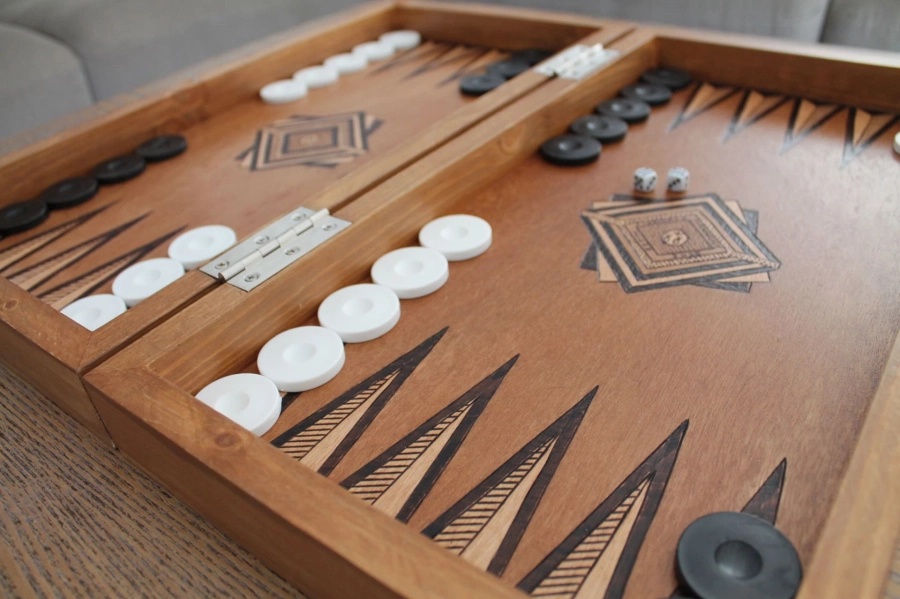
Tavli is a game actively played daily in Greek kafenia (coffee shops), not a souvenir-shop invention. Handcrafted wooden boards range from simple folding sets to elaborately inlaid versions with mother-of-pearl or contrasting woods. The better-quality sets are built for actual play, with weighted pieces and smooth-sliding dice trays.
Where to buy: Pandrossou Street, specialist shops in Monastiraki
Average cost: €40–300 depending on size and inlay
Highlight: Hand-inlaid wood (not printed veneer) lasts and plays better
17. Hand-Embroidered Textiles
Greek island weaving traditions produce tablecloths, runners, and woven bags with patterns specific to each region. A piece from the Cyclades looks distinctly different from one woven on another island, since colour palettes and motifs are often passed down within weaving families. These textiles are a quieter, more traditional gift compared to jewellery or ceramics.
Where to buy: Plaka boutiques, island craft shops (especially the Cyclades)
Average cost: €15–60 depending on size and detail
Highlight: Colour palette and pattern often vary by island
18. Religious Icons
Byzantine-style icon painting is a distinct Greek art form built on centuries-old techniques for depicting saints in gold leaf and rich colour. Shops in Plaka and Monastiraki carry everything from simple printed pieces to fully hand-painted icons made by trained iconographers. Premium pieces use real gold leaf and fine brushwork that's easy to spot up close, and they remain one of the most genuinely traditional things to buy in Greece on this entire list.
Where to buy: Specialist icon shops around Plaka and Monastiraki
Average cost: €20–50 printed/touched-up, €50–150+ fully hand-painted
Look for: Fine brushwork and gold leaf detailing on premium pieces
Where to Shop in Greece?
Athens remains the best of all the places to shop in Greece for variety. Plaka, Monastiraki, and Ermou Street sit close enough together to cover on foot, which is also why Athens works well as a shopping stop on most Europe group trips that move through multiple cities.
For island-specific finds, Sifnos, Crete, and the Cyclades are worth the extra stop if your itinerary allows it. Wherever you land, the same rule holds: walking a street or two back from the busiest corners usually gets you closer to the maker and further from the markup.
Hear from Travellers like you
Manas Divetia
1 Jul 2026
Recently went on a central Europe trip with Wanderon, and it was a fabulous experience. Everything- from visa assistance to trip planning, including hotels was spot on, which made the whole experience enjoyable. Special thanks to Anshika, Yashwant, Yash, Aditya, Shipra for coordinating everything smoothly for my trip.
sahil girdhar
6 Jan 2026
I had a very good experience with WanderOn.
From planning to execution everything was super smooth.
The experts here listen and understand to all of your points during planning and create a curated package.
The most important part of getting VISAs done is in very smart and safe hands of Yashwant from Visa team, he will get it done with ease just submit your details to him.
Then Akash from Execution team will handle all the ground activities of execution. His support 24*7 during the trip is commendable.
Keep it up..
P.S. I booked my honeymoon package for Exploring Europe.
Achin Saxena
15 Dec 2025
WanderOn helped us to build a customised plan and arranged our honeymoon trip to Europe. They prepared the best possible arrangements for us in our budget. Special thanks to Aakash and Abhishek for being proactive starting from booking till the end of our journey.
Visited the rich Heritage of Athens and saw the natural wonders at Santorini in Greece.
Sushmit Tripathi
4 Nov 2025
Had an amazing experience with WanderOn on my recent trip to Europe! Everything was perfectly organized — from the itinerary and hotel bookings to local transfers and on-trip support. The team was professional, responsive, and genuinely cared about making the journey smooth and enjoyable. Special thanks to Deepak, Shreyash and Azad for the personal attention and excellent coordination. Highly recommended for anyone looking for a hassle-free and memorable travel experience!
Frequently Asked Questions
Your right to Know!
01
What are the best things to buy in Greece?
The best things to buy in Greece include extra virgin olive oil, thyme honey, mastiha products from Chios, komboloi worry beads, handmade leather sandals, and hand-painted ceramics. These items reflect genuine Greek craft and food culture rather than mass-produced tourist trinkets.
02
What souvenirs should I buy from Greece?
Top Greek souvenirs include olive oil, honey, ouzo or Metaxa, evil eye (mati) charms, komboloi worry beads, and olive wood kitchenware. For something more traditional, hand-embroidered textiles and Byzantine-style religious icons make meaningful, distinctly Greek gifts.
03
What is Greece famous for buying?
Greece is famous for olive oil, honey, mastiha (a resin found only on Chios), ouzo, handmade leather sandals, and gold or silver jewellery inspired by ancient motifs. These famous things to buy in Greece reflect centuries-old regional traditions.
04
What unique things can I buy in Greece?
Unique things to buy in Greece include PDO-certified mastiha from Chios, hand-thrown Sifnos pottery, custom-engraved goldsmith jewellery from Plaka, and region-specific olive oil labelled by harvest and estate, items with no real substitute elsewhere.
05
Is Greece good for shopping for souvenirs?
Yes, Greece is excellent for souvenir shopping. Athens neighbourhoods like Plaka and Monastiraki concentrate authentic Greek souvenirs, handmade sandals, jewellery, ceramics, alongside food markets selling olive oil, honey, and herbs, all at a wide range of budgets.