Here’s the first thing to know about Sweden tour packages: this isn’t one country, it’s two completely different holidays. The summer Sweden runs on 20 hours of daylight, archipelago ferries, café terraces along Stockholm’s canals and Gothenburg seafood by the harbour. The winter Sweden takes you 1,200 kilometres further north into Lapland, where you chase the Northern Lights from Abisko, sleep in a hotel carved from ice, and spend your evenings around a fire with reindeer herders.
Both trips are brilliant. They’re just not the same trip. Which one is right for you depends on what you want from a Nordic holiday, how much you want to spend, and what you’d rather bring home: photos of pastel townhouses in soft summer light, or shots of green aurora dancing above a frozen lake.
This guide walks through both options, with honest cost bands, itinerary ideas, Nordic pairing logic, and WanderOn’s live Europe tour packages with Sweden departures across the year.
Both are premium holidays. Sweden sits among Europe’s higher-cost destinations, and packages reflect that. Hotel standards, food, transport and experiences all run at Scandinavian pricing.
The Summer Sweden: Stockholm, Archipelago, Gothenburg
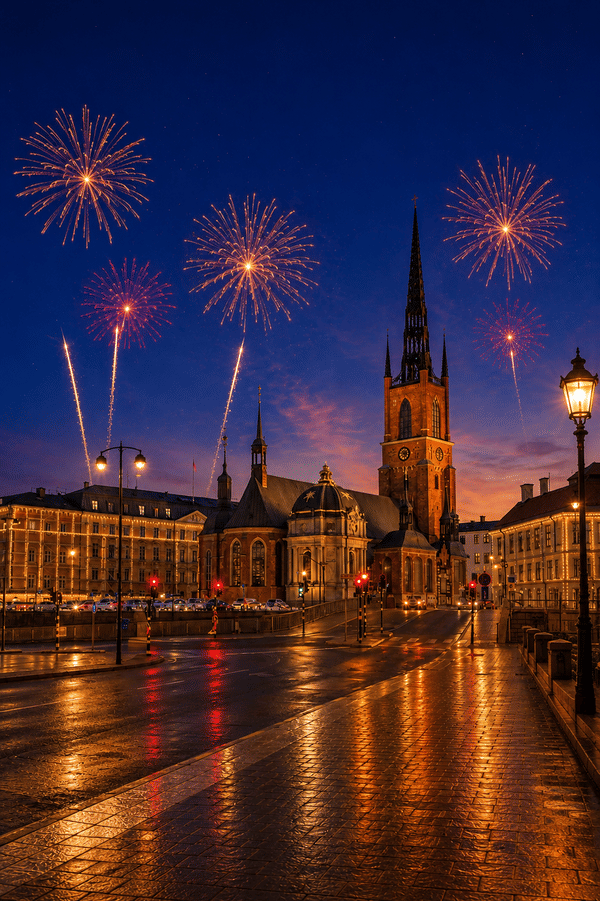
Summer in Sweden is one of Europe’s best-kept secrets. From late May through early September, daylight stretches so long you forget what night looks like. Stockholm comes alive with outdoor terraces, boat tours and midsummer celebrations. The archipelago (30,000 islands, give or take) opens up fully, with ferries running regular schedules to the prettier ones. Gothenburg on the west coast adds the seafood and canal walks.
The classic 7-night summer itinerary looks like this:
Nights 1 to 3 in Stockholm covering Gamla Stan’s medieval streets, the Vasa Museum, Djurgården island and a sunset boat tour of the inner harbour.
Nights 4 to 5 on an archipelago island like Sandhamn, Vaxholm or Grinda, where ferries drop you off at pastel wooden guesthouses and the pace slows right down.
Nights 6 to 7 in Gothenburg for the harbour, Haga district, Liseberg amusement park, and a proper seafood dinner at Feskekôrka, the city’s famous “fish church” market.
If you want to go deeper on Stockholm specifically (which hotels sit where, how to split your days between Gamla Stan and the museum island, where to eat), your Stockholm nights can be built around our dedicated Stockholm tour packages which carry the city depth. A Stockholm package can also work as a standalone shorter trip if you’d rather give the capital a focused 4 to 5 nights instead of touring across.
Summer group departures from WanderOn typically run between late May and early September, with the strongest availability around June and July when the midnight sun is at its peak.
The Winter Sweden: Lapland and the Lights
If you’ve ever dreamed of standing under a sky with green ribbons dancing above you, this is the trip. Swedish Lapland, specifically the Kiruna and Abisko belt, sits inside the Arctic Circle and holds some of the clearest skies in the world for aurora viewing. The 20,000-foot-wide Torne Valley acts as a weather-break, giving Abisko a famously high rate of cloud-free nights through winter.
A Lapland Sweden tour builds around a few headline experiences:
Aurora chasing from Abisko: You head out at night with a guide who knows the sky and the lake, usually to the Aurora Sky Station at Nuolja or out onto frozen Lake Torneträsk. Patience and warm layers are the only real requirements.
A night at the Icehotel in Jukkasjärvi: Rebuilt every winter from blocks of ice carved from the Torne River, with themed suites, an ice bar and reindeer-skin bedding. One night here is the standout memory for most travellers.
Dog sledding across frozen forest trails behind a team of eight huskies, often with a stop for coffee over an open fire at a Sami lavvu.
Aurora Odds by Month
Aurora season in Sweden runs from late September to early April, with December through March carrying the strongest odds. A northern lights sweden package built around 3 nights in Abisko gives you the best shot statistically, since you need multiple attempts to beat weather variability. The further north you go, the better the odds. Reconfirm current aurora forecast tools and conditions with your WanderOn consultant close to departure.
For families combining the aurora chase with a bit of Christmas magic, pairing a Swedish Lapland trip with Finland’s Santa Claus Village in nearby Rovaniemi delivers both the lights and the elves in one Nordic winter holiday.
What Sweden Really Costs
Let’s talk money honestly, because Sweden is premium. Your Sweden trip cost works out higher than most European destinations for three reasons: Scandinavian labour costs, high VAT, and the fact that specialised experiences (Icehotel suites, Abisko aurora guides, archipelago transfers) carry pricing you don’t see on cheaper trips.
Here's a rough idea of how your money is typically spent on a Sweden trip. These are indicative budget estimates for independent travel, not a breakdown of WanderOn's package inclusions.
Accommodation (35–40%): This is usually the biggest expense. A standard 4-star hotel in Stockholm can cost approximately ₹12,000–₹20,000 per room per night as of 2026. A signature stay at the ICEHOTEL can cost considerably more, particularly if you book an Icehotel Art Suite.
Experiences and activities (20–25%): Keep around 20–25% of your budget for experiences. This includes Northern Lights excursions, dog sledding, reindeer experiences, archipelago cruises, museum tickets and guided city tours.
Meals (15–20%): Food in Sweden isn't particularly cheap. Budget approximately ₹1,000–₹1,500 for a casual lunch and ₹2,000–₹3,500 or more for dinner at a mid-range restaurant.
Internal transport (10–15%): Trains between major cities, airport transfers, local taxis and archipelago ferries make up this part of your budget. Booking long-distance train tickets early can help keep costs manageable.
Visa, insurance and small costs round out the rest.
Pair It: The Nordic Combination
Here’s a smart move most travellers don’t consider: Sweden and Norway go together beautifully, and because both are in the Schengen zone, you only need one visa for the whole trip. A combined Nordic holiday lets you pack more into a single journey without the hassle of extra paperwork.
A classic 10-night combo looks like this. You start with 3 nights in Stockholm covering the city and a half-day in the archipelago. Then take the overnight train or short flight to Oslo for 2 nights. From Oslo, you ride the Bergen Railway (one of the world’s great scenic train journeys) across the mountains to Bergen for 2 nights. Then fly to Tromsø for 3 nights of aurora chasing in Norwegian Lapland.
Alternatively, flip the trip for a summer version: Stockholm plus archipelago (3 nights), Oslo (2 nights), Flåm and the fjords (2 nights), Bergen (2 nights). You get the best of both countries at midnight-sun light with minimal time wasted on borders.
When to Book Which Sweden
The booking logic depends on which Sweden you’re after.
For summer trips (May to September): Book 4 to 6 months ahead. Hotels in Stockholm sell out around Midsummer (third weekend of June), and the archipelago properties have limited capacity. July and August are peak season and command peak rates. June offers near-identical light at better pricing.
For winter aurora trips (December to March): Book 6 to 8 months ahead. The Icehotel in particular runs on tight seasonal inventory, with the art suites and signature rooms selling out first. December and January are peak Christmas and New Year windows and offer longer aurora nights and often clearer skies.
For wider Europe planning that places Sweden alongside other continental options, our Europe tour packages carry the broader route picture.
Recently went on a central Europe trip with Wanderon, and it was a fabulous experience. Everything- from visa assistance to trip planning, including hotels was spot on, which made the whole experience enjoyable. Special thanks to Anshika, Yashwant, Yash, Aditya, Shipra for coordinating everything smoothly for my trip.
sahil girdhar
6 Jan 2026
I had a very good experience with WanderOn.
From planning to execution everything was super smooth.
The experts here listen and understand to all of your points during planning and create a curated package.
The most important part of getting VISAs done is in very smart and safe hands of Yashwant from Visa team, he will get it done with ease just submit your details to him.
Then Akash from Execution team will handle all the ground activities of execution. His support 24*7 during the trip is commendable.
Keep it up..
P.S. I booked my honeymoon package for Exploring Europe.
Achin Saxena
15 Dec 2025
WanderOn helped us to build a customised plan and arranged our honeymoon trip to Europe. They prepared the best possible arrangements for us in our budget. Special thanks to Aakash and Abhishek for being proactive starting from booking till the end of our journey.
Visited the rich Heritage of Athens and saw the natural wonders at Santorini in Greece.
Sushmit Tripathi
4 Nov 2025
Had an amazing experience with WanderOn on my recent trip to Europe! Everything was perfectly organized — from the itinerary and hotel bookings to local transfers and on-trip support. The team was professional, responsive, and genuinely cared about making the journey smooth and enjoyable. Special thanks to Deepak, Shreyash and Azad for the personal attention and excellent coordination. Highly recommended for anyone looking for a hassle-free and memorable travel experience!
Frequently Asked Questions
Your right to Know!
01
How much does a Sweden tour package cost from India?
Sweden tour packages from India vary depending on the season, itinerary and experiences included. Based on WanderOn's currently listed departures, the 9-day Stockholm to Lapland backpacking trip starts at ₹1,89,990 per person, while the 10-day Northern Lights Community Tour starts at ₹2,59,990 per person. These are land-package prices, excluding international flights.
02
Is English widely spoken in Sweden?
Yes, Sweden has one of the highest English proficiency levels in the world, consistently ranked in the global top 3 outside native English-speaking countries. You can navigate restaurants, hotels, shops and transport entirely in English across the country, including in remote Lapland. Signs, menus and announcements are typically bilingual.
03
How cold is Swedish Lapland in winter?
Swedish Lapland winter temperatures range from minus 5°C to minus 25°C depending on month and location. December and January are the coldest, February through March slightly milder. Packages include thermal gear, insulated boots and expedition suits for outdoor activities, so you stay warm even during long aurora watches on frozen lakes.
04
Do Indians need a separate visa for Sweden?
No. Sweden is part of the Schengen Area, so Indian travellers need a Schengen visa, which covers all 29 Schengen countries including Norway, Finland, France, Germany and Switzerland. Apply for your visa 4 to 6 weeks before departure through the Sweden embassy or an authorised visa processing centre.
05
Is the Icehotel worth it?
Yes, a night at the Icehotel in Jukkasjärvi is consistently rated among the most memorable experiences in Scandinavia. The hotel is rebuilt every winter from ice carved from the Torne River, with themed art suites and reindeer-skin bedding keeping you warm at around minus 5°C inside the room. One night is enough since the magic hits hardest on arrival.
06
How many days are enough for Sweden?
A summer Sweden trip works best with 7 nights covering Stockholm, the archipelago and Gothenburg at a comfortable pace. A winter Lapland trip works at 5 to 7 nights with multiple aurora attempts. For a combined Sweden plus Norway Nordic holiday, plan 10 to 14 nights to cover both countries properly.
07
Can Sweden and Norway be combined in one trip?
Yes. Both countries are part of the Schengen Area, so you can visit them with a single valid Schengen visa. A 10-night trip can cover Stockholm, Oslo, the Bergen Railway, the Norwegian fjords and Bergen. Flights and trains make travelling between the two countries convenient. If you want to include Tromsø, plan a few extra nights.
08
What is included in a Sweden package?
A standard Sweden tour package includes accommodation, daily breakfast, select meals, airport transfers, intercity transport, guided experiences (archipelago ferry, aurora chase, Icehotel night, dog sledding depending on itinerary) and sightseeing with English-speaking local guides. Flights, visa fees, travel insurance and personal expenses are usually quoted separately.
09
Is Sweden expensive for Indian travellers?
Yes, Sweden sits among Europe’s premium destinations, with daily costs running higher than most of Western Europe. The Sweden trip cost reflects Scandinavian labour costs, high VAT and specialised experiences like the Icehotel and guided aurora tours.
10
When can you see the northern lights in Sweden?
Northern Lights season in Sweden runs from late September to early April, with December through March carrying the strongest viewing odds. Abisko in Swedish Lapland is one of Europe’s best aurora destinations because the Torne Valley creates a cloud-break, giving the area famously clear skies. For reliable sightings, book at least 3 nights in Abisko to allow multiple viewing attempts.
11
What is the Stockholm archipelago?
The Stockholm archipelago is a 30,000-island chain stretching east from the Swedish capital into the Baltic Sea. Ferries connect popular islands like Vaxholm, Sandhamn and Grinda to central Stockholm, with journeys ranging from 30 minutes to 3 hours. The islands carry pastel wooden houses, swimming jetties, seafood restaurants and the pace that defines Swedish summer.