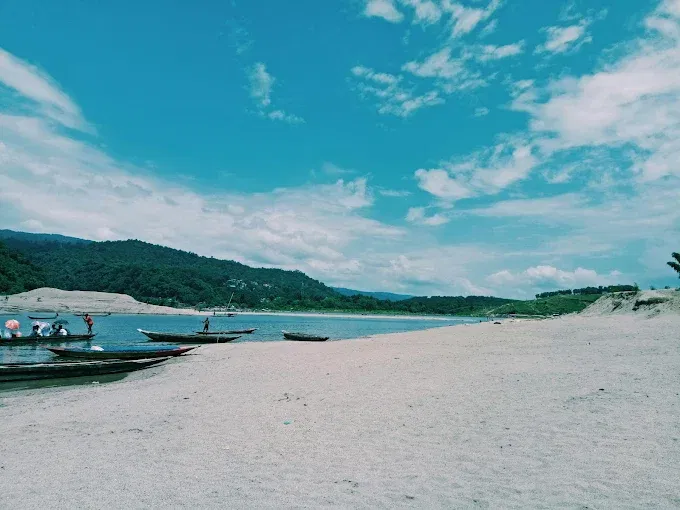
Jaflong Zero Point is a viewing area at the India Bangladesh border Dawki side, about 1–2 km from Dawki town in Meghalaya's East Khasi Hills. It's the closest most travellers ever get to Bangladesh without a visa: a riverside spot where the Umngot river flats stretch out toward the border, BSF personnel keep watch, and Bangladeshi soil is visible just across the line.
It's a short stop, not a destination in itself, and this guide covers what you'll actually see, the rules that apply this close to an international border, the honest answer on whether you can cross, and how to fit it into a day around Dawki.
Most travellers reach Jaflong Zero Point as one stop on a longer day exploringMeghalaya trips built around Dawki, Shillong, and the East Khasi Hills, rather than as a trip on its own.
This guide covers everything from timings, entry rules and route to the Indian-side Jaflong Zero Point Dawki viewpoint.
Jaflong Zero Point at a Glance
Location: 1–2 km from Dawki town, East Khasi Hills, Meghalaya
Across the line: Jaflong town, Sylhet district, Bangladesh
River: Umngot River, locally nicknamed the Jaflong stones river, also called the Dawki River
Timings: 8 AM–4 PM (confirm locally; some list 9 AM–5 PM)
Entry fee: None reported
Security: BSF-monitored border zone
Distance from Shillong: 80–95 km, about 2.5–3 hours
Best time: October to February, for the clearest water
Time needed: 30–45 minutes
Please Note: There’s another Jaflong town in Bangladesh in the Sylhet district, with its own zero point. The two points face each other across the same river and border line, and the two names often get mixed up.
What You Actually See at the Jaflong Zero Point?
Set your expectations honestly: this is a 30–45 minute stop built around one view, unlike most other Meghalaya tourism spots that offer a fuller day's worth of sights on their own.
The river flats: Wide, shallow stretches of the Jaflong stones river bed, scattered with smooth, pale stones washed down from the hills
Stone-collection boats: On clear days, you can often spot boats and workers on the Bangladesh side gathering river stones, a genuine local trade rather than a staged photo opportunity
Boundary markers: Pillars and markers indicate exactly where India ends and Bangladesh begins, making the abstract idea of a border suddenly very literal
The India Bangladesh border Dawki area beyond the pillars: Rooftops, fields, and everyday life on the Bangladeshi side are visible in the near distance, a quiet reminder of how close two countries sit here
The general Dawki-Tamabil crossing area: Visible from a distance, this is where the formal, regulated border crossing operates, distinct from the tourist viewpoint itself
Border Etiquette and Rules for Travellers to Follow
This is an active international border, and the rules here are firmer than at a typical scenic viewpoint and this exact loop is also the backbone of most Meghalaya group trips that include this stretch of the state.
1. No crossing without a visa. Tamabil is a formal, regulated border crossing for travellers and cargo with the correct paperwork, not a casual walk-across point for tourists at the viewing area
2. Carry a valid photo ID (like Aadhaar Card, passport, or driving license) at all times, since this is a designated border zone and BSF personnel may ask for identification
3. Photograph the landscape, not the security posts. General river and border-view photos are fine at the tourist point, but avoid photographing BSF personnel, installations, or equipment directly
4. Drones are not permitted. This is a sensitive international border zone, and flying a drone here without prior clearance from the relevant authorities is against the rules, full stop, regardless of what you may have gotten away with elsewhere in Meghalaya
5. Follow BSF instructions immediately if given any, since they're enforcing genuine security protocol, not being difficult
6. Dress and behave respectfully, since this remains an active security post first and a tourist spot second. Also confirm the current Jaflong Zero Point timings before visiting.
Can You Cross at Dawki Border?
No. The Zero Point viewpoint is a designated viewing area, not an immigration checkpoint — tourists stand on the Indian side looking across, while BSF personnel ensure that line isn't crossed. Actual crossings happen a short distance away at Tamabil, a formal Land Customs Station requiring valid visas for both countries, used for regulated trade and travel, not casual sightseeing.
Pairing Jaflong Zero Point with Dawki
Almost nobody visits Zero Point on its own. It's one stop in a Dawki day that usually includes the river itself and, often, a nearby village.
1. Umngot River boating
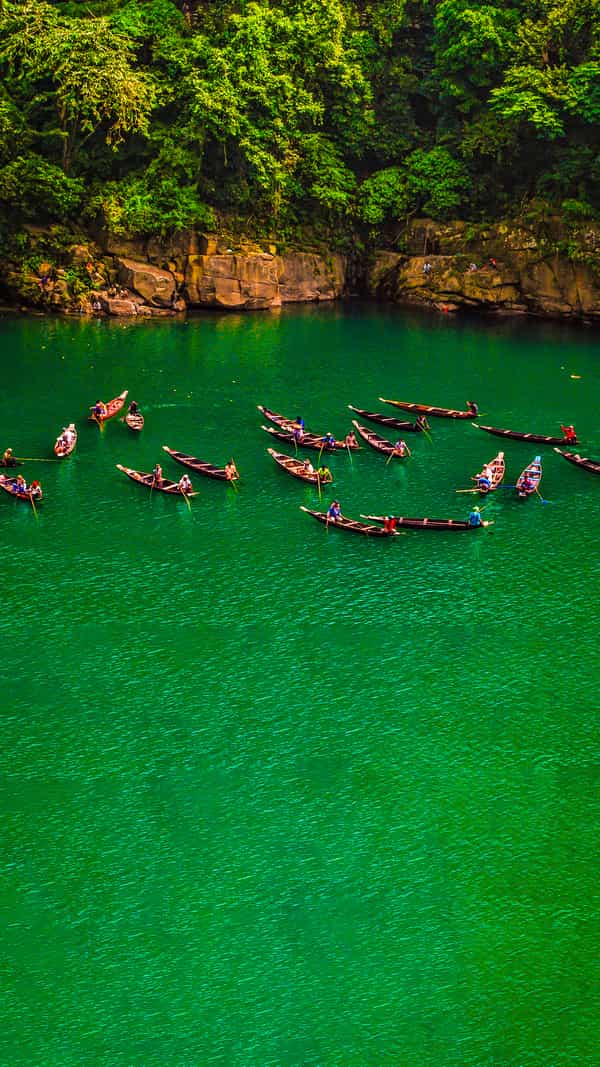
Boating on theUmngot River is the main event of most Dawki visits, with boats gliding over water so clear it looks like they're floating on air.
Located within the same stretch of Dawki town, a few minutes from Zero Point — easy to pair either before or after
Dawki river boating is best done earlier in the day, when the water is calmest and clearest
2. Mawlynnong village
Often called one of Asia's cleanest villages, Mawlynnong is a small, well-kept Khasi settlement known for its spotless lanes and community-driven upkeep.
About 25 km from Dawki, roughly 45 minutes by road
Commonly combined with Dawki as part of the same long day trip from Shillong
3. Shnongpdeng
A riverside village along the Umngot, known for camping in Meghalaya and water sports rather than sightseeing in the traditional sense.
About 3 km from Dawki, a short detour if you have time to spare
Worth adding only if you're not already tired from the day's driving, since it's more of an activity stop than a quick photo halt
4. Mawsynram
If your wider itinerary includesMawsynram and its record rainfall claims, it's worth treating as a separate day from the Dawki side.
Mawsynram and Dawki sit in different directions from Shillong, so combining both in a single day means a long, inefficient drive rather than a natural pairing
Better planned as its own day alongside Cherrapunji than tacked onto a Dawki itinerary
How to Reach Jaflong Zero Point?
By Road from Shillong (the standard route)
Distance and time: 80–83 km via NH206, about 2.5–3 hours
Route: Shillong → Pynursla (around 60 km, a small town with a few restaurants, a good fuel and washroom stop) → a scenic canyon stretch above Pynursla → a switchback descent of about the last 20 km into the Dawki valley
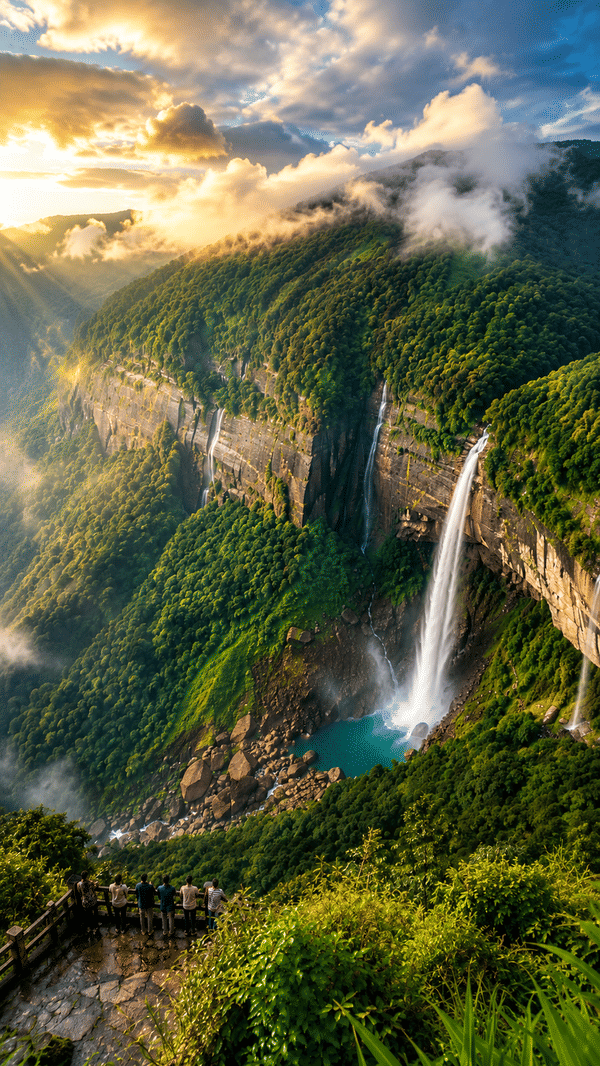
Named viewpoint en route: the Lyngkyrdem/Borsora viewpoint, on the descent, gives an open view over the Dawki valley
Fuel: petrol is limited in Dawki itself, so fill up in Shillong or Pynursla
Check road status before you leave: this stretch has seen short-term closures for construction near Laitlyngkot–Lyngkyrdem, so confirm the route is open, especially if travelling in summer
By Air or Train (via Guwahati or Shillong)
Guwahati airport (best connected): Lokpriya Gopinath Bordoloi International Airport, then continue by road to Shillong before the Dawki leg; see theGuwahati to Meghalaya route for that first stretch
Shillong airport, Umroi: smaller, with fewer flights, but leaves you about 80 km from Dawki once you land
Nearest railway station: Guwahati Railway Station; Meghalaya has no station of its own, so you continue by road via Shillong either way
From Dawki Town to the Border Viewpoint
Distance to the Dawki border viewpoint: 1–2 km, an easy short drive or a walkable stretch if you're already at the river
How most people cover it: the same taxi that brought you to Dawki, or a short local ride if you arrived by bus or shared transport
Planning the Day from Shillong
Leave by 7–8 AM to reach Dawki before late-morning crowds and haze build up
Order of stops: most itineraries do Umngot boating first, then Zero Point, then Mawlynnong on the way back
Return to Shillong by evening, with time left fortourist places in Shillong or dinner around Police Bazar
Planning Your Visit to Jaflong Zero Point
1. Go in the morning for the clearest light and calmer water, since haze and glare tend to build up by midday
2. Avoid peak monsoon if clarity matters to you. Heavy rain churns up the Umngot's famously clear water and can reduce visibility at the viewpoint; if you're travelling between June and September anyway, it helps to know howMeghalaya in monsoon affects visibility and travel more broadly across the state, not just at Dawki
3. Carry your ID and some cash, since this is a border checkpoint area and digital payments aren't reliably available nearby
4. Budget 30–45 minutes here, not a half-day, and spend the extra time on the river itself or at Mawlynnong instead
5. Combine it into a full Dawki day rather than a special single-purpose trip, since the drive from Shillong is the same either way
6. Best time to visit: October to February is also when most Meghalaya trips in winter are scheduled, which conveniently lines up with the clearest water at the viewpoint too
Was planning Meghalaya for a long time .. Been through different sources and found wanderOn at last ..
Finally went with them on Nov 8. Meghalaya backpacking trip ( Nov 8- Nov 13)
The Itinerary was really good and our captain Himanshu was on different level . Never saw a person so engaging and child at heart . He was so perfect with the suggestions for food menu throughout the journey. The stays were really good. Thanks Himanshu and wanderOn for making my trip a success and memorable 😊
Harshad
22 Jun 2026
My Meghalaya trip with WanderOn was truly unforgettable! From the stunning landscapes and serene surroundings to the well-organized travel arrangements, everything was handled flawlessly. The entire experience felt effortless thanks to the excellent coordination behind the scenes—permits, accommodations, and meals were all perfectly managed. A special shoutout to our trip captain, Sarthak, whose dedication, care, and constant support ensured everyone's comfort and well-being throughout the journey. Every moment was worth it, and I would highly recommend this experience to fellow travelers!" 🌿✨🏔️
Hamsalatha Ramaiah
22 Jun 2026
Wonderfully organized trip to Meghalaya. Sarthak was our coordinator and he did a great job accommodating our needs as it was a family vacation. We were super happy with the whole experience. I recommend wanderon for your trips whether it’s friends or family. This is my 3rd trip with them and trust me you won’t be disappointed booking with them :)
Arun Mikkilineni
11 Jun 2026
We went on a trip to Meghalaya with WanderOn, and it turned out to be an absolutely wonderful experience. From the very beginning, the booking process was seamless, hassle-free, and well organized.
A special thanks to Shrut Dhakad for the fantastic planning of the trip. Every detail was thoughtfully arranged, allowing us to simply relax and enjoy the journey. The weather was amazing, and the itinerary covered some truly beautiful destinations. We thoroughly enjoyed activities like boating and exploring the many scenic places Meghalaya has to offer.
The execution of the trip was equally impressive. Sarthak Ghai managed everything seamlessly and ensured that the entire experience ran smoothly from start to finish. He was calm, composed, and extremely supportive throughout the trip. Whether it was coordinating logistics, handling schedules, or taking care of participants' needs, everything was managed professionally and efficiently.
The WanderOn team took care of every aspect of the trip, making it stress-free and enjoyable for everyone. Overall, it was a memorable experience filled with great moments, beautiful landscapes, and excellent hospitality. We truly enjoyed the trip and would highly recommend WanderOn to anyone looking for a well-planned and well-executed travel experience.
Frequently Asked Questions
Your right to Know!
01
What is Jaflong Zero Point?
Jaflong Zero Point is a riverside viewpoint on the India–Bangladesh border near Dawki, Meghalaya, where the Umngot river flats stretch toward Bangladesh. BSF personnel monitor the area, and visitors can see boundary markers, stone-collection boats, and everyday life across the border in the near distance.
02
Can you cross into Bangladesh at Dawki?
No, not from the Zero Point viewpoint. It's a designated viewing area, not an immigration checkpoint. Actual crossings happen at Tamabil, a formal Land Customs Station nearby, and require valid visas for both India and Bangladesh, arranged well in advance.
03
What are the timings at Jaflong Zero Point?
Jaflong Zero Point is generally open from 8 AM to 5 PM, though local tourist activities operate strictly within daylight hours (typically wrapping up by 4:00 PM or 5:00 PM). Timings can vary based on local BSF discretion, so it's worth confirming locally on the day of your visit rather than assuming fixed hours.
04
Is there an entry fee for Jafflong Zero Point?
No entry fee has been reported for visiting the Jaflong Zero Point viewpoint. As with timings, it's worth confirming this locally on arrival, since rules and charges at border-zone tourist spots can occasionally change without much prior notice.
05
How far is Jaflong Zero Point from Dawki town?
Jaflong Zero Point is roughly 1–2 km from Dawki town, an easy short drive or even a walkable stretch if you're already near the river. Most travellers reach it using the same taxi that brought them into Dawki.
06
Can you fly a drone at the Dawki border?
No. Drones aren't permitted at Jaflong Zero Point without prior clearance from the relevant authorities, since it's an active international border zone. This rule applies strictly here, regardless of drone use being more relaxed elsewhere in Meghalaya.
07
Is it safe to visit Jaflong Zero Point?
Yes. It's a regular tourist spot with a constant BSF presence, and nothing about visiting is risky if you stick to basic border etiquette. Carry your ID, don't point a camera at security personnel or posts, and listen if a BSF officer tells you something.
08
What ID do I need to carry to visit Jaflong Zero Point?
Always carry a government-issued photo ID like an Aadhaar card, passport, or driving licence works. This is a restricted border area, so BSF personnel can ask to see it, even if you're just stopping by for twenty minutes.