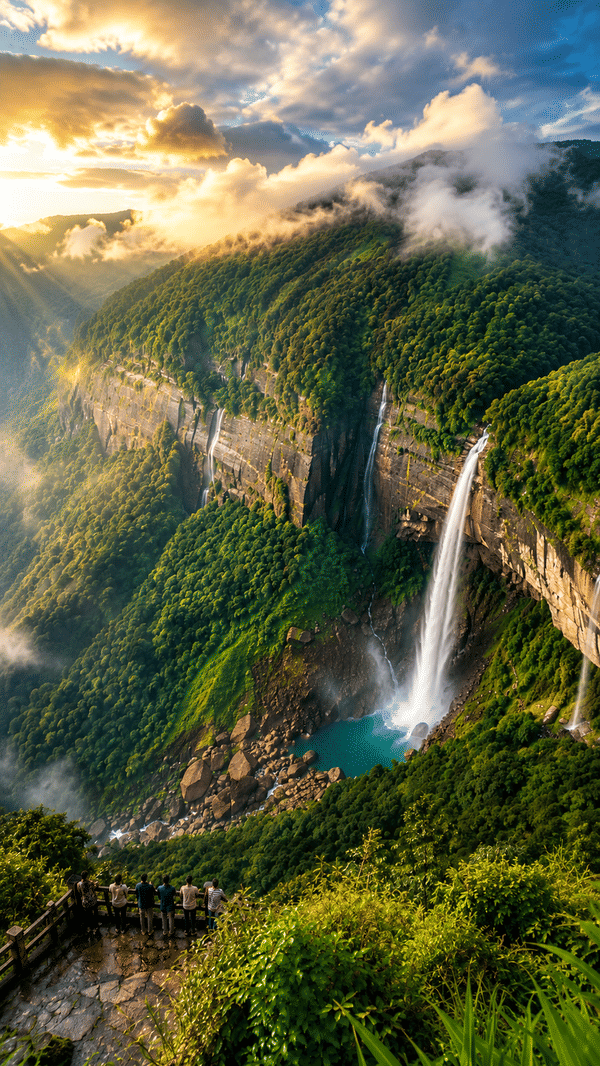
The best time to visit Shillong in Meghalaya is between September and May, when the city stays dry, cool, and easy to explore. If you want misty mornings without the risk of landslides or flight delays, aim for October to February. Shillong weather stays notably milder than Cherrapunji or Mawsynram, since the city sits at a lower, more sheltered elevation, so your travel window here doesn't need to match the rest of Meghalaya exactly.
Whether you're planning a weekend of café hopping and live music in Police Bazar, a boat ride on Umiam Lake, or a trek out to Elephant Falls, the season you pick for your Meghalaya trips changes how easy each of these is to do.
This guide breaks down the best time to go to Shillong, what to expect month by month, so you can match your trip to the right season instead of guessing.
Shillong Weather At A Glance
Shillong sits at roughly 1,525 metres above sea level, which keeps it cooler than the plains year-round without ever turning extreme. Average temperatures range from 4°C in peak winter to 26°C in early summer, and Shillong weather rarely swings outside that band.
So the best time to visit Shillong for travellers majorly depends on temperature, rainfall, road conditions, and flight reliability into Umroi Airport.
Best Season to Visit Shillong: Quick Snapshot
Best Season to visit Shillong: What to Expect
Shillong in Winter (November – February): Peak Season
Weather in Shillong in November is the most reliable stretch of the year. You'll find very little rainfall before the fog and chill of December set in.
- Temperature: Shillong temperature in January drops to its lowest point of the year, typically ranging between 4°C and 19°C in winter.
- Weather: Foggy mornings, sunny afternoons, minimal rain
- Road conditions: NH-6 is still dry and reliable through winter, but watch out for fog near Umiam Lake early in the morning. So, try to avoid driving before 7 AM.
- Flights: Umroi Airport gets the fewest delays of the year, and that just makes it the most dependable season to fly in.
- What to pack: You'll want heavy woollens, a windproof jacket, and gloves for when it's early in the morning and after the sun goes down.
- Festivals: Christmas week celebrations in December, Strawberry Festival in February
- Crowd: You'll see the heaviest crowds of the year, especially from December 20th to January 2nd (Shillong temperature in December remains low so pack proper clothing.
- Average stay cost: Hotel rates typically come out to ₹4,000–₹7,000 a night for this time of year, and that's roughly 40-60% higher than off-season rates. So, you should book 4-6 weeks ahead.
- Best experiences: You can get really clear views from Shillong Peak in the morning, take quiet walks around Ward's Lake, or enjoy evenings with live music at cafés in Police Bazar.
Shillong in Summer (March – May): Peak in April-May, Shoulder in March
- Temperature: 15°C–26°C, warm days and cool evenings
- Weather: Mostly clear, with short pre-monsoon showers building by late May
- Road conditions: It's dry through March and April, but fuel stops thin out past Nongpoh. So, make sure to stock up before you leave Guwahati.
- Flights: Flights are reliable through March and April, though occasional short delays start showing up by June.
- What to pack: Pack light layers for the day, one warm layer for evenings, and carry a compact umbrella as Shillong weather in May starts changing.
- Festivals: Shad Suk Mynsiem, a thanksgiving dance festival held in April
- Crowd: March is still pretty quiet, but April and May get busy since they overlap with Indian summer holidays.
- Average stay cost: March hotel rates are around ₹2,500–₹4,000 a night, but April and May rates go up to ₹3,500–₹6,000 as demand rises.
- Best experiences: You can visit Elephant Falls surrounded by spring greenery that feels really fresh, find trekking trails that are pretty easy, and go boating on Umiam Lake.
Shillong in Monsoon (June – September): Off-Season
- Temperature: 18°C–24°C, humid throughout
- Weather: Heavy, near-daily rainfall; Shillong in July sees the heaviest rain of the season
- Road conditions: There's the highest landslide risk of the year on the Nongpoh–Umiam stretch of NH-6. So, make sure to check live traffic updates before you head out.
- Flights: Umroi Airport gets its most frequent weather-related delays this season, so you'll want to keep your connecting plans flexible.
- What to pack: Pack a waterproof jacket—you might even want to wear it over an umbrella—plus clothing that dries fast and shoes that really grip for wet stone pathways.
- Festivals: Behdeinkhlam, a tribal festival held in nearby Jowai in July
- Crowd: Shillong in June-July is when you'll find the lowest crowds of the year
- Average stay cost: Hotel rates typically drop to ₹1,800–₹3,000 a night, and it's often the cheapest time to book a stay in Shillong.
- Best experiences: Elephant Falls and Umiam Lake are at full power; you can take some dramatic photos in low light or find quiet indoor live music without the crowds.
Shillong in Autumn (October): Shoulder Season
- Temperature: 12°C–22°C, comfortable through the day
- Weather: Shillong weather in October sees light rain, leaving the greenest landscapes of the year
- Road conditions: Light showers in the first week can slow travel, but weather gets dry and dependable by mid-month.
- Flights: Flying is a safer bet than driving in early October, since road delays are still possible.
- What to pack: Pack a light jacket for evenings, plus one layer to deal with rain just in case.
- Festivals: You'll find the Autumn Festival and Nongkrem Dance Festival, and they're both big cultural events in the city.
- Crowd: Crowds start building steadily through the month as the season gets closer to winter.
- Average stay cost: Hotel rates are around ₹2,800–₹4,500 a night, but they start going up to the higher end by late October.
- Best experiences: It's the best time to visit Shillong with family or spouse for sightseeing and stunning views across Shillong Peak and Umiam Lake that are really fresh after the monsoon.
When to Avoid Visiting Shillong?
Shillong in monsoon isn't a season to fear entirely, but July and August specifically test most travelers' patience, especially if your plans depend on fixed timings. This period is when monsoon rainfall peaks, the Guwahati–Shillong highway sees the highest landslide risk of the year, and flights into Umroi Airport face the most frequent delays.
Outdoor sightseeing can shrink to just a few clear hours a day, so this window suits only travellers who don't mind rain reshaping their itinerary. Whatever the best time for Shillong tour turns out to be, the season you pick shapes the whole trip; book with that in mind, and let the rest fall into place.