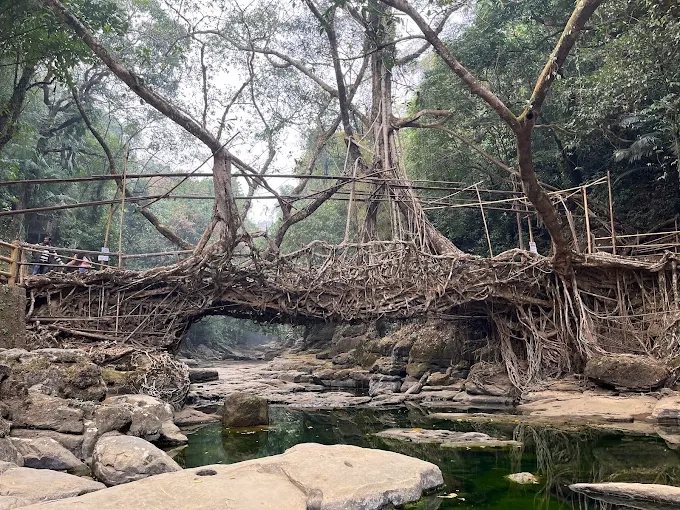
Deep in a forested gorge in the East Khasi Hills of Meghalaya sits Nongriat, a village of just 34 households reachable only on foot. It's famous for one thing above all else — the Umshiang Double Decker Living Root Bridge, grown by hand over generations by weaving the roots of rubber fig trees across a river gorge, a structure so unusual it's been filmed for BBC's Human Planet and Japanese television documentaries.
It’s one of the bucket-list destinations on any Meghalaya trips among trekkers and offbeat travellers looking for a genuine digital detox. Reaching Nongriat means several thousand stone steps down into a valley and the same climb back up whenever you leave, so it’s definitely not for quick sightseeing. It has no roads, patchy phone signals, and an evening routine built around shared meals and the sound of the river below.
This Nongriat travel guide covers everything that decision requires: what the village is actually like, where to stay, whether Rainbow Falls is worth the extra climb, and if spending the night is worth it at all.
Nongriat at a Glance
Location: East Khasi Hills, Meghalaya (roughly 65 km from Shillong)
Trailhead: Tyrna village (last point reachable by road)
Ideal for: Fit trekkers, offbeat and nature travellers, digital-detox seekers
Less suited to: Limited mobility, young children, travellers wanting comfort or quick sightseeing
Recommended stay: 1 night minimum; 2 nights if adding Rainbow Falls and Nongthymmai
Connectivity: Little to no mobile network; limited electricity via community hydro power
Best time to visit: October–April for safer footing; June–September for lush, dramatic scenery
What Is Nongriat Village?
Nongriat village, Meghalaya sits at the bottom of a deep valley in the East Khasi Hills, connected to the outside world only by a steep trekking route as there's no road access. A few verified facts worth knowing:
Home to roughly 130 people across 34 households
The main local livelihood is bay leaf cultivation, sold to traders from the surrounding hills
Neighbouring villages — Nongthymmai, Tyrna, Mawshamok, and Nongkroh — sit along the same trekking network
Best known worldwide for the Umshiang Double Decker Living Root Bridge, a structure that's taken generations to grow into shape
The village itself has slowly modernised — a small community-run hydro setup now powers basic street lighting and phone-charging points — but it remains fundamentally off-grid compared to anywhere else on a typical Meghalaya trip.
How to Reach Nongriat Village from Tyrna
The journey from Tyrna to Nongriat is a steep, stepped descent through forest — several thousand stone steps down into the valley, which means an equally steep climb back up whenever you leave. Tyrna itself is the trailhead village, reachable by road from Cherrapunji, and it's the last point private vehicles can take you.
How to Reach Tyrna
From Shillong: Roughly 65 km via the Cherrapunji road, about 2.5–3 hours by shared taxi or private cab
From Cherrapunji (Sohra): The shorter, more common route — about 12–15 km, roughly 20–30 minutes by taxi, typically ₹250–400 one way
Nearest major airport: Guwahati, around 170 km away; Shillong's smaller Umroi airport is closer but has limited flight connectivity
At Tyrna: A small parking area and a couple of tea stalls mark the trailhead — there's no taxi stand here, so arrange for your driver to wait or return for pickup in advance
How to go from Tyrna to Nongriat
Distance: Roughly 3 km on foot, almost entirely downhill on stone-cut steps rather than flat trail
Steps: Several thousand steps cut into the hillside — estimates vary by source, generally between 2,500 and 3,500
Time: Budget 1.5–3 hours going down at a comfortable pace; the return climb takes longer for most people
Route: Cemented and largely well-marked, crossing a couple of suspension bridges along the way
Things to See in Nongriat Village
Once you've made it down, the village itself is compact and walkable, with most sights within a short distance of each other.
Single Decker Root Bridge A smaller living root bridge you pass just before entering the main village — often overlooked in the rush to reach the double decker, but worth pausing at.
Umshiang Double Decker Root Bridge The main event: two tiers of living root bridge, woven from rubber fig tree roots over generations, spanning a river gorge a short walk from the village homestays. A small entry fee applies, which goes directly to the community that maintains it.
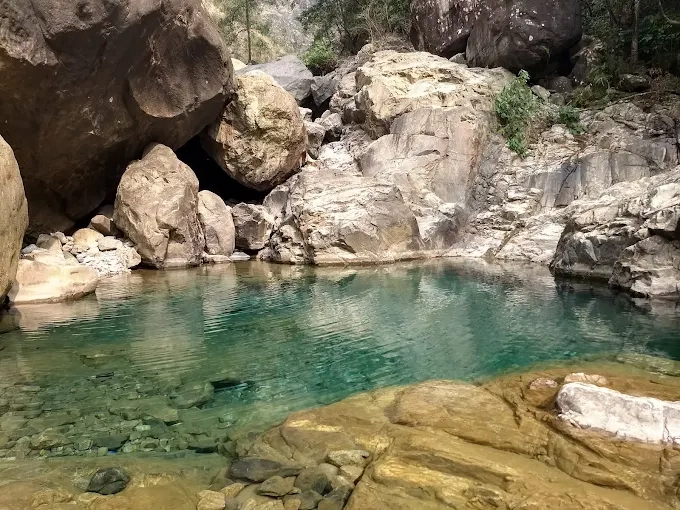
Natural pools beneath the bridge Clear, cold pools sit right under the double decker structure — a popular spot to cool off after the descent, with locals and travellers alike swimming here through the day.
Nongthymmai village The next settlement over, quieter and far less visited, worth a short walk if you want to see Khasi village life without the crowds that gather at the main bridge.
How to Visit Rainbow Falls Near Nongriat?
Rainbow Falls Nongriat sits about an hour's walk beyond the double decker bridge, through denser jungle with noticeably fewer people than the main trail. What to expect:
A more remote, in-the-jungle feel compared to the main village stretch
A powerful waterfall with a pool at its base that's swimmable if you're willing to scramble down the bank
Best visited earlier in the day, since the return climb back to the village adds meaningfully to an already long day
If waterfalls are the main draw for your Meghalaya trip, Rainbow Falls is one stop among several worth knowing about — the region's other cascades are covered in more depth on our page on waterfalls in Meghalaya, and this specific extension is one of the more rewarding stretches oftrekking in Meghalaya precisely because so few day-trippers make it this far.
Nongriat Homestay Options
A nongriat homestay is generally basic by design — simple rooms or dormitory beds, shared bathrooms, and meals cooked and served communally. A few names travellers consistently mention:
Serene Homestay — run by Byron, widely credited as the person who started tourism in Nongriat; dorm beds and private rooms, meals included
Nongriat Village Guest House (Community Guest House) — the first stay you reach entering the village, simple and inexpensive
Shipara Homestay and a handful of smaller family-run guesthouses — similar basic setup, often chosen simply on availability
Expect to pay roughly ₹250–1500 per person depending on dorm vs. private room, usually with dinner and breakfast included in that price. None of these are bookable much in advance — most travellers simply arrive and ask around, so having a backup option in mind matters more than a confirmed reservation.
A proper Nongriat village stay typically means one night, occasionally two if you want to add Rainbow Falls and Nongthymmai without rushing both in a single day.
How is Nongriat at Night?
Nongriat at night is quiet in a way that's genuinely hard to find elsewhere on a Meghalaya trip. A few things to expect:
Mobile network is patchy to non-existent — treat this as a digital detox rather than a temporary inconvenience
Basic solar and small hydro-powered lighting covers the main paths, but it's nowhere near city-level brightness
Dinner is usually a shared, simple affair — rice, dal, vegetables — eaten alongside whichever other travellers are staying that night
Many homestays have a common area where guests end up talking, playing carrom, or just listening to the river below
It's this after-dark stretch, as much as the bridge itself, that travellers tend to remember longest.
Is Nongriat Worth Staying Overnight?
For most travellers, yes. Here's the honest trade-off:
Reasons to stay:
Doing the descent and climb back up in a single day is genuinely hard on the knees and leaves no time to enjoy the village itself
An overnight stay lets you add Rainbow Falls without rushing
The evening atmosphere — dinner, conversation, the sound of the river — is a real part of what makes Nongriat worth visiting at all
Reasons a day trip might work instead:
If you're short on time and only want to see the double decker bridge itself
If basic, no-frills accommodation genuinely isn't for you
Most people who've done both agree the overnight version is the better experience, even with the extra climb it requires the following day.
Best Time to Visit Nongriat Village
October to April: Drier conditions, safer footing on the stone steps, and comfortable temperatures for the climb
June to September (monsoon): Waterfalls and the surrounding jungle are at their most dramatic, but steps get slippery and leeches are common — manageable with the right footwear, but worth knowing in advance
Expert Travel Tips for Your Visit to Nongriat Village
Wear proper trekking shoes — grip matters far more than cushioning on wet stone steps
Start the descent by mid-morning so you're not still on the stairs after dark
Carry cash in small denominations — no ATMs or card payments anywhere in the village
Bring your own water and snacks — there's little to buy along the trail itself
Pack insect repellent and a basic first-aid kit, especially during monsoon months when leeches are common
Carry a power bank — electricity is limited, and charging points aren't guaranteed
Don't count on a confirmed homestay — arrive with enough daylight left to check a second option if your first choice is full
Carry your trash back out with you — there's no waste collection in the valley
Base yourself in Cherrapunji the nights before and after rather than attempting this as a same-day trip from Shillong. Our list ofhotels in Cherrapunji covers options nearby.
Pair it with Nohkalikai Falls: The falls are around 8 km on foot and 16 km via road from Nongriat, so combining them together can be a good idea.
Hear from Travellers like you
Akshay singh
13 Nov 2022
Was planning Meghalaya for a long time .. Been through different sources and found wanderOn at last ..
Finally went with them on Nov 8. Meghalaya backpacking trip ( Nov 8- Nov 13)
The Itinerary was really good and our captain Himanshu was on different level . Never saw a person so engaging and child at heart . He was so perfect with the suggestions for food menu throughout the journey. The stays were really good. Thanks Himanshu and wanderOn for making my trip a success and memorable 😊
Harshad
22 Jun 2026
My Meghalaya trip with WanderOn was truly unforgettable! From the stunning landscapes and serene surroundings to the well-organized travel arrangements, everything was handled flawlessly. The entire experience felt effortless thanks to the excellent coordination behind the scenes—permits, accommodations, and meals were all perfectly managed. A special shoutout to our trip captain, Sarthak, whose dedication, care, and constant support ensured everyone's comfort and well-being throughout the journey. Every moment was worth it, and I would highly recommend this experience to fellow travelers!" 🌿✨🏔️
Hamsalatha Ramaiah
22 Jun 2026
Wonderfully organized trip to Meghalaya. Sarthak was our coordinator and he did a great job accommodating our needs as it was a family vacation. We were super happy with the whole experience. I recommend wanderon for your trips whether it’s friends or family. This is my 3rd trip with them and trust me you won’t be disappointed booking with them :)
Arun Mikkilineni
11 Jun 2026
We went on a trip to Meghalaya with WanderOn, and it turned out to be an absolutely wonderful experience. From the very beginning, the booking process was seamless, hassle-free, and well organized.
A special thanks to Shrut Dhakad for the fantastic planning of the trip. Every detail was thoughtfully arranged, allowing us to simply relax and enjoy the journey. The weather was amazing, and the itinerary covered some truly beautiful destinations. We thoroughly enjoyed activities like boating and exploring the many scenic places Meghalaya has to offer.
The execution of the trip was equally impressive. Sarthak Ghai managed everything seamlessly and ensured that the entire experience ran smoothly from start to finish. He was calm, composed, and extremely supportive throughout the trip. Whether it was coordinating logistics, handling schedules, or taking care of participants' needs, everything was managed professionally and efficiently.
The WanderOn team took care of every aspect of the trip, making it stress-free and enjoyable for everyone. Overall, it was a memorable experience filled with great moments, beautiful landscapes, and excellent hospitality. We truly enjoyed the trip and would highly recommend WanderOn to anyone looking for a well-planned and well-executed travel experience.
Frequently Asked Questions
Your right to Know!
01
Can you stay overnight in Nongriat?
Yes, and most travellers should. Basic homestays operate nightly, and staying over lets you see Rainbow Falls and the village atmosphere without rushing the climb back up the same day — the more common and more enjoyable way to experience Nongriat.
02
How much does a Nongriat homestay cost?
Expect roughly ₹150–500 per person per night, depending on whether you choose a shared dorm bed or private room. This typically includes simple home-cooked meals like rice, dal, and vegetables, served communally with other guests.
03
Is Rainbow Falls worth the extra trek?
For most travellers, yes. It's about an hour beyond the double decker bridge, through quieter jungle, ending at a turquoise pool you can swim in. It requires decent fitness and adds real time to your day, so it suits those not rushing back the same day.
04
Is there mobile network in Nongriat?
Coverage is patchy at best and often completely absent. Most travellers treat this as an expected digital detox rather than a problem to solve — it's part of what makes an overnight stay here distinct from anywhere else on a Meghalaya trip.
05
Is the bridge really closed on Sundays?
Yes. The Double Decker Root Bridge and the trek to Nongriat are closed to tourists on Sundays, a community decision tied to local religious observance. Plan your visit for any other day of the week to avoid wasting a trip.
06
How do I book a homestay with no network in the village?
You largely can't book remotely — most travellers simply arrive and ask around in person. Arriving with enough daylight left means you can check a second homestay if your first choice is full, rather than being stuck after dark.