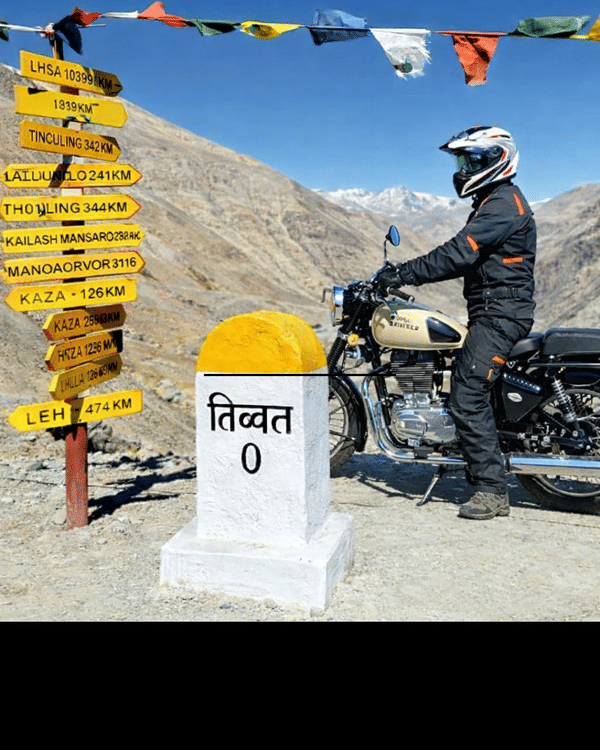
If you're wondering how to reach Spiti Valley from Ahmedabad, the journey begins by flying or taking a train to Himachal Pradesh, as there is no direct flight or rail connectivity to Spiti Valley. You first travel to Delhi or Chandigarh by air or rail, and Chandigarh or Shimla as the closest major railheads, then drive into the valley.
The Ahmedabad to Spiti Valley distance runs roughly 1,400 to 1,600 kilometres, with two road entries: the year-round Shimla–Kinnaur route and the summer-only Manali–Kunzum route.
The real planning lies in choosing the right route. Spiti sits at an altitude of over 3,000 meters, and both approaches offer very different experiences. The Shimla–Kinnaur route gains altitude gradually, making it better for acclimatisation, while the Manali–Kunzum Pass route is quicker but is generally accessible only during the summer months. Choosing the route that matches your travel dates is one of the most important decisions when planning how to reach Spiti Valley from Ahmedabad.
Every WanderOn departure has an experienced trip captain who knows these mountain roads very well and follows an itinerary designed for gradual acclimatisation. WanderOn also holds an India Book of Records recognition for completing the largest group motorcycle ride in Spiti Valley, reflecting years of expertise in the region.
Below, we'll compare every travel option before exploring the best Spiti Valley tour packages, helping you plan your Spiti adventure from Ahmedabad with confidence.
How to Reach Spiti Valley from Ahmedabad by Flight
There is no airport in Spiti itself, so thinking about how to reach Spiti Valley from Ahmedabad by flight usually means flying first to a well-connected North Indian hub, then continuing by road into the mountains. You have two convenient options, Delhi and Chandigarh, and both work well depending on your fares and preferred route.
Option 1: Fly Ahmedabad to Delhi
- Flight time is roughly 1 hour 45 minutes to 2 hours, with several direct flights daily.
- Airlines include IndiGo, Air India, Akasa Air, and SpiceJet.
- Indicative one-way fares run around ₹3,500 to ₹7,000, lower when booked two to three weeks ahead.
- Delhi has the most flights and the best prices and connects smoothly to both the Shimla–Kinnaur and Manali entry routes.
Option 2: Fly Ahmedabad to Chandigarh
- Flight time is around 2 hours, either direct or via a quick Delhi connection.
- Airlines include IndiGo and Air India, with fares roughly ₹4,000 to ₹8,000 depending on season and how early you book.
- Chandigarh sits closer to the hills, trimming the first stretch of the road trip.
- It opens straight onto the year-round Shimla–Kinnaur approach, the safer bet outside peak summer.
Delhi or Chandigarh to Spiti by Road
- From either hub, you enter Spiti by one of two roads: the year-round Shimla–Kinnaur route or the shorter summer-only Manali–Kunzum route.
- The Shimla–Kinnaur approach climbs gradually over two to three days, which is far kinder for acclimatisation.
- The Manali side is quicker but crosses Kunzum Pass, usually open only from around June.
- This road stretch is the real Himalayan journey, and it's where your body adjusts to altitude.
What flying into a WanderOn departure to Spiti Valley changes
- Some WanderOn Spiti group trips begin in Delhi, so your flight connects directly to a planned group road journey.
- A Trip Captain who has driven these passes leads the drive and knows where fuel and mobile networks cut out past Kalpa.
- The ascent is paced deliberately for acclimatisation, drawn from real route experience rather than a rushed taxi itinerary.
How to Reach Spiti Valley from Ahmedabad by Train
There is no railway station in Spiti, so if you are wondering how to reach Spiti Valley from Ahmedabad by train, it means going to the nearest railhead in Chandigarh or Delhi and then driving up.
- Nearest railheads: Chandigarh, Delhi, and Kalka are the most practical, both sitting at the start of the year-round Shimla–Kinnaur road route.
- The train leg: Ahmedabad connects toward Delhi and Chandigarh, roughly a 18 to 24 hour ride depending on the service.
- Smart routing: Many travellers come to Delhi first, then connect onward, which widens timing options.
- Onward drive: From Chandigarh or Kalka, climb gradually into Spiti over two to three days; this is far kinder for acclimatisation.
- Why it works: It is budget-friendly and lets you arrive rested before the demanding mountain leg past Kalpa.
Fastest train (Ahmedabad to Delhi)
- 12957 SBIB NDLS RAJ
- Duration: 12 hours 10 minutes
- Route: Sabarmati (SBIB) → New Delhi (NDLS)
- Runs daily
Fastest Train (Ahmedabad to Chandigarh)
- 12473 Sarvodya Express
- Journey time: 18 hours 27 minutes
Good, this one's already Ahmedabad. Here's the human edit, keeping your pointers and links but stripping the label-format stiffness.
How to reach Spiti Valley from Ahmedabad by car
Driving up from Ahmedabad is a serious undertaking, but for the right kind of traveller it's the whole point. Here's the route experienced road trippers and most Spiti Valley tour packages actually follow.
- The route: Ahmedabad → Udaipur → Jaipur → Delhi/Chandigarh → Shimla → Kalpa → Nako → Tabo → Kaza. It's long, but every stretch has a natural place to break.
- Distance: roughly 1,500 to 1,700 km one way, give or take depending on where exactly you start and which entry you take.
- How long it takes: plan for 3 to 4 days with proper overnight halts before Kaza. Don't try to compress it, the halts are what keep the altitude manageable.
- Why the Shimla side: if you're driving, this is the route to take. It gains height gradually, which is your best defence against AMS. The Manali side is faster but far harder on your body.
- Road conditions: the highways stay smooth right up to Himachal. Past Shimla the mountain roads narrow, but they're well-travelled through the season, so you're rarely alone on them.
- When to go: May to October is the window. Outside that, snow starts closing the higher stretches.
- Fuel and network: top up at Shimla, Reckong Peo, and Kaza whenever you see a pump, gaps between them are long. BSNL has the widest reach once you're deep in; other networks fade fast.
- Before you leave: get the car serviced, check tyres and brakes properly, and carry a spare wheel, offline maps, basic medicines, and emergency supplies. Help is hours away up there.
Our honest recommendation Having run this route on repeat, here's what we'd actually suggest for most people: fly Ahmedabad to Delhi and join WanderOn's Spiti Valley Group Tour from there. You travel overnight by Volvo, enter through Shimla, and let your body adjust gradually, without the grind of a multi-day self-drive from Gujarat. It's the low-stress way to answer how to reach Spiti Valley from Ahmedabad: minimum planning, maximum comfort, and the road handled by people who know it.
Shimla–Kinnaur vs Manali–Kunzum: Which Route is Better to Reach Spiti Valley from Ahmedabad?
Best-Selling Spiti Valley Tour Packages:
Best Time to Visit Spiti Valley, Permits & Altitude Tips
A few things worth knowing before you go, the kind of detail that saves a trip rather than just fills a page.
When to go: May to October is the window for Spiti Valley road trips. Through peak summer both the Shimla and Manali routes are usually open, though the Manali–Kunzum side tends to hold out until June before the snow clears it.
On acclimatisation: Coming from Ahmedabad, take the Shimla–Kinnaur route or at least sleep a night in Shimla or Kalpa before you push on to Kaza. Your first day at altitude isn't the day for anything strenuous, go easy, drink far more water than feels necessary, and let your body catch up.
Permits: If you're an Indian citizen, you don't need one, Spiti is open to you. Foreign nationals do need an Inner Line Permit for Reckong Peo and the Sumdo/Kaza stretch.
Network: BSNL is the only one that really holds up out here. Jio and Airtel flicker in and out of the bigger towns, but between villages you'll go long stretches with nothing at all, so download your offline maps before you lose signal.
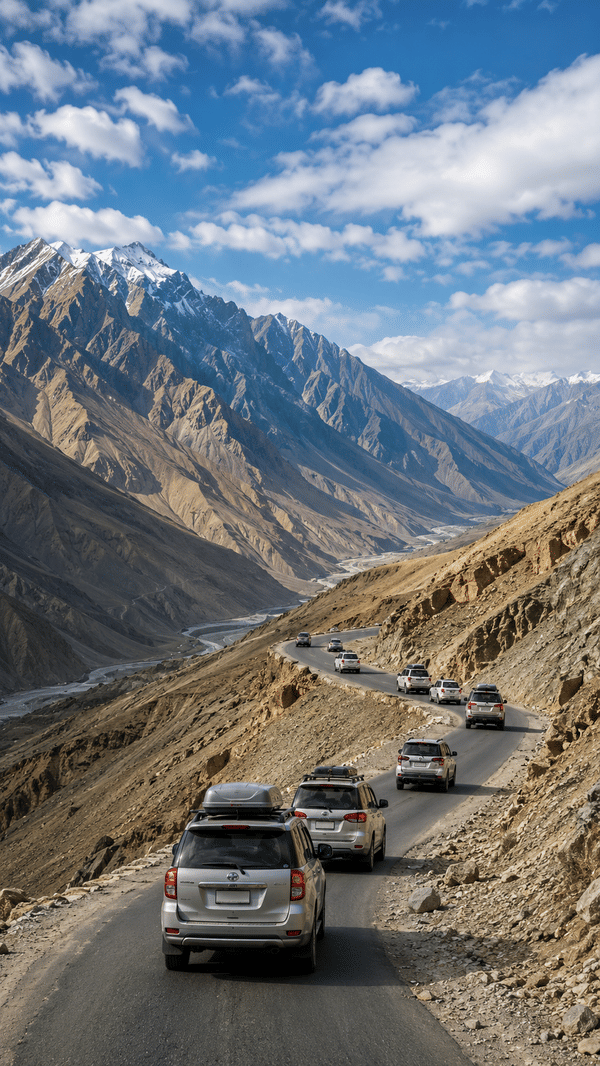
On the roads: Expect single-lane mountain roads, tight blind bends, the odd landslide-prone patch, and water crossings that get worse after a monsoon shower. The one rule nobody should break: drive in daylight only.
Fuel: Pumps are few and far between. Fill up at Reckong Peo on the Shimla route and again at Kaza, and never roll past a working station on the assumption there'll be another soon. There often isn't.