If you're wondering how to reach Spiti Valley from Hyderabad, the best way is to fly to Chandigarh or Delhi, then travel by road via Shimla and Reckong Peo to Kaza. Chandigarh is closer, leaving around 500 km of driving, while Delhi adds roughly 250 km but offers cheaper and more frequent flights.
This Shimla route stays open all twelve months, unlike the Manali side, which operates only from June to October. Counting one overnight halt in Kinnaur for acclimatisation, that is how to reach Spiti Valley from Hyderabad in about three days.
The total Hyderabad to Spiti Valley distance works out to nearly 1,950 km, of which the flight covers most of it in about two hours. Better road conditions on the Shimla highway and increasing connectivity have helped Spiti tourism grow steadily, even in winter months.
Our Spiti Valley tour packages take care of the road journey, hotels, and permits, so just book the flight.
How to Reach Spiti Valley from Hyderabad by Flight
Spiti Valley has no commercial airport or railway station of its own, so the journey from Hyderabad always happens in two parts: a flight to Delhi or Chandigarh, followed by a road trip to Kaza. For most travellers researching how to reach Spiti Valley from Hyderabad, Delhi wins on flight frequency and fares, while Chandigarh wins on the shorter drive that follows.
Hyderabad to Spiti Valley by Flight
- Departure airport: Rajiv Gandhi International Airport, Hyderabad (HYD)
- Arrival airports: Indira Gandhi International Airport, Delhi (DEL) or Chandigarh Airport (IXC)
- Total travel time: Around 18–30 hours, including the flight, road journey, and an overnight halt, depending on the airport chosen, road conditions, and weather.
Hyderabad to Delhi Flights
- IndiGo, Air India, Air India Express, and Akasa Air operate on the Hyderabad–Delhi route.
- Non-stop flights take around 2 hours 15 minutes to 2 hours 25 minutes, while one-stop options stretch to 4–7 hours or more depending on the layover city.
- As checked in August 2026, one-way Hyderabad to Delhi flight fares start from roughly ₹5,900–₹6,700 and return fares from around ₹10,786. Fares are dynamic and rise during weekends, holidays, and peak Spiti season.
- Delhi offers far more daily departures than Chandigarh, making it easier to find an early-morning or late-evening flight that fits your onward road plan.
Onward journey from Delhi Airport:
- The all-season route runs Delhi → Shimla → Rampur → Reckong Peo/Kalpa → Nako → Tabo → Kaza.
- Delhi to Shimla takes about 8–10 hours by road, and Shimla to Kaza needs another 12–15 hours.
- Plan an overnight stay in Shimla, Rampur, or Kalpa instead of driving through in one stretch.
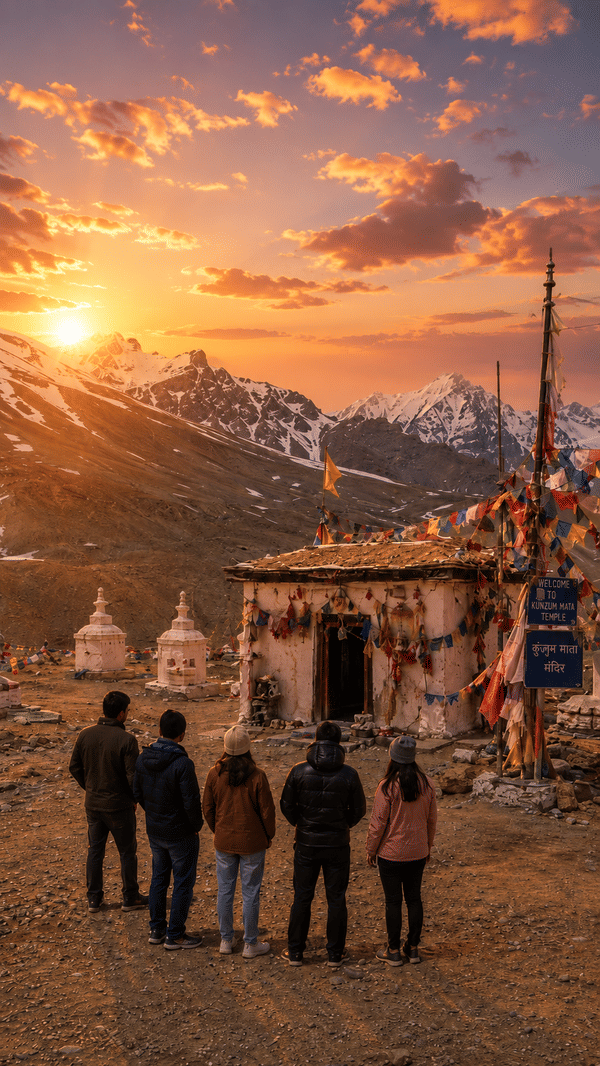
- The alternative route via Manali, the Atal Tunnel, and Kunzum Pass is shorter but seasonal, opening only once Kunzum Pass is clear of snow.
Hyderabad to Chandigarh Flights
- IndiGo currently runs direct flights between Hyderabad and Chandigarh, covering the distance in about 2 hours 30 minutes.
- Air India and other carriers offer connecting services, usually through Delhi or Mumbai, taking 4–8 hours or longer.
- August 2026 fare calendar shows one-way fares starting near ₹7,500, with the lowest future fares around ₹7,151, and return fares from approximately ₹14,162, subject to availability.
Onward journey from Chandigarh Airport:
- The route follows Chandigarh → Shimla → Narkanda → Rampur → Reckong Peo/Kalpa → Nako → Tabo → Kaza.
- The road distance is roughly 500 km and takes 15–18 hours of driving.
- An overnight stop in Shimla or Kalpa before reaching Kaza the next day is the safer, more comfortable plan.
- State-run buses and private taxis operate from both Shimla and Manali, and Himachal Tourism estimates around 12 hours from either town to Kaza, depending on road and weather conditions.
Expert travel tip: Book Chandigarh when a direct flight is available, since it cuts the road distance meaningfully. Pick Delhi if you want flexible timings, more airline options, and generally lower fares. Either way, recheck live fares and confirm Kunzum Pass and Kinnaur road conditions before you set out.
How to Reach Spiti Valley from Hyderabad by Train
There is no direct train from Hyderabad to Spiti Valley because Kaza has no railway station. The most practical route is to take a train from Hyderabad to Delhi and continue to Spiti Valley by bus or taxi.
Hyderabad to Delhi by Train
- Departure stations: Secunderabad Junction, Hyderabad Deccan, or Kacheguda
- Arrival stations: New Delhi or Hazrat Nizamuddin
- Popular trains: Telangana Express, Secunderabad–Nizamuddin Duronto Express, Rajdhani Express, and Dakshin Express
- Travel time: Approximately 22–30 hours
- Indicative fares: Sleeper Class from ₹750, 3AC from ₹1,900, and 2AC from ₹2,700
Travellers researching how to reach Spiti Valley from Hyderabad by train should confirm the latest timings, seat availability, and fares on IRCTC or NTES before booking, since schedules and prices change through the year.
Onward Journey from Delhi to Spiti Valley
- Recommended route: Delhi → Shimla → Rampur → Kalpa → Nako → Tabo → Kaza
- Travel modes: HRTC bus, private Volvo, shared taxi, or private cab
- Recommended halt: Spend one night in Shimla, Rampur, or Kalpa before heading to Kaza.
- Why break the journey: An overnight stop cuts travel fatigue and gives your body time to adjust gradually to the altitude.
- The alternative Delhi–Manali–Kaza route is shorter but remains open only when Kunzum Pass is clear of snow.
Hyderabad to Chandigarh by Train
- Direct trains between Hyderabad and Chandigarh are limited, so reaching Delhi first and taking a connecting train is the practical option.
- Delhi–Chandigarh connections include the Kalka Shatabdi, Chandigarh Shatabdi, and Vande Bharat Express.
- From Chandigarh, the road journey to Kaza takes approximately 15–18 hours and should be spread over two days.
For anyone planning how to reach Spiti Valley from Hyderabad, Delhi remains the best rail connection, offering better train frequency and easier onward transport. The train-plus-bus combination is also the most economical answer for travellers working out how to travel to Spiti Valley from Hyderabad on a budget.
How to Reach Spiti Valley from Hyderabad by Road
Travellers planning how to go to Spiti Valley from Hyderabad by car can drive to Kaza through either the Shimla–Kinnaur route or the Manali–Kunzum Pass route. The total road distance is approximately 2,200–2,300 km, which means around 45–50 hours of pure driving time. Set aside at least four to six days for a safe Spiti Valley road trip journey.
Route 1: Hyderabad to Spiti via Shimla (recommended)
- Route: Hyderabad → Nagpur → Jhansi → Delhi → Chandigarh → Shimla → Narkanda → Rampur → Kalpa → Nako → Tabo → Kaza
- Best for: First-time visitors and travellers who want a gradual altitude gain
- Recommended halts: Nagpur, Delhi, Shimla or Narkanda, and Kalpa
- Road conditions: The final stretch follows the old Hindustan–Tibet Road through Kinnaur, where sections can be narrow, rough, or briefly closed by landslides.
- Why it works: This route avoids the high-altitude Kunzum Pass entirely, which is what makes it dependable through most of the year. HRTC buses and taxis also run towards Spiti through Shimla and Kinnaur in the main travel season, so help is never far if your vehicle runs into trouble.
Route 2: Hyderabad to Spiti via Manali
- Route: Hyderabad → Nagpur → Delhi → Chandigarh → Manali → Atal Tunnel → Gramphu → Batal → Kunzum Pass → Losar → Kaza
- Best for: Experienced mountain drivers travelling in summer
- Season: Usually open between June and October, depending on snowfall and Kunzum Pass conditions
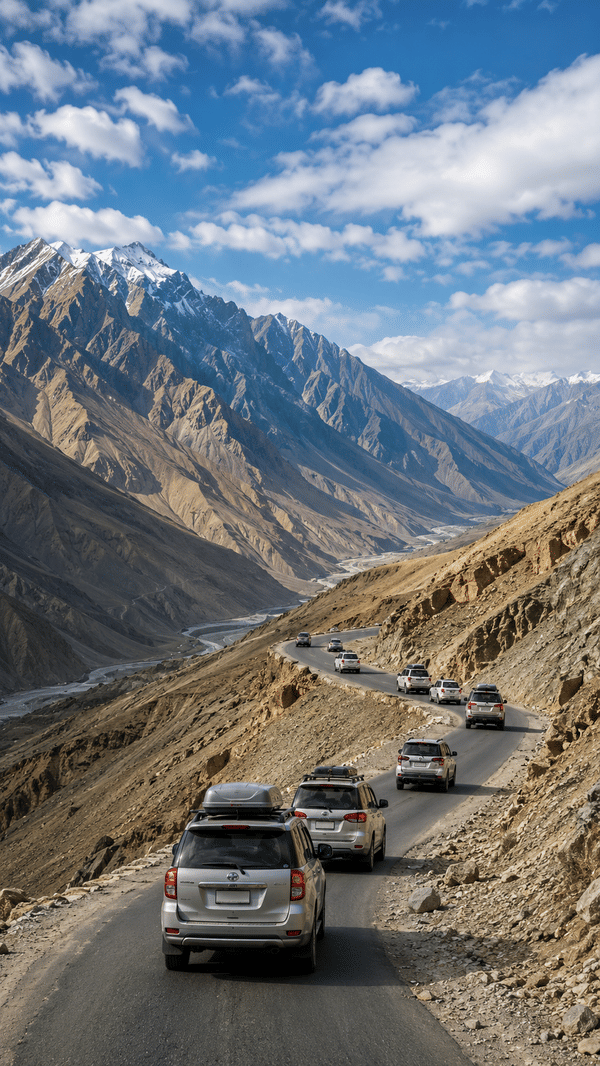
- Vehicle: A high-ground-clearance SUV is strongly recommended, as the Gramphu–Kaza stretch has broken surfaces, water crossings, and loose rock.
Important Driving Tips
- Split the journey into manageable driving days and never drive mountain roads after dark.
- Check weather updates, landslide alerts, and road status before leaving Manali, Shimla, or Kalpa.
- Carry a spare tyre, puncture kit, basic medicines, drinking water, and offline maps, since network coverage drops beyond Reckong Peo.
- Refuel at every opportunity - fuel stations thin out sharply as you approach Spiti, with Kaza housing one of the world's highest-altitude petrol pumps.
- Sleep one night at a lower altitude before reaching Kaza to lower the risk of altitude sickness.
For travellers who find a 2,200 km self-drive daunting, flying from Hyderabad to Delhi or Chandigarh and hiring an experienced mountain driver for the hill section is the safer choice. On balance, the Shimla route is the most practical answer to how to reach Spiti Valley from Hyderabad by car.
Best-Selling Spiti Valley Tour Packages:
WanderOn Style Itinerary: How to Go to Spiti Valley from Hyderabad
Hyderabad – Chandigarh – Narkanda – Chitkul – Sangla – Tabo – Kaza – Gue – Kalpa – Shimla – Chandigarh – Hyderabad
Day 1 — Fly to Chandigarh, drive to Narkanda (180 km, 5–6 hrs)Land in Chandigarh and start the climb the same day. Narkanda's your first taste of altitude, with Hatu Peak and the Himalayan views easing you in gently.
Day 2 — Narkanda to Sangla (170 km, 6–7 hrs) The road drops into the Baspa Valley today. Push on to Chitkul if you can, it's the last village before the border and worth every extra kilometre.
Day 3 — Sangla to Tabo (190 km, 7–8 hrs) A long, dramatic day past the Khab confluence, where the Spiti and Sutlej rivers meet, and Nako Lake. This is where the landscape turns properly barren and lunar.
Day 4 — Tabo to Kaza (50 km, 2–3 hrs) A short, easy leg, so use the extra time at Dhankar Monastery, perched improbably on a cliff edge. Reaching Kaza early also helps you settle before the higher-altitude days.
Day 5 — Kaza sightseeing: Langza, Komic & Hikkim The high-village day. Langza's fossils, Komic (one of the highest motorable villages anywhere), and Hikkim, home to the world's highest post office, worth posting a card just to say you did.
Day 6 — Key Monastery, Kibber & Chicham Bridge Key Monastery is the postcard shot of Spiti for a reason. Pair it with Kibber village and a stop at Chicham Bridge, Asia's highest.
Day 7 — Kaza to Kalpa via Gue (210 km, 7–8 hrs) Break the drive at Gue to see the naturally preserved 500-year-old mummy, then wind down into the green of Kinnaur, a proper contrast after days in the cold desert.
Day 8 — Kalpa to Shimla (≈230 km, 7–8 hrs) The long descent back toward civilisation. One last morning of apple orchards and Kinner Kailash views before Shimla.
Day 9 — Fly home from Chandigarh Drive down to Chandigarh and fly out. A full loop, entering and leaving by the Shimla side, which keeps the whole trip on the year-round road.