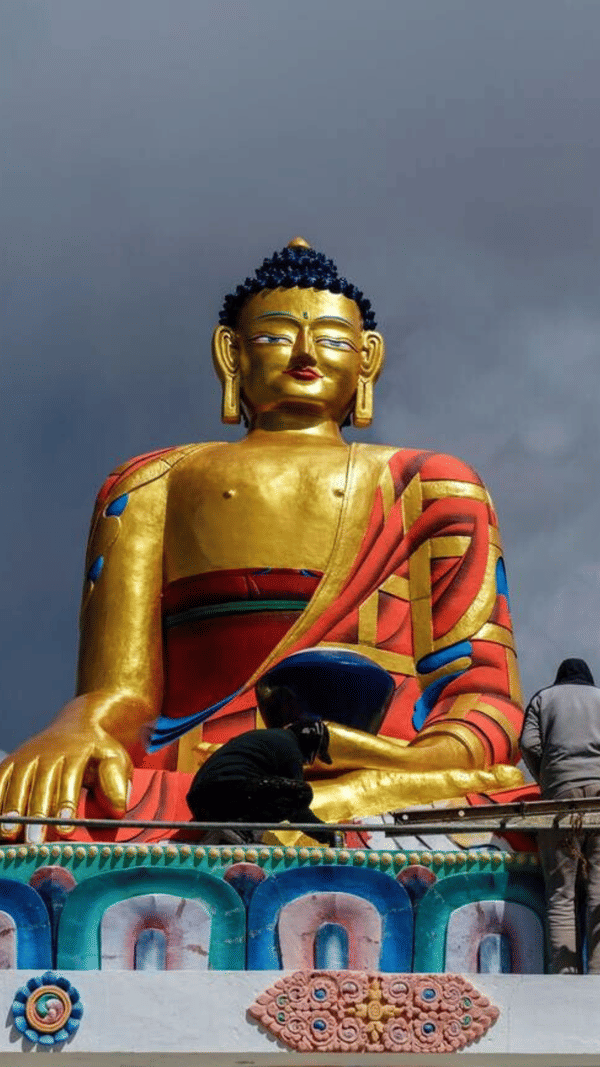
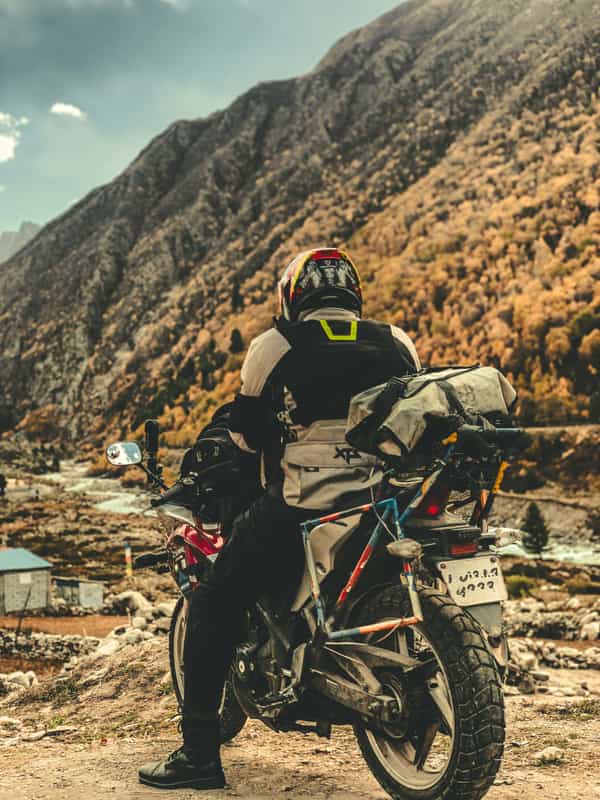
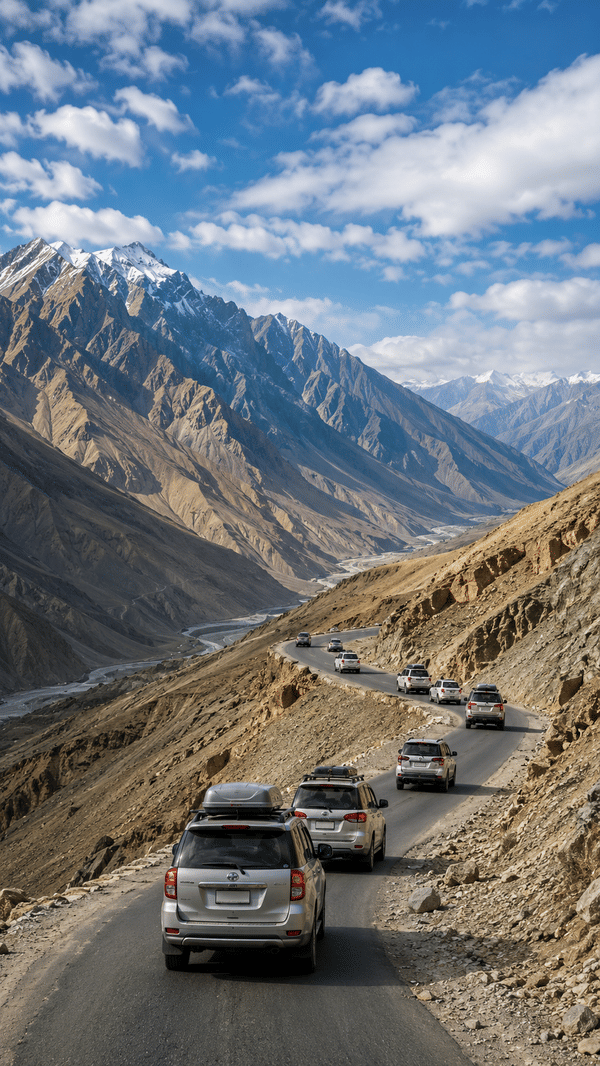
Kalpa is a scenic mountain village above Reckong Peo in Himachal Pradesh, known for its views of the snow-covered Kinner Kailash range, apple orchards and traditional Kinnauri architecture. At around 2,759 metres, WanderOn’s Kalpa tour packages offer an easy way to experience the Kinnauri villages, its temples, monasteries and surrounding Himalayan landscapes without a trekking-heavy itinerary.
Most Kalpa trips work best as part of a wider Kinnaur circuit covering Sangla, Rakchham and Chitkul. Depending on the itinerary, travellers can also continue towards Nako and Spiti Valley.
With WanderOn, you can choose Spiti trip packages based on your preferred duration, route and travel style while avoiding the rushed planning that often makes mountain trips tiring. Pick a fixed group departure to travel with a set itinerary and fellow travellers, or go for a customised trip if you'd rather set your own dates, route and pace.
Book your own Kalpa tour packages now!
Best Kalpa Tour Packages (Part of Spiti Trips)
Why Choose WanderOn's Kalpa Tour Packages?
A good Spiti itinerary needs more than a list of sightseeing stops. It needs realistic driving days, sensible overnight locations, and enough flexibility for mountain conditions.
Depending on the selected WanderOn itinerary, a Kalpa trip can offer:
- A logically planned route through Kinnaur
- Accommodation at designated overnight stops
- Transfers as specified in the package
- Planned sightseeing and local experiences
- Group-trip coordination
- A route that can combine Kalpa with Sangla and Chitkul without treating every destination as a rushed photo stop
- Support with trip logistics throughout the scheduled journey
Note: Exact inclusions depend on the selected WanderOn Spiti group tour package. Check the individual itinerary before booking
Why Visit Kalpa?
Kalpa is worth visiting primarily for its close-up Himalayan setting, Kinnauri character and slower pace. Unlike destinations where sightseeing means driving from one attraction to another all day, much of Kalpa's appeal comes from simply spending time around the village and watching the surrounding mountains change with the light.
Here are a few reasons to include it in your trip:
1. Views of the Kinner Kailash Range
Kalpa sits opposite the Kinner Kailash mountain range making mountain views one of the destination's defining experiences. Clear mornings are especially rewarding for travelers interested in photography.
2. Traditional Kinnauri Surroundings
Old village lanes, wooden architecture, temples and orchards make Kalpa feel distinctly different from heavily developed Himachal hill stations.
3. Apple-Growing Landscapes
Kinnaur is known for its orchards and Kalpa's slopes reflect this agricultural landscape. The scenery changes through the growing and harvest seasons.
4. Hindu and Buddhist Heritage
Temples and Buddhist monasteries coexist around Kalpa reflecting the wider cultural character of Kinnaur.
5. Easy Addition to a Kinnaur Circuit
Kalpa fits naturally with Reckong Peo, Sangla, Rakchham and Chitkul, making it more useful as part of a multi-stop itinerary than as an isolated weekend destination.
WanderOn’s Sample Itinerary
Starting Day
Departure from Delhi to Shimla by evening. Overnight journey by Volvo.
Day 1
Reach Shimla- Transfer To Sangla/Chitkul. Overnight Stay At Chitkul / Sangla [Distance: Approx 220km, Duration: 9-10 Hours]
Day 2
Explore Chitkul - Transfer to Kalpa. Overnight stay at Kalpa. [Distance: Approx 80km, Duration: 6-7 Hours]
Day 3
Transfer from Kalpa to Kaza via Nako - Tabo - Ka loops. Overnight stay at Kaza. [Distance: 220 km, Duration: 8- 9 Hours]
Day 4
Visit Key Monastery, Chicham Bridge along with Hikkim - Komic - Langza. Overnight stay at Kaza.
Day 5
Depart for Chandra Taal - Overnight stay at Chandra Taal. [Distance: Approx 95 km, Duration: 5-6 Hours]
Day 6
Depart for Manali - Old Manali café crawl - Overnight stay at Manali. [Distance: Approx 95 km, Duration: 5-6 Hours]
Day 7
Self-Explore Manali - Departure To Delhi.
Last Day
Reach Delhi by morning. [ Distance: 510 km, Duration: 10 - 11 Hours ]
Best Time to Visit Kalpa
The best time to visit Kalpa is generally from April to June and September to October when sightseeing conditions are more comfortable and road travel through Kinnaur is usually easier to plan.
- April to June — Best for sightseeing: Days stay pleasant and evenings turn cool during this stretch, and with the roads in better shape, it is one of the busier times for booking Kalpa travel packages. Spring and early summer suit village walks and orchard views, and the Kinner Kailash range looks its best from here around then.
- July to August — Travel with caution: Monsoon conditions can increase the risk of landslides, falling rocks and road delays along parts of the Kinnaur route. Keep buffer days and check road advisories before travelling.
- September to October — Best for mountain views: Post-monsoon conditions often bring clearer skies and crisp mountain weather making this one of the better periods for photography and combining Kalpa with Sangla and Chitkul.
- November to February — Best for winter landscapes: Snow is likely and temperatures can fall below freezing. Roads get unpredictable in winter, so keep your plans flexible if you are travelling then.
- For Kalpa tour packages from Delhi: April–June and September–October are generally the most practical periods because the long road journey via Shimla and Kinnaur is easier to manage.
Traveller Tip: Always check the latest weather forecast and Kinnaur road conditions before departure, especially during monsoon and winter
Cost of a Kalpa Tour Package
- Average price range: A Kalpa tour package typically costs between ₹15,000 to ₹25,000 per person for a standard trip, depending on hotel category, group size, and inclusions.
- Budget packages: Starting prices can be as low as ₹8,000 for shorter, no-frills itineraries, often combined with nearby Sangla.
- Standard/deluxe options: Packages combining Kalpa with Sangla and Chitkul range from around ₹16,700 for a standard package to ₹21,500 for a deluxe version per person (ex-Kolkata, subject to city of origin).
- Group coach tours: Larger group departures (around 30 travellers) tend to be more economical, with rates increasing for smaller families or individual travellers since costs aren't shared across as many people.
- Extended/customised trips: For 8–10 day customised itineraries covering Kalpa, Tabo, and Kaza, prices start from roughly ₹16,000 to ₹20,000 per person.
What to Pack for a Kalpa Trip
Packing for Kalpa should focus on layering, road comfort and changing mountain weather. Whether you are booking Kalpa trip packages or travelling across Sangla, Kalpa, Kinnaur these essentials will make the journey more comfortable:
- Warm layers: Pack thermals, a fleece or sweater and a warm jacket. Even outside winter, the mornings and evenings can get cold up here.
- Waterproof or windproof jacket: Useful during sudden weather changes and particularly important during monsoon months.
- Comfortable walking shoes: Choose shoes with good grip for village walks, uneven roads and short sightseeing trails.
- Sun protection: Pack sunglasses, sunscreen, lip balm and a cap because mountain sunlight can be strong at higher elevations.
- Personal medicines: Carry your regular medication along with basic first-aid supplies.
- Cash: Keep some cash for smaller shops, local eateries or areas where digital payments may be affected by weak connectivity.
- Power bank: Long road journeys and inconsistent network coverage can drain phone batteries quickly.
- Offline maps: Download maps before entering more remote sections of Kinnaur.
- Reusable water bottle: Useful during long drives between destinations.
For Sangla Kalpa Kinnaur itineraries, pack slightly warmer than you would for a regular Himachal hill-station trip, especially if Chitkul is included.
Expert Travel Tips for Visiting Kalpa
A good Kalpa Kinnaur tour plan needs more than warm clothes and hotel bookings. Kalpa sits at about 2,759 metres and is reached primarily by mountain roads through Kinnaur, so route timing and flexibility matter as much as sightseeing.
- Use Reckong Peo as your logistics stop: Kalpa is about 14 km from Reckong Peo, the district headquarters. If your Kalpa package involves onward travel, Peo is the more practical place to organise buses, taxis and supplies.
- Do not calculate drive time from kilometres alone: Kinnaur's mountain roads can make relatively short distances time-consuming. Keep your arrival evening light instead of scheduling major Kalpa sightseeing immediately after a long road journey.
- Check the road status before leaving Shimla or Rampur: The district administration specifically advises checking road conditions in Spiti during the rainy season and winter because blocks can interrupt travel. Build a buffer day into a Kalpa Kinnaur tour package during these periods.
- Do not assume the Manali–Kaza route is always an alternative: The district administration notes that the Manali–Kaza–Reckong Peo route remains closed through much of winter and spring. For most trips, the Shimla–Rampur side is the more dependable planning route.
- Separate Kalpa sightseeing from the Kinner Kailash Yatra: Seeing Kinner Kailash from Kalpa is very different from undertaking the pilgrimage/trek. The yatra has separate registration and safety rules, and official access can be suspended when conditions become unsafe.
- Keep a physical ID accessible: This becomes particularly important if your Kalpa Kinnaur tour plan extends towards notified or border-sensitive parts of Kinnaur. Permit and movement rules can differ by nationality and destination.
- Plan Sangla and Chitkul as a separate valley leg: Sangla lies in the Baspa Valley, reached by turning from the main Kinnaur corridor around Karcham. Avoid treating Kalpa–Sangla–Chitkul as three neighbouring sightseeing points to be rushed through in a few hours.
- Arrange transport according to your itinerary style: Official district guidance notes that one-way taxis to Kalpa/Reckong Peo followed by local taxis can suit flexible travellers, while a vehicle hired for the entire circuit may be more practical for a fixed itinerary.
- Keep daylight for unfamiliar mountain-road sections: Even when the road is open, narrow stretches, bends and changing conditions make daylight travel preferable when your schedule allows.
- Don't turn cliffside roads into photo stops: Some dramatic stretches around Kinnaur have steep drops and limited stopping space. Use proper pull-offs instead of stopping at blind bends or road edges for photographs.
Planning insight: The strongest Kalpa package is rarely the one covering the maximum number of places. A better itinerary gives Kalpa, Sangla, and Chitkul enough time individually while keeping one flexible window for Kinnaur's changing road conditions.
Do You Need a Permit for Kalpa?
Indian travellers generally do not need a special permit to visit Kalpa, Sangla, or Chitkul on the standard tourist circuit. Kalpa lies in the Kinnaur district, and regular sightseeing in these commonly visited areas is accessible to Indian citizens with valid government-issued identification.
However, Kinnaur includes border-sensitive and protected areas, so permit requirements can change depending on the traveler's nationality and how far the itinerary extends beyond the usual tourist route. Foreign nationals may require an Inner Line Permit or Protected Area Permit for certain notified sections of Kinnaur, especially when travelling further towards places such as Nako and the Indo-Tibetan border belt.
Current rules should always be checked with the Kinnaur district administration before departure.
For most Kalpa travel packages covering the usual Sangla-Kalpa-Kinnaur circuit, Indian travellers can focus on carrying a valid photo ID rather than arranging a separate Kalpa permit.
Traveller tip: If your itinerary continues towards upper Kinnaur or Spiti, confirm the latest permit requirements separately, as rules may differ by route, nationality and destination.